Loading...
Analysis will be generated on first visit.
Scores and timeline are available below. The page will refresh automatically when ready.
Dong Yun vs Napoleon Bonaparte
Napoleon Bonaparte leads by 23.9 pts · 2 figures compared
…

Dong Yun
Politician · Ancient
58.5Total
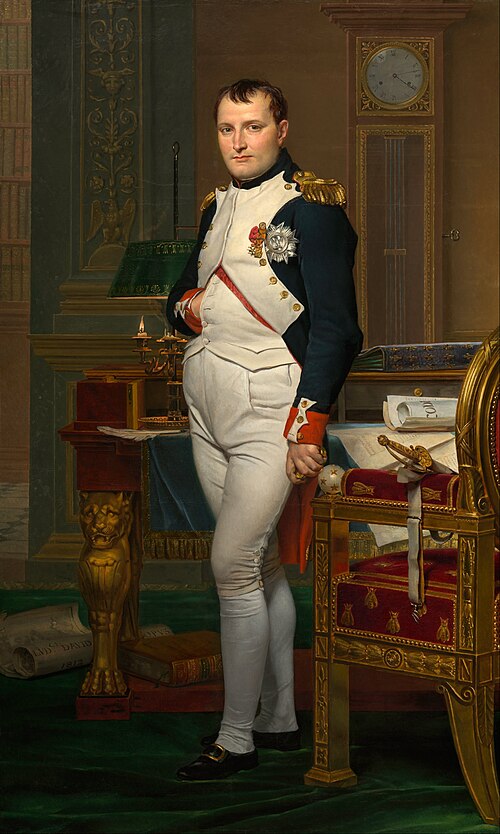
Napoleon Bonaparte
General · Modern
82.4Total
Basic Information
Born
193
1769
Died
246
1821
Era
Ancient
Modern
Nationality
China
France
Occupation
Politician
General
Civilization
Eastern
Western
Score Comparison
Military (10%)
30.2
94.0
Political (20%)
62.7
75.0
Influence (20%)
72.5
82.0
Legacy (20%)
58.4
78.0
Leadership (15%)
72.0
80.0
Strategy (15%)
39.8
93.0
TOTAL
58.5
82.4
Rankings
🥇
Napoleon BonaparteLeader
Mil: 94.0Pol: 75.0Inf: 82.0
82.4
🥈
Dong Yun
Mil: 30.2Pol: 62.7Inf: 72.5
58.5
+23.9 behind
How This Comparison Works
Algorithm
Each figure is scored on 6 dimensions (0—100 scale) based on structured historical data: Military (10%), Political (20%), Influence (20%), Legacy (20%), Leadership (15%), Strategy (15%). The weighted total produces the final ranking.
Data Sources
Scores are computed from structured sub-indicators in the database. Scale factors adjust for era (Ancient ×0.85, Modern ×1.0) and civilization size (Eastern ×1.05, Other ×0.80) to account for differences in population and military scale.
Maximum 3 Figures
Comparisons are limited to 2—3 figures to ensure readability and statistical meaningfulness.
Error Margins
±5 points per dimension — Sub-scores are derived from historical records with inherent uncertainty. Two figures within 5 points on a dimension should be considered roughly equivalent in that area.
Total Score Accuracy
±3 points overall — The weighted combination of 6 dimensions produces a total score with approximately ±3 points of uncertainty. Differences of less than 3 points are not statistically significant— the figures are effectively tied.
Known Limitations
- Historical records are incomplete and uneven across civilizations
- Figures from oral-tradition societies may be underrepresented
- Occupation labels can misclassify multi-role figures
- Scores measure capability and impact, not moral character
- Quantitative scoring is a comparison tool, not absolute truth
Capability Radar
Military (10%) — Battles & Warfare
Battles
19
95
Win Rate
25
90
Expansion
26
95
Political (20%) — Governance & Reform
Reform
30
95
Diplomacy
35
80
Economy
30
85
Influence (20%) — Cultural & Global Reach
Cultural
20
85
Global
10
90
Legacy (20%) — Historical Impact
Historical
25
95
Longevity
20
90
Leadership (15%) — Power & Stability
Tenure
40
85
Stability
50
70
Strategy (15%) — Tactics & Innovation
Strategy
33
95
Tactics
33
98
Reform
36
92
Analysis will be generated on first visit.
Scores and timeline are available below. The page will refresh automatically when ready.
Dong Yun — Complete Timeline
220 AD
Service as Palace AttendantPolitical Action
Dong Yun served as a Palace Attendant under Liu Bei and later under Liu Shan. He was known for his strict adherence to protocol and his role in maintaining order at court.
Shu-HanCourt OfficialGovernment
Impact: nationalconstructive
234 AD
Appointment as General of the HouseholdPolitical Action
After Zhuge Liang's death, Dong Yun was appointed General of the Household, responsible for the emperor's security and court discipline. He continued to enforce order and prevent factional strife.
Shu-HanAppointmentCourt Discipline
Impact: nationalconstructive
Similar Comparisons
Comments & Discussion
NapoleonWashed6/17/2026
Comparing a man who redrew the map of Europe to a mid-tier civil servant who filed memos? That’s like comparing a hurricane to a gentle breeze. Dong Yun’s defining moment was giving career advice to a king; Napoleon’s was crushing the Austrians at Austerlitz. One shaped continents, the other shaped court etiquette. Let’s not pretend these are equals in any scale of history.
古板数据控6/17/2026
光从数字来看,这根本没法比。拿破仑领导超过50场战役,动员了上百万士兵;董允唯一的统计数据是他管了多少份文书。拿一个行政文员跟战争天才放在一起比较,要么是历史学的失败,要么是纯粹的反讽。如果董允能打赢一次小规模战斗,我们再聊。
IronChancellor6/17/2026
Classic sinophilic romanticism—elevating a competent bureaucrat to legendary status because he served a "virtuous" kingdom. Let’s be blunt: Dong Yun’s Shu-Han was a rump state that collapsed within decades of his death. Meanwhile, Napoleon's French Empire changed civil law, governance, and warfare across an entire continent. Virtue doesn’t rewrite history; action does.
京华旧梦人6/17/2026
你们这些西方中心论者真是可笑。拿破仑火烧莫斯科、败于滑铁卢,到头来不过是一个流放圣赫勒拿的失败者。而董允辅佐刘禅,在乱世中维持蜀汉近二十年平稳,这才是真正的治国之道。战争只是暴力的速效药,行政才是文明的常青树。
EagleEyeSkeptic6/17/2026
Let’s talk about the elephant in the room: Napoleon’s legacy includes millions dead, a shattered Europe, and his own exile. Dong Yun’s legacy is stable governance and zero military disasters. If we’re measuring success by lives improved, not battles won, the minister wins hands down. Maybe the real genius isn’t the guy with the biggest cannon, but the one who never had to fire it.