Loading...
Analysis will be generated on first visit.
Scores and timeline are available below. The page will refresh automatically when ready.
Elisabeth Borne vs Julius Caesar
Julius Caesar leads by 27.3 pts · 2 figures compared
…

Elisabeth Borne
Politician · Modern
56.0Total
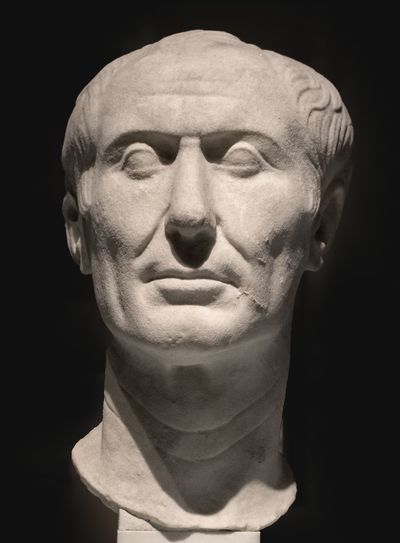
Julius Caesar
General · Ancient
83.3Total
Basic Information
Born
1961
-100
Died
—
-44
Era
Modern
Ancient
Nationality
France
Roman Republic
Occupation
Politician
General
Civilization
Western
Western
Score Comparison
Military (10%)
37.5
88.0
Political (20%)
57.2
78.0
Influence (20%)
67.1
85.0
Legacy (20%)
51.2
82.0
Leadership (15%)
78.8
82.0
Strategy (15%)
35.3
88.0
TOTAL
56.0
83.3
Rankings
🥇
Julius CaesarLeader
Mil: 88.0Pol: 78.0Inf: 85.0
83.3
🥈
Elisabeth Borne
Mil: 37.5Pol: 57.2Inf: 67.1
56.0
+27.3 behind
How This Comparison Works
Algorithm
Each figure is scored on 6 dimensions (0—100 scale) based on structured historical data: Military (10%), Political (20%), Influence (20%), Legacy (20%), Leadership (15%), Strategy (15%). The weighted total produces the final ranking.
Data Sources
Scores are computed from structured sub-indicators in the database. Scale factors adjust for era (Ancient ×0.85, Modern ×1.0) and civilization size (Eastern ×1.05, Other ×0.80) to account for differences in population and military scale.
Maximum 3 Figures
Comparisons are limited to 2—3 figures to ensure readability and statistical meaningfulness.
Error Margins
±5 points per dimension — Sub-scores are derived from historical records with inherent uncertainty. Two figures within 5 points on a dimension should be considered roughly equivalent in that area.
Total Score Accuracy
±3 points overall — The weighted combination of 6 dimensions produces a total score with approximately ±3 points of uncertainty. Differences of less than 3 points are not statistically significant— the figures are effectively tied.
Known Limitations
- Historical records are incomplete and uneven across civilizations
- Figures from oral-tradition societies may be underrepresented
- Occupation labels can misclassify multi-role figures
- Scores measure capability and impact, not moral character
- Quantitative scoring is a comparison tool, not absolute truth
Capability Radar
Military (10%) — Battles & Warfare
Battles
29
95
Win Rate
30
92
Expansion
36
97
Political (20%) — Governance & Reform
Reform
30
90
Diplomacy
30
85
Economy
25
82
Influence (20%) — Cultural & Global Reach
Cultural
10
88
Global
10
94
Legacy (20%) — Historical Impact
Historical
15
95
Longevity
10
96
Leadership (15%) — Power & Stability
Tenure
20
75
Stability
20
60
Strategy (15%) — Tactics & Innovation
Strategy
36
94
Tactics
41
96
Reform
44
88
Analysis will be generated on first visit.
Scores and timeline are available below. The page will refresh automatically when ready.
Elisabeth Borne — Complete Timeline
2022 AD
Appointed Prime Minister of FrancePolitical Action◆ Major
President Emmanuel Macron appointed
AppointmentGender Milestone
Impact: nationalconstructive
2023 AD
Invoked Article 49.3 to pass pension reformPolitical Action◆ Major
Borne used Article 49.3 of the French Constitution to force through a controversial pension reform raising the retirement age from 62 to 64, bypassing a parliamentary vote. This triggered widespread protests and no-confidence motions.
Pension ReformConstitutional CrisisProtests
Impact: nationaldestructive
2024 AD
Resigned as Prime MinisterPolitical Action◆ Major
Borne resigned as Prime Minister following political tensions and the aftermath of the pension reform. She was succeeded by Gabriel Attal.
ResignationGovernment Change
Impact: national
Similar Comparisons
Comments & Discussion
CAESAROPHOBE6/17/2026
Comparing Borne to Caesar is like comparing a calculator to a sword. Caesar conquered Gaul, crossed the Rubicon, and changed the course of history. Borne raised the retirement age from 62 to 64. The only thing they share is a title. This analysis tries to find depth in a shallow analogy. Caesar was a man who remade the world with legions; Borne is a functionary who managed a pension reform. The chasm isn't essential—it's comical.
元老院刺客6/17/2026
这种比较简直是学术界的标题党。凯撒是军事天才,征服高卢,改写欧洲版图;博恩呢?她连自己的内阁都管不住,最后被马克龙当弃子扔掉。说“时代塑造命运”?凯撒的命运是被元老院刺杀,博恩的命运是体面辞职。一个是千古悲剧,一个只是政治游戏。别把管理退休金的公务员和改写历史的人物放在一起,这既不尊重历史,也不尊重常识。
CLASSICS_DUDE6/17/2026
Oh please. Borne is a competent administrator in a stable democracy. Caesar was a law-breaking autocrat who destroyed the Roman Republic. The analysis frames Caesar’s “ambition” as a virtue, but his career was built on illegal commands, mass slaughter in Gaul, and a coup disguised as a consulship. Borne raised the retirement age—Caesar crossed a river with an army and started a civil war. If you want real comparison, put Borne next to a modern reformer like Macron or Merkel. Caesar belongs with
民主守卫者6/17/2026
说穿了,凯撒是古典时代的独裁模型,博恩是民主制度的执行者。凯撒用剑说话,博恩用法律和流程办事。分析里说“危机时期执政”——凯撒制造了危机,博恩只是在危机中努力工作。更可笑的是把“赢得战争、取悦民众、超越对手”当作成功秘诀,这听起来像是威权者的自我辩护。真正值得比较的不是个人命运,而是两种完全不同的权力逻辑。博恩至少不需要被人刺杀才能结束任期。
RETIREMENT_REFORMER6/17/2026
Look, I get the appeal of big historical drama, but this comparison fundamentally ignores the scale of governance. Caesar commanded armies and provinces; Borne managed a prime minister’s office in a parliamentary system under a hyper-presidential constitution. Her reform raised the pension age by two years—a tough but necessary step in an aging society. Caesar’s “reforms” included debt cancellation, land redistribution, and calendar reorganization—all while being a dictator. They operated in dif
边疆老兵6/17/2026
我打过仗,我告诉你,凯撒和博恩根本是两个物种。凯撒在战场上和士兵一起吃大麦,在暴