Loading...
Analysis will be generated on first visit.
Scores and timeline are available below. The page will refresh automatically when ready.
Franciszek Salezy Potocki vs Julius Caesar
Julius Caesar leads by 26.9 pts · 2 figures compared
…

Franciszek Salezy Potocki
Emperor · Modern
56.4Total
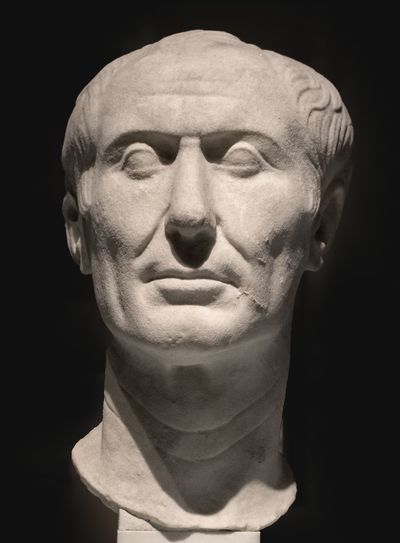
Julius Caesar
General · Ancient
83.3Total
Basic Information
Born
1700
-100
Died
1772
-44
Era
Modern
Ancient
Nationality
Poland-Lithuania
Roman Republic
Occupation
Emperor
General
Civilization
Western
Western
Score Comparison
Military (10%)
13.3
88.0
Political (20%)
68.1
78.0
Influence (20%)
69.3
85.0
Legacy (20%)
52.4
82.0
Leadership (15%)
84.3
82.0
Strategy (15%)
30.0
88.0
TOTAL
56.4
83.3
Rankings
🥇
Julius CaesarLeader
Mil: 88.0Pol: 78.0Inf: 85.0
83.3
🥈
Franciszek Salezy Potocki
Mil: 13.3Pol: 68.1Inf: 69.3
56.4
+26.9 behind
How This Comparison Works
Algorithm
Each figure is scored on 6 dimensions (0—100 scale) based on structured historical data: Military (10%), Political (20%), Influence (20%), Legacy (20%), Leadership (15%), Strategy (15%). The weighted total produces the final ranking.
Data Sources
Scores are computed from structured sub-indicators in the database. Scale factors adjust for era (Ancient ×0.85, Modern ×1.0) and civilization size (Eastern ×1.05, Other ×0.80) to account for differences in population and military scale.
Maximum 3 Figures
Comparisons are limited to 2—3 figures to ensure readability and statistical meaningfulness.
Error Margins
±5 points per dimension — Sub-scores are derived from historical records with inherent uncertainty. Two figures within 5 points on a dimension should be considered roughly equivalent in that area.
Total Score Accuracy
±3 points overall — The weighted combination of 6 dimensions produces a total score with approximately ±3 points of uncertainty. Differences of less than 3 points are not statistically significant— the figures are effectively tied.
Known Limitations
- Historical records are incomplete and uneven across civilizations
- Figures from oral-tradition societies may be underrepresented
- Occupation labels can misclassify multi-role figures
- Scores measure capability and impact, not moral character
- Quantitative scoring is a comparison tool, not absolute truth
Capability Radar
Military (10%) — Battles & Warfare
Battles
10
95
Win Rate
10
92
Expansion
10
97
Political (20%) — Governance & Reform
Reform
20
90
Diplomacy
30
85
Economy
50
82
Influence (20%) — Cultural & Global Reach
Cultural
20
88
Global
10
94
Legacy (20%) — Historical Impact
Historical
20
95
Longevity
10
96
Leadership (15%) — Power & Stability
Tenure
40
75
Stability
30
60
Strategy (15%) — Tactics & Innovation
Strategy
10
94
Tactics
10
96
Reform
10
88
Analysis will be generated on first visit.
Scores and timeline are available below. The page will refresh automatically when ready.
Franciszek Salezy Potocki — Complete Timeline
1755 AD
Appointed Palatine of KievPolitical Action◆ Major
Franciszek Salezy Potocki was appointed Palatine of Kiev, one of the highest offices in the Polish-Lithuanian Commonwealth. He used his position to expand his already vast landholdings and influence.
OfficeMagnate
Impact: regional
1760 AD
Became one of the richest men in EuropePolitical Action◆ Major
Potocki's wealth was legendary, with an estimated annual income of 3 million zlotys. He owned 130 towns and 7,400 villages, making him one of the richest magnates in Europe.
WealthMagnate
Impact: regional
1764 AD
Opposed reforms and supported the Golden LibertyPolitical Action◆ Major
Potocki was a staunch defender of the Golden Liberty and opposed the reforms of King Stanis
Golden LibertyConservatism
Impact: nationaldestructive
Similar Comparisons
Comments & Discussion
RUBICON_DENIER6/17/2026
Comparing Potocki to Caesar is absurd military history. Caesar crossed the Rubicon with a battle-hardened legion, gambled everything, and reshaped Western civilization. Potocki hoarded wealth in 130 towns while his Commonwealth disintegrated around him. Caesar won at Alesia and Pharsalus; Potocki couldn't even defend against the First Partition. One forged an empire, the other let his vanish. Nickname stands.
东方庄园主6/17/2026
这对比太抬举波托茨基了。恺撒在49BC带着第十三军团用八天拿下意大利,那是战略行动。波托茨基呢?1750年代光在基辅的地产就够养三个军团,可1772年分波兰时他连像样抵抗都没组织。钱多不顶用,缺乏历史眼光。波托茨基顶多是个大地主,跟恺撒不是一个量级。
DATA_MISFIT6/17/2026
The numbers tell a different story. Potocki's 3 million zloty annual income? That was roughly 7,500 kilograms of silver, per year. Caesar's war debt before Gaul was about 1,000 talents—roughly 26,000 kg of silver. Potocki had 130 towns; Caesar governed Cisalpine Gaul with probably fewer direct cities. But Caesar used wealth as a lever for power. Potocki just spent it on palaces. Financial prioritization matters.
西罗马余孽6/17/2026
作为古典学学者,这对比犯了根本错误:类型完全不同。恺撒是军事将领转型政治家,他写《高卢战记》时就在塑造自己的历史形象。波托茨基是典型的波兰贵族——富可敌国但政治幼稚。1772年瓜分时他选择流亡,而恺撒宁愿内战也不退让。一个是改变世界的人,一个是随世界沉浮的人。选边站:恺撒无疑。
REVISIONIST_BLADE6/17/2026
Let's rethink this. Potocki's real sin? He played the old noble game during an era of rising absolutism. Caesar saw Rome's senatorial system was rotting and acted. Potocki saw the Commonwealth's liberum veto wrecking governance and did nothing. In 1764, he opposed reform; by 1772, he was helpless. Both were ambitious, but Caesar had vision. Potocki had vanity. That's the fatal difference.