Loading...
Analysis will be generated on first visit.
Scores and timeline are available below. The page will refresh automatically when ready.
George C. Marshall vs Qin Shi Huang
Qin Shi Huang leads by 6.1 pts · 2 figures compared
…

George C. Marshall
General · Modern
77.4Total
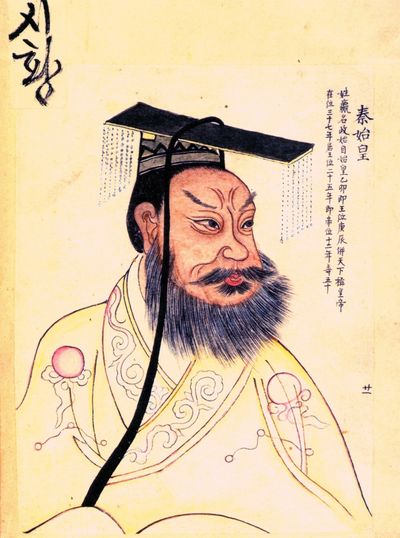
Qin Shi Huang
Emperor · Ancient
83.5Total
Basic Information
Born
1880
-259
Died
1959
-210
Era
Modern
Ancient
Nationality
United States
China
Occupation
General
Emperor
Civilization
Western
Eastern
Score Comparison
Military (10%)
56.3
80.0
Political (20%)
82.0
88.0
Influence (20%)
78.0
82.0
Legacy (20%)
78.0
85.0
Leadership (15%)
80.9
88.0
Strategy (15%)
80.5
75.0
TOTAL
77.4
83.5
Rankings
🥇
Qin Shi HuangLeader
Mil: 80.0Pol: 88.0Inf: 82.0
83.5
🥈
George C. Marshall
Mil: 56.3Pol: 82.0Inf: 78.0
77.4
+6.1 behind
How This Comparison Works
Algorithm
Each figure is scored on 6 dimensions (0—100 scale) based on structured historical data: Military (10%), Political (20%), Influence (20%), Legacy (20%), Leadership (15%), Strategy (15%). The weighted total produces the final ranking.
Data Sources
Scores are computed from structured sub-indicators in the database. Scale factors adjust for era (Ancient ×0.85, Modern ×1.0) and civilization size (Eastern ×1.05, Other ×0.80) to account for differences in population and military scale.
Maximum 3 Figures
Comparisons are limited to 2—3 figures to ensure readability and statistical meaningfulness.
Error Margins
±5 points per dimension — Sub-scores are derived from historical records with inherent uncertainty. Two figures within 5 points on a dimension should be considered roughly equivalent in that area.
Total Score Accuracy
±3 points overall — The weighted combination of 6 dimensions produces a total score with approximately ±3 points of uncertainty. Differences of less than 3 points are not statistically significant— the figures are effectively tied.
Known Limitations
- Historical records are incomplete and uneven across civilizations
- Figures from oral-tradition societies may be underrepresented
- Occupation labels can misclassify multi-role figures
- Scores measure capability and impact, not moral character
- Quantitative scoring is a comparison tool, not absolute truth
Capability Radar
Military (10%) — Battles & Warfare
Battles
45
85
Win Rate
55
90
Expansion
40
90
Political (20%) — Governance & Reform
Reform
95
95
Diplomacy
95
75
Economy
90
90
Influence (20%) — Cultural & Global Reach
Cultural
65
95
Global
85
85
Legacy (20%) — Historical Impact
Historical
85
95
Longevity
80
95
Leadership (15%) — Power & Stability
Tenure
75
70
Stability
85
65
Strategy (15%) — Tactics & Innovation
Strategy
85
85
Tactics
60
80
Reform
90
95
Analysis will be generated on first visit.
Scores and timeline are available below. The page will refresh automatically when ready.
George C. Marshall — Complete Timeline
1939 AD
Appointment as US Army Chief of StaffPolitical Action
Marshall was appointed Chief of Staff of the US Army on September 1, 1939, the day Germany invaded Poland. He oversaw the massive expansion and modernization of the US Army from a small peacetime force to a global fighting force of over 8 million soldiers.
World War IIMilitary ExpansionLeadership
Impact: globalconstructive
1944 AD
Oversight of the D-Day Invasion (Operation Overlord)War
As Chief of Staff, Marshall was instrumental in planning and executing the Allied invasion of Normandy on June 6, 1944. He coordinated the massive logistical effort and troop deployments that enabled the successful landings and the subsequent liberation of Western Europe.
World War IID-DayAllied Victory
Impact: globalconstructive
1947 AD
Announcement of the Marshall PlanReform
As Secretary of State, Marshall proposed the European Recovery Program (Marshall Plan) in a speech at Harvard University. The plan provided over $12 billion in economic aid to rebuild Western European economies after World War II, countering Soviet influence and fostering economic recovery.
Cold WarEconomic AidEuropean Recovery
Impact: globalconstructive
1953 AD
Receipt of the Nobel Peace PrizeCultural◆ Major
Marshall was awarded the Nobel Peace Prize for his role in the Marshall Plan and his efforts to promote post-war reconstruction and international cooperation. He was the first professional soldier to receive the prize.
Nobel PrizePeaceRecognition
Impact: globalconstructive
Qin Shi Huang — Complete Timeline
246 BC
Construction of the Mausoleum and Terracotta ArmyOther◆ Major
Qin Shi Huang commissioned a vast mausoleum complex near Xi'an, guarded by thousands of life-sized terracotta soldiers, horses, and chariots. The project employed hundreds of thousands of workers and reflected his obsession with immortality and imperial power.
Impact: global
230 BC
Conquest of the Six Warring StatesWar
From 230 to 221 BCE, Ying Zheng led the Qin state in a series of campaigns that conquered the Han, Zhao, Wei, Chu, Yan, and Qi states. This unified China under a single ruler for the first time, ending the Warring States period.
Impact: global
221 BC
Standardization of Writing, Currency, and MeasurementsReform◆ Major
Qin Shi Huang ordered the standardization of Chinese script, currency, and weights and measures across the unified empire. This facilitated administration, trade, and cultural integration, laying a foundation for future dynasties.
Impact: globalconstructive
Proclamation of the Qin DynastyPolitical Action
After conquering the last independent state, Ying Zheng declared himself Shi Huangdi (First Emperor), founding the Qin Dynasty. He adopted a new title to signify his supreme authority and initiated centralized imperial rule.
Impact: global
214 BC
Initiation of the Great Wall ConstructionOther◆ Major
Qin Shi Huang ordered the connection and extension of existing northern fortifications to create a unified defensive wall against nomadic Xiongnu raids. This project involved massive conscripted labor and became the precursor to the later Great Wall.
Impact: regional
213 BC
Burning of Books and Burying of ScholarsPolitical Action◆ Major
On the advice of Li Si, Qin Shi Huang ordered the burning of historical records and philosophical texts not aligned with Legalist doctrine. He also had 460 Confucian scholars buried alive to suppress dissent and consolidate ideological control.
Impact: nationaldestructive
Similar Comparisons
Comments & Discussion
五丈原的谋主6/17/2026
Marshall's genius was institutional, Qin's was totalitarian. Marshall built the Joint Chiefs, the Pentagon, and a logistics system that landed 2 million men in Europe within 18 months. Qin standardized writing and axle widths—but he also buried 460 scholars alive. One created a framework that outlasted him; the other left a pyramid of skulls. Don't confuse efficiency with effectiveness.
兵马俑的守夜人6/17/2026
拿马歇尔和始皇帝比?这是把打字机和青铜剑并排摆。始皇帝统一六国用了十年,杀了上百万人;马歇尔当参谋长度过四十年,没亲手杀过一个人。始皇帝的遗产是兵马俑和焚书坑儒,马歇尔的遗产是北约和马歇尔计划。一个靠恐惧统治,一个靠信任重建——你们真觉得这两者能相提并论?
The Pentagon Paperboy6/17/2026
Let's talk numbers. Qin's population was maybe 30 million; he mobilized 700,000 for his tomb alone, plus 300,000 for the Great Wall. That's 3.3% of his entire population in two projects—and we're still debating casualties. Marshall managed 8 million uniformed personnel, 16 million tons of supplies shipped, with a 0.5% desertion rate. The Chinese data is sand; the US data is steel. I trust the ledger.
铁血的改革者6/17/2026
你们都在美化马歇尔,却忘了他的局限性。他坚持种族隔离军队,拒绝使用黑人战斗部队直到1944年;始皇帝虽然残暴,但至少废除了分封制,建立了郡县制——这比美国废除奴隶制早了两千年。我是说,别急着把西装革履的将军捧上神坛。马歇尔在人权上的黑历史,未必比始皇帝的暴政更光彩。
The Grand Inquisitor of Effici6/17/2026
You're all missing the point. Both men understood the same truth: scale requires standardization. Qin standardized measures, writing, and laws—China's bureaucracy still bears his mark. Marshall standardized logistics, training, and command—the Pentagon still uses his staff system. The difference? Qin used force to achieve uniformity; Marshall used cooperation. But both solved the problem of the many with one vision. That's not a comparison—that's a mirror.