Loading...
Analysis will be generated on first visit.
Scores and timeline are available below. The page will refresh automatically when ready.
George II of Great Britain vs Julius Caesar
Julius Caesar leads by 16.4 pts · 2 figures compared
…

George II of Great Britain
Emperor · Modern
66.9Total
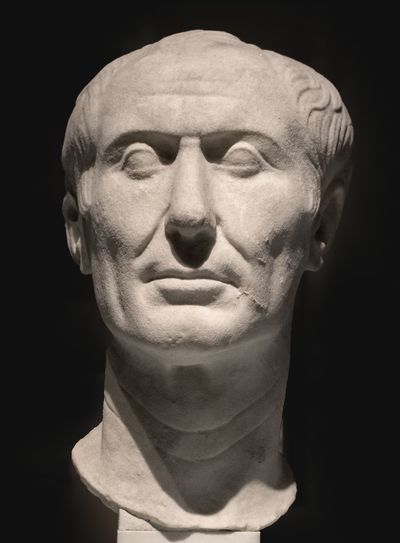
Julius Caesar
General · Ancient
83.3Total
Basic Information
Born
1683
-100
Died
1760
-44
Era
Modern
Ancient
Nationality
United Kingdom
Roman Republic
Occupation
Emperor
General
Civilization
Western
Western
Score Comparison
Military (10%)
62.7
88.0
Political (20%)
67.0
78.0
Influence (20%)
72.3
85.0
Legacy (20%)
66.5
82.0
Leadership (15%)
75.0
82.0
Strategy (15%)
54.6
88.0
TOTAL
66.9
83.3
Rankings
🥇
Julius CaesarLeader
Mil: 88.0Pol: 78.0Inf: 85.0
83.3
🥈
George II of Great Britain
Mil: 62.7Pol: 67.0Inf: 72.3
66.9
+16.4 behind
How This Comparison Works
Algorithm
Each figure is scored on 6 dimensions (0—100 scale) based on structured historical data: Military (10%), Political (20%), Influence (20%), Legacy (20%), Leadership (15%), Strategy (15%). The weighted total produces the final ranking.
Data Sources
Scores are computed from structured sub-indicators in the database. Scale factors adjust for era (Ancient ×0.85, Modern ×1.0) and civilization size (Eastern ×1.05, Other ×0.80) to account for differences in population and military scale.
Maximum 3 Figures
Comparisons are limited to 2—3 figures to ensure readability and statistical meaningfulness.
Error Margins
±5 points per dimension — Sub-scores are derived from historical records with inherent uncertainty. Two figures within 5 points on a dimension should be considered roughly equivalent in that area.
Total Score Accuracy
±3 points overall — The weighted combination of 6 dimensions produces a total score with approximately ±3 points of uncertainty. Differences of less than 3 points are not statistically significant— the figures are effectively tied.
Known Limitations
- Historical records are incomplete and uneven across civilizations
- Figures from oral-tradition societies may be underrepresented
- Occupation labels can misclassify multi-role figures
- Scores measure capability and impact, not moral character
- Quantitative scoring is a comparison tool, not absolute truth
Capability Radar
Military (10%) — Battles & Warfare
Battles
55
95
Win Rate
60
92
Expansion
40
97
Political (20%) — Governance & Reform
Reform
45
90
Diplomacy
60
85
Economy
55
82
Influence (20%) — Cultural & Global Reach
Cultural
40
88
Global
45
94
Legacy (20%) — Historical Impact
Historical
50
95
Longevity
40
96
Leadership (15%) — Power & Stability
Tenure
70
75
Stability
65
60
Strategy (15%) — Tactics & Innovation
Strategy
50
94
Tactics
45
96
Reform
30
88
Analysis will be generated on first visit.
Scores and timeline are available below. The page will refresh automatically when ready.
George II of Great Britain — Complete Timeline
1740 AD
War of the Austrian SuccessionWar◆ Major
George II involved Britain in the War of the Austrian Succession, fighting against France and Spain. British forces achieved victories at Dettingen and Fontenoy. The war ended with the Treaty of Aix-la-Chapelle in 1748, which returned conquered territories.
WarEuropean ConflictTreaty
Impact: global
1743 AD
Battle of DettingenWar◆ Major
George II personally led British and allied forces to victory over the French at Dettingen in Bavaria. He was the last British monarch to command troops in battle. This victory was part of the War of the Austrian Succession.
BattleWar of Austrian SuccessionPersonal Command
Impact: regional
1745 AD
Jacobite Rising of 1745War◆ Major
George II faced a major Jacobite rebellion led by Charles Edward Stuart (Bonnie Prince Charlie). The rebels advanced into England but were defeated at the Battle of Culloden in 1746. This ended the Stuart threat to the Hanoverian throne.
Jacobite RebellionCullodenStuart Claimant
Impact: national
1760 AD
Death from Aortic DissectionOther
George II died of an aortic dissection at Kensington Palace at age 76. He was buried in Westminster Abbey. His death passed the throne to his grandson George III. His reign saw the expansion of British colonial power.
DeathSuccessionMonarchy
Impact: national
Similar Comparisons
Comments & Discussion
CRITICAL_CASER6/17/2026
Caesar? Please. George II actually won a battlefield victory commanding troops, at Dettingen, with musket balls flying past his wig. Caesar got lucky crossing the Rubicon against a divided opposition—Pompey wasn’t even in Italy. Give me a monarch who bled on horseback, not one who wrote memoirs to polish his own statue. George was the last real fighting king of Europe. Caesar was a glorified politician with a sword.
历史解构师6/17/2026
把乔治二世跟凯撒比?这不叫对比,叫范畴错误。凯撒在八年高卢战争里屠杀了据说一百万人口,而乔治二世参加的德廷根战役只能算一场警察行动。凯撒改造了西方政治结构,直接催生了罗马帝国;乔治二世不过是在汉诺威和英国之间来回跑,连英语都说不利索。一个是真的在改写历史剧本,另一个只是勉强背出了自己的台词。
NUMBERS_GUY6/17/2026
Let’s talk scale: Caesar fought over 40 major battles across Gaul, Britain, and the Civil Wars, often outnumbered. George II led exactly one battlefield charge—at Dettingen—and that was more symbolic than strategic. The casualty figures aren’t even close: Caesar’s campaigns involved hundreds of thousands of combatants; Dettingen had maybe 50,000 total. You can’t compare a man who redrew the map of Europe to one who just held his place in it.
战史批评家6/17/2026
军迷们总爱吹德廷根,但事实上乔治二世当时差点被自己的马甩下去,指挥权实际掌握在坎伯兰公爵手里。凯撒在高卢的阿莱西亚围城战同时对抗内外夹击,那种多线操作的能力才是真正的军事天才。乔治不是战略家,只是个穿着甲胄去摆拍的君主,而凯撒定义了两千年来的战争艺术。一个是真刀真枪的将帅,一个是镀金的泥塑偶像。