Loading...
Analysis will be generated on first visit.
Scores and timeline are available below. The page will refresh automatically when ready.
Jose Maria Sison vs Qin Shi Huang
Qin Shi Huang leads by 24.4 pts · 2 figures compared
…
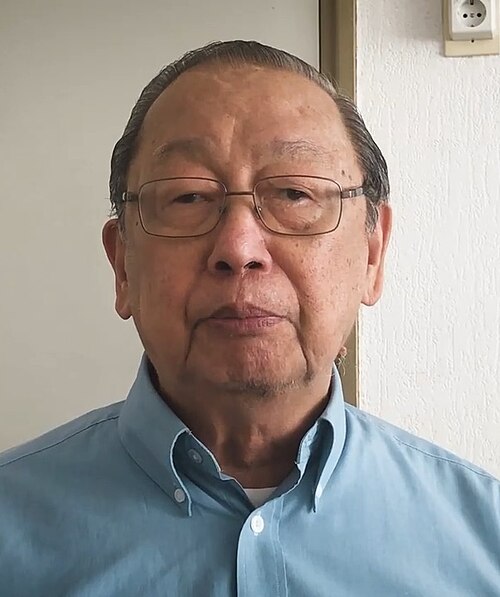
Jose Maria Sison
Revolutionary · Modern
59.1Total
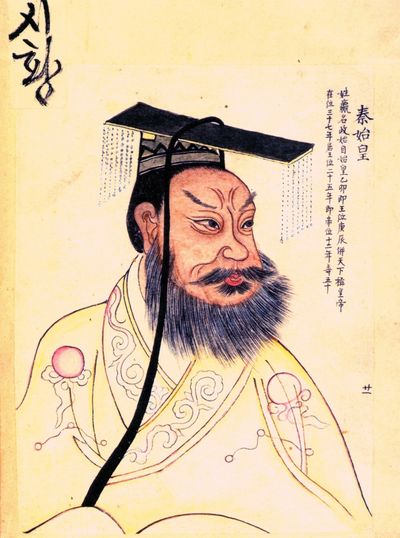
Qin Shi Huang
Emperor · Ancient
83.5Total
Basic Information
Born
1939
-259
Died
—
-210
Era
Modern
Ancient
Nationality
Philippines
China
Occupation
Revolutionary
Emperor
Civilization
Eastern
Eastern
Score Comparison
Military (10%)
52.0
80.0
Political (20%)
54.4
88.0
Influence (20%)
74.8
82.0
Legacy (20%)
63.2
85.0
Leadership (15%)
73.0
88.0
Strategy (15%)
30.0
75.0
TOTAL
59.1
83.5
Rankings
🥇
Qin Shi HuangLeader
Mil: 80.0Pol: 88.0Inf: 82.0
83.5
🥈
Jose Maria Sison
Mil: 52.0Pol: 54.4Inf: 74.8
59.1
+24.4 behind
How This Comparison Works
Algorithm
Each figure is scored on 6 dimensions (0—100 scale) based on structured historical data: Military (10%), Political (20%), Influence (20%), Legacy (20%), Leadership (15%), Strategy (15%). The weighted total produces the final ranking.
Data Sources
Scores are computed from structured sub-indicators in the database. Scale factors adjust for era (Ancient ×0.85, Modern ×1.0) and civilization size (Eastern ×1.05, Other ×0.80) to account for differences in population and military scale.
Maximum 3 Figures
Comparisons are limited to 2—3 figures to ensure readability and statistical meaningfulness.
Error Margins
±5 points per dimension — Sub-scores are derived from historical records with inherent uncertainty. Two figures within 5 points on a dimension should be considered roughly equivalent in that area.
Total Score Accuracy
±3 points overall — The weighted combination of 6 dimensions produces a total score with approximately ±3 points of uncertainty. Differences of less than 3 points are not statistically significant— the figures are effectively tied.
Known Limitations
- Historical records are incomplete and uneven across civilizations
- Figures from oral-tradition societies may be underrepresented
- Occupation labels can misclassify multi-role figures
- Scores measure capability and impact, not moral character
- Quantitative scoring is a comparison tool, not absolute truth
Capability Radar
Military (10%) — Battles & Warfare
Battles
5
85
Win Rate
5
90
Expansion
10
90
Political (20%) — Governance & Reform
Reform
40
95
Diplomacy
30
75
Economy
20
90
Influence (20%) — Cultural & Global Reach
Cultural
40
95
Global
40
85
Legacy (20%) — Historical Impact
Historical
50
95
Longevity
40
95
Leadership (15%) — Power & Stability
Tenure
60
70
Stability
15
65
Strategy (15%) — Tactics & Innovation
Strategy
10
85
Tactics
10
80
Reform
15
95
Analysis will be generated on first visit.
Scores and timeline are available below. The page will refresh automatically when ready.
Jose Maria Sison — Complete Timeline
1968 AD
Founded the Communist Party of the PhilippinesPolitical Action◆ Major
Sison re-established the Communist Party of the Philippines (CPP) along Maoist lines, breaking from the old Partido Komunista ng Pilipinas. The CPP launched a protracted people's war against the Philippine state, becoming one of Asia's longest-running insurgencies.
CommunismMaoismInsurgency
Impact: nationaldestructive
1969 AD
Founded the New People's ArmyPolitical Action◆ Major
Sison established the New People's Army (NPA) as the armed wing of the CPP. The NPA began guerrilla operations in rural areas, targeting government forces and infrastructure. The group has been designated a terrorist organization by the Philippines and the US.
GuerrillaInsurgencyArmed Struggle
Impact: nationaldestructive
1977 AD
Arrested and imprisoned under MarcosPolitical Action◆ Major
Sison was arrested by the Marcos regime and imprisoned for seven years. During his detention, he continued to direct the CPP/NPA through written orders smuggled out of prison. He was released in 1986 after the People Power Revolution.
ImprisonmentMartial LawMarcos
Impact: nationaltragic
1987 AD
Exiled to the NetherlandsPolitical Action◆ Major
After the 1986 revolution, Sison went into self-exile in the Netherlands. From there, he continued to lead the CPP/NPA, issuing directives and negotiating peace talks with the Philippine government. He remains in exile as of 2024.
ExilePeace TalksLeadership
Impact: national
Qin Shi Huang — Complete Timeline
246 BC
Construction of the Mausoleum and Terracotta ArmyOther◆ Major
Qin Shi Huang commissioned a vast mausoleum complex near Xi'an, guarded by thousands of life-sized terracotta soldiers, horses, and chariots. The project employed hundreds of thousands of workers and reflected his obsession with immortality and imperial power.
Impact: global
230 BC
Conquest of the Six Warring StatesWar
From 230 to 221 BCE, Ying Zheng led the Qin state in a series of campaigns that conquered the Han, Zhao, Wei, Chu, Yan, and Qi states. This unified China under a single ruler for the first time, ending the Warring States period.
Impact: global
221 BC
Standardization of Writing, Currency, and MeasurementsReform◆ Major
Qin Shi Huang ordered the standardization of Chinese script, currency, and weights and measures across the unified empire. This facilitated administration, trade, and cultural integration, laying a foundation for future dynasties.
Impact: globalconstructive
Proclamation of the Qin DynastyPolitical Action
After conquering the last independent state, Ying Zheng declared himself Shi Huangdi (First Emperor), founding the Qin Dynasty. He adopted a new title to signify his supreme authority and initiated centralized imperial rule.
Impact: global
214 BC
Initiation of the Great Wall ConstructionOther◆ Major
Qin Shi Huang ordered the connection and extension of existing northern fortifications to create a unified defensive wall against nomadic Xiongnu raids. This project involved massive conscripted labor and became the precursor to the later Great Wall.
Impact: regional
213 BC
Burning of Books and Burying of ScholarsPolitical Action◆ Major
On the advice of Li Si, Qin Shi Huang ordered the burning of historical records and philosophical texts not aligned with Legalist doctrine. He also had 460 Confucian scholars buried alive to suppress dissent and consolidate ideological control.
Impact: nationaldestructive
Similar Comparisons
Comments & Discussion
帝国铁拳6/17/2026
Calling this a comparison is like comparing a sledgehammer to a sewing needle. Qin Shi Huang unified China through mass conscription, standardized writing and measures—actual empire-building with physical borders and roads. Sison, meanwhile, wrote pamphlets from the Netherlands. The First Emperor built the Great Wall; Sison built a laptop revolution. One shaped history for two millennia; the other shaped a footnote. Give me granite over gigabytes any day.
数据稻草人6/17/2026
Let's talk numbers. Qin ruled 20+ million people across 1.5 million square miles. Sison's NPA never controlled more than a few thousand square kilometers of jungle, maybe 10,000 fighters at peak. The First Emperor raised armies of 300,000; Sison couldn't assemble 3,000 for a parade. If we're comparing impact per capita, it's not even close. One man had the scale of a continent; the other had the scope of a campus protest. My data says: Emperor wins, hands down.
历史幽灵6/17/2026
秦始皇烧书坑儒,而西松写了三十本理论著作。一个是毁灭思想,一个是生产思想——但结果呢?秦朝的思想控制让中国统一了两千年,西松的毛主义理论让菲律宾农村死了四万人还打不赢政府。谁更有效?焚书坑儒至少换来了稳定的帝国骨架;西松的"人民战争"换来了无尽的坟墓和毫无进展的政治僵局。我选秦始皇,因为他知道思想要么被利用,要么被埋葬。
农村战略家6/17/2026
重点不在于谁更"成功",而在于谁理解了农民。秦始皇修长城、开驰道、建兵马俑——全是国家暴力工程,农民只是砖瓦。西松则把枪交给农民,让他们打地主、夺土地、建立根据地。一个是自上而下的镇压机器,一个是自下而上的武装觉醒。你们嘲笑他没赢,但菲律宾农村的革命火种至今未灭。两千年前皇帝赢了,今天呢?帝国早灭了,山上的枪还在响。
文人考古者6/17/2026
你们都在比较权力规模,却忽略了核心差异:秦始皇是以暴力终结了战国,西松是以暴力延续了贫穷。秦始皇的严刑峻法虽然残暴,但建立了统一的市场和法律体系,为汉唐盛世铺了路。西松的"新人民军"呢?四十年游击战,打烂了菲律宾的农村经济,让农民更穷、更绝望、更被军队和叛军两面勒索。一个暴君开创了文明,一个理论家拖垮了国家。历史会记住秦始皇的统一,但不会记住连政权都没拿到的空想家。