Loading...
Julius Caesar vs Mohamed Bouazizi
Julius Caesar leads by 22.5 pts · 2 figures compared
…
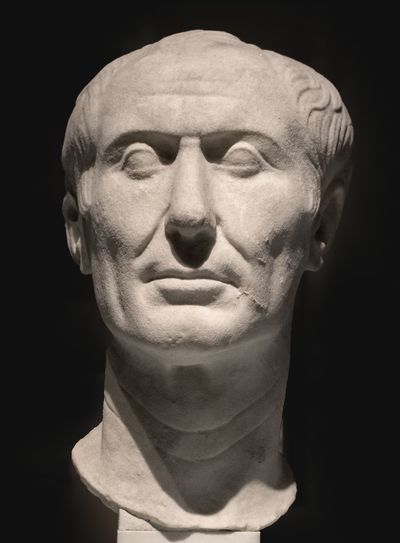
Julius Caesar
General · Ancient
83.3Total

Mohamed Bouazizi
Revolutionary · Modern
60.8Total
Basic Information
Born
-100
1984
Died
-44
—
Era
Ancient
Modern
Nationality
Roman Republic
Tunisia
Occupation
General
Revolutionary
Civilization
Western
Middle Eastern
Score Comparison
Military (10%)
88.0
49.4
Political (20%)
78.0
62.8
Influence (20%)
85.0
71.3
Legacy (20%)
82.0
60.1
Leadership (15%)
82.0
73.5
Strategy (15%)
88.0
39.8
TOTAL
83.3
60.8
Rankings
🥇
Julius CaesarLeader
Mil: 88.0Pol: 78.0Inf: 85.0
83.3
🥈
Mohamed Bouazizi
Mil: 49.4Pol: 62.8Inf: 71.3
60.8
+22.5 behind
How This Comparison Works
Algorithm
Each figure is scored on 6 dimensions (0—100 scale) based on structured historical data: Military (10%), Political (20%), Influence (20%), Legacy (20%), Leadership (15%), Strategy (15%). The weighted total produces the final ranking.
Data Sources
Scores are computed from structured sub-indicators in the database. Scale factors adjust for era (Ancient ×0.85, Modern ×1.0) and civilization size (Eastern ×1.05, Other ×0.80) to account for differences in population and military scale.
Maximum 3 Figures
Comparisons are limited to 2—3 figures to ensure readability and statistical meaningfulness.
Error Margins
±5 points per dimension — Sub-scores are derived from historical records with inherent uncertainty. Two figures within 5 points on a dimension should be considered roughly equivalent in that area.
Total Score Accuracy
±3 points overall — The weighted combination of 6 dimensions produces a total score with approximately ±3 points of uncertainty. Differences of less than 3 points are not statistically significant— the figures are effectively tied.
Known Limitations
- Historical records are incomplete and uneven across civilizations
- Figures from oral-tradition societies may be underrepresented
- Occupation labels can misclassify multi-role figures
- Scores measure capability and impact, not moral character
- Quantitative scoring is a comparison tool, not absolute truth
Capability Radar
Military (10%) — Battles & Warfare
Battles
95
41
Win Rate
92
41
Expansion
97
47
Political (20%) — Governance & Reform
Reform
90
57
Diplomacy
85
61
Economy
82
68
Influence (20%) — Cultural & Global Reach
Cultural
88
30
Global
94
55
Legacy (20%) — Historical Impact
Historical
95
55
Longevity
96
40
Leadership (15%) — Power & Stability
Tenure
75
59
Stability
60
66
Strategy (15%) — Tactics & Innovation
Strategy
94
51
Tactics
96
53
Reform
88
56
Expert Analysis
# 两团火焰:恺撒与布瓦吉吉的宿命与回响
2010年12月17日,突尼斯小镇西迪布济德,一名26岁的水果小贩站在市政厅前,将打火机油浇在自己身上。火焰吞噬他的那一刻,没有人想到这团火会点燃整个阿拉伯世界。而两千一百五十四年前,在罗马元老院的地板上,另一团火焰——权力与野心的火焰——正从六十把匕首的伤口中熄灭。
这两个人,一个征服了高卢,一个连高中都没毕业;一个统治过从西班牙到叙利亚的帝国,一个连自己摊位上的苹果都保不住;一个的名字被刻在历法上,一个的名字被绣在抗议者的旗帜上。但他们都在人类历史的转折点上,点燃了改变世界的火焰。
命运的起点
公元前100年,恺撒出生在罗马最古老的贵族家庭之一。他的姑父是马略,岳父是秦纳——两位曾经撼动共和国的风云人物。他从小就知道,自己的血管里流淌着权力的血液。罗马共和国此时已经病入膏肓:元老院腐败,贫富悬殊,流亡的将军们带着私军横行。恺撒在这样的世界里长大,他学会的不是如何遵守规则,而是如何利用规则。
1984年,布瓦吉吉出生在突尼斯南部一个贫困的橄榄农家庭。他从未见过父亲——父亲在他三岁时就去世了。母亲带着六个孩子,住在没有自来水的泥屋里。他十岁就开始打工,高中辍学后,靠摆水果摊养活母亲和兄弟姐妹。他生活的世界,是一个表面稳定、实则窒息的国家:本·阿里总统已经统治了二十三年,失业率高达百分之三十,警察随意没收小贩的货物,年轻人除了绝望一无所有。
恺撒生来就站在世界的顶端,只是需要爬得更高;布瓦吉吉生来就站在谷底,只求不要被踩得更深。
崛起之路
恺撒的崛起是一部精心策划的权力剧本。三十一岁担任财务官,三十七岁担任大祭司,四十岁担任执政官——每一步都踩在共和国的制度裂缝上。他和庞培、克拉苏秘密结成“前三头同盟”,用金钱和联姻编织权力网络。他最聪明的一步棋是高卢总督职位:八年间,他征服了三百多个部落,杀死了一百万高卢人,俘虏了同样数量的人。这场战争不仅让罗马人崇拜他,还让他拥有了罗马最忠诚、最精锐的军队——以及取之不尽的战利品来收买人心。
布瓦吉吉的崛起只有一瞬间。2010年12月17日上午,他的货物被警察没收,原因是“没有经营许可证”。他试图向省政府投诉,却连省长的面都见不到。一名女警察当众扇了他耳光,吐口水在他脸上。这个从十岁起就默默承受一切的男人,在那一刻崩溃了。他跑到省政府门口,喊了一句:“你们不让我活,我就烧死自己。”然后点燃了火柴。
恺撒用了四十年,用剑和笔征服世界;布瓦吉吉用了六十秒,用火柴和汽油点燃了一个时代。
巅峰与低谷
恺撒的巅峰是公元前46年的四重凯旋式:高卢、埃及、本都、阿非利加——四个被征服的王国在罗马街头游行。他被任命为终身独裁官,头像被铸在硬币上,月份以他的名字命名。但他最辉煌的时刻也是最危险的时刻:共和派元老们惊恐地发现,这个人已经不再是“第一公民”,而是“国王”了。公元前44年3月15日,六十名元老将他刺死在庞培议事厅。他倒在血泊中,用袍子遮住脸——不是出于尊严,而是因为他看到布鲁图斯,那个他当作儿子的人,也举起了匕首。
布瓦吉吉的巅峰是他被烧伤后躺在病床上的十八天。他从未亲眼看到自己引发的风暴:突尼斯全国爆发抗议,本·阿里政权在二十八天内垮台;埃及的穆巴拉克、利比亚的卡扎菲、也门的萨利赫——一个个铁腕统治者在他点燃的火焰中倒下。但他也从未享受过胜利的果实:2011年1月4日,他因全身百分之九十烧伤去世,年仅二十六岁。他死的时候,突尼斯人还在街上与警察对峙。
恺撒死在权力的巅峰,布瓦吉吉死在绝望的谷底——但他们都用自己的死亡,为历史画下了一个惊叹号。
历史的回响
恺撒留下了什么?他留下了罗马帝国——虽然他自己没能活着看到。他留下的历法沿用至今,他留下的政治体制成为后世君主的模板,他留下的《高卢战记》至今仍是拉丁文学的经典。但他也留下了一个危险的先例:一个人可以凭借军队和个人魅力,摧毁一个延续了五百年的共和国。两千年来,每一个试图独裁的野心家,都会在梦里看到恺撒的影子。
布瓦吉吉留下了什么?他留下了一个被点燃的阿拉伯世界。突尼斯的“茉莉花革命”蔓延到埃及、利比亚、叙利亚、也门——四个独裁者倒台,三个国家陷入内战,数百万人流离失所。他留下的不是完美的民主,而是希望的种子和痛苦的代价。就像恺撒死后罗马陷入了十三年的内战,阿拉伯之春后的中东至今仍在流血。
结语
恺撒征服了世界,却被自己的野心吞噬;布瓦吉吉点燃了革命,却被革命本身淹没。他们一个是权力的化身,一个是绝望的象征。但他们都证明了一个残酷的真理:历史从不按照任何人的剧本上演。恺撒以为自己能拯救共和国,结果他葬送了它;布瓦吉吉以为自己只是烧死了一个小贩,结果他唤醒了整个中东。
火焰熄灭后,留下的是灰烬——以及从灰烬中长出的、谁也无法预料的东西。
Frequently Asked Questions
Who ranks highest among Julius Caesar, Mohamed Bouazizi?
Based on our six-dimension data-driven analysis, the ranking is determined by comparing Military, Political, Influence, Legacy, Leadership, and Strategy scores derived from quantifiable historical metrics. See the full analysis for the detailed comparison.
How accurate is this comparison?
The scoring system has a ±3 point error margin per dimension and ±3 points overall. Figures within 3 points are considered statistically tied. The analysis uses structured historical data but cannot capture every nuance of historical context.
Mohamed Bouazizi — Complete Timeline
2010 AD
Self-immolation in Sidi BouzidPolitical Action
Mohamed Bouazizi, a fruit vendor in Sidi Bouzid, set himself on fire on December 17, 2010, after police confiscated his cart and humiliated him. His act of protest against corruption and unemployment sparked mass demonstrations across Tunisia.
Arab SpringProtestSelf-immolation
Impact: globaltragic
2011 AD
Death from burnsOther◆ Major
Bouazizi died on January 4, 2011, from severe burns sustained in his self-immolation. His death intensified the Tunisian protests, which escalated into a full-scale revolution that ousted President Zine El Abidine Ben Ali on January 14, 2011.
Arab SpringTunisian RevolutionMartyrdom
Impact: globaltragic
Similar Comparisons
Comments & Discussion
CohortVictor6/18/2026
Comparing Caesar to Bouazizi is absurd. One conquered Gaul and reshaped Western civilization; the other self-immolated as a protest symbol. Bouazizi’s act sparked the Arab Spring, but he wasn’t a strategist—Caesar’s military reforms like the *Legio X* siege at Alesia dwarf Bouazizi’s tactical void. Value the spark, but don’t conflate protest with power.
长安铁甲6/18/2026
把凯撒和布阿齐齐放在天平两端,简直是历史认知的失衡。凯撒在鲁比孔河前用10年征服高卢,布阿齐齐的推车市场被扣只是个体悲剧。前者工程学与法律遗产至今流转,后者象征燃尽即灭。历史评分若要公平,就不能把火花与灯塔等同。
StatsSkepticDan6/18/2026
Data-wise, this comparison falters on impact scale. Bouazizi’s death triggered mass uprisings across 15 nations, toppling four regimes—a measurable geopolitical shift. Caesar’s longest impact is abstract: imperial structures that decayed. If we weigh casualties, Caesar’s Gallic campaigns killed a million; Bouazizi’s symbol cost 200,000 lives in Syria alone. Raw numbers tip the scale differently.
青简墨客6/18/2026
两人同列,却如星火与巨柱。凯撒在元老院前死于23刀,却成就罗马帝国基石;布阿齐齐以一己之焰点燃阿拉伯之春,却见证后续悲剧。历史不唯功过,更看遗产纯度:凯撒留下法律与日历,布阿齐齐留下未竟的变革。我投凯撒,但尊重那瞬火光。
MarbleFist6/18/2026
Bouazizi out-Caesars Caesar in one catastrophic move. Caesar played politics with legions; Bouazizi played politics with his body. The 2011 uprisings reshaped global diplomacy, oil markets, and refugee flows—Caesar’s reforms were olive oil and Latin. If legacy means tangible change, Bouazizi’s match blows Caesar’s empire out of the water.