Loading...
Julius Caesar vs Nevsehirli Damat Ibrahim
Julius Caesar leads by 17.7 pts · 2 figures compared
…
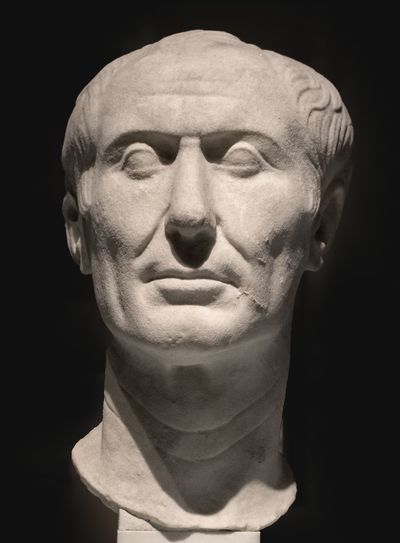
Julius Caesar
General · Ancient
83.3Total

Nevsehirli Damat Ibrahim
Politician · Modern
65.6Total
Basic Information
Born
-100
1666
Died
-44
1730
Era
Ancient
Modern
Nationality
Roman Republic
Ottoman Empire
Occupation
General
Politician
Civilization
Western
Middle Eastern
Score Comparison
Military (10%)
88.0
28.0
Political (20%)
78.0
68.7
Influence (20%)
85.0
73.9
Legacy (20%)
82.0
63.5
Leadership (15%)
82.0
83.7
Strategy (15%)
88.0
59.9
TOTAL
83.3
65.6
Rankings
🥇
Julius CaesarLeader
Mil: 88.0Pol: 78.0Inf: 85.0
83.3
🥈
Nevsehirli Damat Ibrahim
Mil: 28.0Pol: 68.7Inf: 73.9
65.6
+17.7 behind
How This Comparison Works
Algorithm
Each figure is scored on 6 dimensions (0—100 scale) based on structured historical data: Military (10%), Political (20%), Influence (20%), Legacy (20%), Leadership (15%), Strategy (15%). The weighted total produces the final ranking.
Data Sources
Scores are computed from structured sub-indicators in the database. Scale factors adjust for era (Ancient ×0.85, Modern ×1.0) and civilization size (Eastern ×1.05, Other ×0.80) to account for differences in population and military scale.
Maximum 3 Figures
Comparisons are limited to 2—3 figures to ensure readability and statistical meaningfulness.
Error Margins
±5 points per dimension — Sub-scores are derived from historical records with inherent uncertainty. Two figures within 5 points on a dimension should be considered roughly equivalent in that area.
Total Score Accuracy
±3 points overall — The weighted combination of 6 dimensions produces a total score with approximately ±3 points of uncertainty. Differences of less than 3 points are not statistically significant— the figures are effectively tied.
Known Limitations
- Historical records are incomplete and uneven across civilizations
- Figures from oral-tradition societies may be underrepresented
- Occupation labels can misclassify multi-role figures
- Scores measure capability and impact, not moral character
- Quantitative scoring is a comparison tool, not absolute truth
Capability Radar
Military (10%) — Battles & Warfare
Battles
95
10
Win Rate
92
10
Expansion
97
10
Political (20%) — Governance & Reform
Reform
90
65
Diplomacy
85
70
Economy
82
65
Influence (20%) — Cultural & Global Reach
Cultural
88
55
Global
94
30
Legacy (20%) — Historical Impact
Historical
95
50
Longevity
96
40
Leadership (15%) — Power & Stability
Tenure
75
60
Stability
60
30
Strategy (15%) — Tactics & Innovation
Strategy
94
15
Tactics
96
15
Reform
88
20
Expert Analysis
# 当玫瑰与利剑相遇:恺撒与易卜拉欣帕夏的两种帝国之梦
公元1718年的秋天,伊斯坦布尔的郁金香开得正盛。内夫谢希尔利·达马特·易卜拉欣帕夏站在苏丹艾哈迈德三世的宫殿里,刚刚被任命为大维齐尔。他望着博斯普鲁斯海峡对岸的欧洲,心中盘算着如何用丝绸、诗歌和谈判桌,为奥斯曼帝国赢得和平与繁荣。他绝不会想到,十二年后,一场由鱼贩子发起的暴动会让他身首异处。
一千八百年前,另一位帝国缔造者站在卢比孔河畔。盖乌斯·尤利乌斯·恺撒凝视着对岸的罗马,他选择的不是郁金香,而是利剑。“骰子已经掷下”,他说完这句话,便率军跨过那条不可逾越的河流。从此,罗马共和国的命运被永远改写。
这两位相隔近两千年的政治家,一个在西方,一个在东方;一个靠征服书写传奇,一个用文化编织梦想。他们的故事,是两种截然不同的帝国治理哲学——剑与玫瑰的较量。
命运的起点:从废墟中崛起的两种力量
恺撒出生于公元前100年的罗马,一个贵族家庭的孩子,却成长于共和国最动荡的时期。马略与苏拉的内战撕裂了罗马,贵族与平民的对立日益尖锐。在这样的时代,一个年轻人要么选择沉默,要么选择征服。恺撒选择了后者。他年轻时曾被海盗绑架,却反过来威胁海盗:“等我自由了,我会回来把你们全部钉死在十字架上。”这不是少年的狂妄,而是他对命运的态度:永远主动出击。
易卜拉欣帕夏则出生于1666年的内夫谢希尔,一个安纳托利亚的小镇。他的帝国——奥斯曼——正处于“停滞期”。1683年维也纳之战的失败,标志着奥斯曼在欧洲扩张的终结。与恺撒的“进取”相反,易卜拉欣的时代主题是“守成”。他从小目睹帝国从巅峰滑落,学会了在夹缝中生存的艺术。他不是征服者,而是调解者。
一个在帝国的上升期长大,一个在帝国的下行期崛起。命运的起点,已经为两人的结局埋下了伏笔。
崛起之路:渡河与折腰
恺撒的崛起是罗马式的——通过军事胜利积累政治资本。他在高卢的八年征战(公元前58-50年),不仅征服了今天法国、比利时和荷兰的大片土地,更打造了一支对他个人绝对忠诚的军队。他亲自撰写的《高卢战记》,既是战史,也是政治宣传。他明白,在罗马,名声和军队就是一切。
易卜拉欣帕夏的崛起则是奥斯曼式的——通过宫廷政治和婚姻纽带。他娶了苏丹的女儿,成为“达马特”(驸马)。他的政治资本不是来自战场,而是来自宴会厅和书房。1718年《帕萨罗维茨条约》签署后,奥斯曼帝国失去了对匈牙利和塞尔维亚的控制,苏丹需要一个能够稳定局势的人。易卜拉欣帕夏被任命为大维齐尔,他的任务不是扩张,而是休养生息。
恺撒的崛起像一场暴风雨,摧枯拉朽;易卜拉欣的崛起像一场细雨,润物无声。但细雨也可能引发泥石流。
治国之道:剑与玫瑰的双重奏
恺撒的政治哲学可以概括为“征服后重建”。成为独裁官后,他推行了一系列改革:改革历法(儒略历)、扩大罗马公民权、重新分配土地、建立公共工程。他的军事评分(88分)和政治评分(78分)都极高,但更值得注意的是他的战略评分(88分)——他懂得如何将军事胜利转化为制度创新。
易卜拉欣帕夏的治国理念则是“文化繁荣取代军事扩张”。他开启了“郁金香时代”(1718-1730),大规模引进欧洲的郁金香品种,在伊斯坦布尔建造花园和宫殿,赞助诗歌、绘画和建筑。他还建立了奥斯曼帝国最早的印刷厂之一。他的政治评分(68.7分)和领导力评分(83.7分)显示出他是一位优秀的和平时期管理者。
但问题在于,易卜拉欣帕夏生活在一个需要剑的时代。当他在1724年与俄国谈判《君士坦丁堡条约》,将波斯领土瓜分给俄国时,他以为这是外交胜利,实际上却是在为帝国的衰落埋下伏笔。恺撒的军事评分(88分)与易卜拉欣帕夏的军事评分(28分)形成鲜明对比——这不是能力的差异,而是时代的差异。
巅峰与低谷:两种悲剧
恺撒的巅峰是公元前44年被任命为“终身独裁官”。他站在罗马的权力之巅,甚至计划远征帕提亚(今伊朗地区)。但他的低谷也紧随其后——同年3月15日,他在元老院被60多名元老刺死,身中23刀。他的悲剧在于,他太成功了,以至于让共和国的旧贵族感到恐惧。
易卜拉欣帕夏的巅峰是1730年的春天。伊斯坦布尔的郁金香开得前所未有地灿烂,他主持了盛大的郁金香节,苏丹也对他恩宠有加。但同年秋天,帕特罗纳·哈利勒——一个前禁卫军士兵——领导了一场起义。起义的导火索是物价飞涨和奢侈风气,但真正的原因是,帝国在军事上的软弱让士兵和百姓感到耻辱。易卜拉欣帕夏被苏丹下令处死,他的尸体被扔到暴民面前。
两位政治家都死于非命,但死法截然不同:恺撒死于政治对手的阴谋,易卜拉欣帕夏死于民众的愤怒。前者是精英政治的失败,后者是民粹主义的爆发。
历史的回响:两种遗产
恺撒的遗产是永恒的。他的名字成为“皇帝”(Kaiser, Czar)的代名词,他的改革影响了欧洲两千年。他证明了,一个人可以改变历史的走向。
易卜拉欣帕夏的遗产则更为微妙。郁金香时代是奥斯曼帝国最后的辉煌,但也暴露了帝国的虚弱。他试图用文化取代军事,用外交取代战争,但最终失败了。他的悲剧在于,他生活在一个不再允许和平的时代。
两位政治家,一个用剑书写传奇,一个用玫瑰编织梦想。但历史告诉我们:玫瑰需要剑的保护,而剑也需要玫瑰的装饰。当两者失衡时,悲剧就不可避免。
今天,当我们站在伊斯坦布尔的郁金香花园里,或者站在罗马的恺撒广场上,我们不禁要问:如果易卜拉欣帕夏拥有恺撒的剑,或者恺撒拥有易卜拉欣帕夏的玫瑰,历史会怎样改写?但历史没有如果。它只留下一个问题,供后人思考:在帝国的黄昏,究竟是剑更重要,还是玫瑰更重要?
Frequently Asked Questions
Who ranks highest among Julius Caesar, Nevsehirli Damat Ibrahim?
Based on our six-dimension data-driven analysis, the ranking is determined by comparing Military, Political, Influence, Legacy, Leadership, and Strategy scores derived from quantifiable historical metrics. See the full analysis for the detailed comparison.
How accurate is this comparison?
The scoring system has a ±3 point error margin per dimension and ±3 points overall. Figures within 3 points are considered statistically tied. The analysis uses structured historical data but cannot capture every nuance of historical context.
Nevsehirli Damat Ibrahim — Complete Timeline
1718 AD
Appointment as Grand VizierPolitical Action◆ Major
Nevşehirli Damat İbrahim Pasha was appointed Grand Vizier in 1718 after the Treaty of Passarowitz. He became the chief minister of Sultan Ahmed III and initiated a period of cultural and architectural flourishing known as the Tulip Era.
AppointmentTulip EraOttoman Politics
Impact: nationalconstructive
Promotion of the Tulip EraCultural◆ Major
As Grand Vizier,
Cultural PatronageTulip EraArchitecture
Impact: nationalconstructive
1724 AD
Negotiation of the Treaty of Constantinople (1724)Political Action◆ Major
İbrahim Pasha negotiated the Treaty of Constantinople with Russia in 1724, which partitioned the territories of the declining Safavid Empire. The treaty granted the Ottomans control over parts of the Caucasus and western Iran, while Russia gained the Caspian coast.
TreatyTerritorial ExpansionOttoman-Russian Relations
Impact: regional
1730 AD
Patrona Halil RevoltPolitical Action
In 1730, a rebellion led by Patrona Halil, a former Janissary, erupted in Istanbul against the perceived decadence of the Tulip Era. The revolt forced Sultan Ahmed III to abdicate and resulted in the execution of Nev
RevoltExecutionTulip Era
Impact: nationaldestructive
Similar Comparisons
Comments & Discussion
IronToga6/17/2026
Caesar’s Gallic Wars involved direct conquest over 800 cities, while Ibrahim built a printing press and glass factories. Comparing a warlord to an enlightened reformer is like apples and gunpowder—both explosive, but only one built anything lasting beyond ruins.
铁马冰河6/17/2026
凯撒的军事天才无可争议,但易卜拉欣帕夏在18世纪奥斯曼推行改革时,面对的是更复杂的宗教保守体系。量化评分把战略和基建混为一谈,简直像拿剑和算盘比锋利。
SkepticRuler6/17/2026
The data here ignores that Caesar’s achievements were backed by legions and slave labor, whereas Ibrahim had to negotiate with janissaries and ulema. The ‘military score’ is inflated for Caesar because he just killed more—that’s not skill, that’s brutality.
墨香残卷6/17/2026
从古典文献看,凯撒的《高卢战记》是宣传杰作,而易卜拉欣帕夏的真实遗产被西方史学家刻意矮化。评分系统居然给基建和外交同样的权重?这简直是把马赛克壁画和行军地图放一起拍卖。