Loading...
Abd al-Aziz Khan vs Leopold II
Abd al-Aziz Khan leads by 7.3 pts · 2 figures compared
…
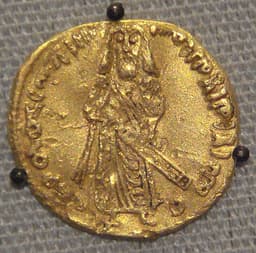
Abd al-Aziz Khan
Emperor · Modern
54.9Total

Leopold II
Emperor · Modern
47.6Total
Basic Information
Born
1614
1747
Died
1681
1792
Era
Modern
Modern
Nationality
Khanate of Bukhara
Holy Roman Empire
Occupation
Emperor
Emperor
Civilization
Eastern
Western
Score Comparison
Military (10%)
40.0
21.2
Political (20%)
68.0
45.0
Influence (20%)
57.2
51.8
Legacy (20%)
46.7
40.8
Leadership (15%)
68.0
74.0
Strategy (15%)
45.0
45.0
TOTAL
54.9
47.6
Abd al-Aziz Khan — Complete Timeline
1651 AD
Accession to the throne of BukharaPolitical Action◆ Major
Abd al-Aziz Khan became the Jani-Begid ruler of the Khanate of Bukhara after deposing his father Nadir Muhammad. His reign was marked by efforts to restore the khanate's power and prestige.
Jani-BegidsAccessionBukhara
Impact: regionalconstructive
1660 AD
Patronage of Islamic arts and architectureCultural◆ Major
Abd al-Aziz Khan became a notable patron of Islamic arts and architecture. He commissioned the construction of madrasas and mosques in Bukhara, including the Abd al-Aziz Khan Madrasa, which became a center of learning.
Jani-BegidsPatronageArchitecture
Impact: regionalconstructive
1670 AD
Conflict with the SafavidsWar
Abd al-Aziz Khan engaged in military conflicts with the Safavid Empire over control of Khorasan. These campaigns were largely defensive and prevented Safavid expansion into Transoxiana.
Jani-BegidsWarSafavids
Impact: regional
1681 AD
Death and end of strong rulePolitical Action◆ Major
Abd al-Aziz Khan died in 1681, marking the end of the last strong Ashtarkhanid rule in Bukhara. His successors were weaker, leading to the gradual decline of the khanate.
Jani-BegidsDeathDecline
Impact: regionaltragic
Leopold II — Complete Timeline
1765 AD
Grand Duke of Tuscany reformsReform◆ Major
Leopold II, as Grand Duke of Tuscany, implemented a series of enlightened reforms, including the abolition of torture and the death penalty, the introduction of a liberal penal code, and the promotion of free trade. Tuscany became a model of enlightened absolutism.
TuscanyEnlightenmentReform
Impact: regionalprogressive
1790 AD
Elected Holy Roman EmperorPolitical Action◆ Major
Leopold II succeeded his brother Joseph II as Holy Roman Emperor in 1790. He reversed some of Joseph's radical reforms to appease the nobility and clergy, stabilizing the Habsburg monarchy after a period of unrest.
ElectionSuccessionStabilization
Impact: regional
1791 AD
Declaration of PillnitzPolitical Action◆ Major
Leopold II, together with King Frederick William II of Prussia, issued the Declaration of Pillnitz, calling for European powers to intervene in France to restore Louis XVI's authority. This declaration escalated tensions with revolutionary France and contributed to the outbreak of the French Revolutionary Wars.
French RevolutionInterventionPillnitz
Impact: global
Expert Analysis
Origins
Abd al-Aziz Khan (1614-1681) was born into the Ashtarkhanid dynasty of the Khanate of Bukhara. His father, Nadir Muhammad, ruled with limited authority, and Abd al-Aziz was trained in military and political leadership from a young age. He deposed his father in 1645 to claim the throne, reflecting the turbulent succession practices of Central Asian khanates. His early life was shaped by the need to consolidate power amidst rival factions and external threats from the Safavid Empire and nomadic tribes.
Leopold II (1747-1792), born in Vienna, was the son of Empress Maria Theresa and Emperor Francis I. As a younger son, he was initially destined for the church, but after the death of his older brother, he became Grand Duke of Tuscany in 1765. His upbringing in the Habsburg court exposed him to Enlightenment ideals, which he later implemented in Tuscany. His reign as Holy Roman Emperor (1790-1792) was brief, following the death of his brother Joseph II.
Rise to Power
Abd al-Aziz Khan rose to power by deposing his father in 1645, a move that required military backing from influential tribal leaders. His early reign focused on securing Bukhara's borders and asserting authority over rebellious provinces. He successfully repelled Safavid incursions into Khorasan, preventing territorial losses. His patronage of Islamic arts and architecture, including the construction of the Abd al-Aziz Khan Madrasa in Bukhara, solidified his reputation as a cultured ruler.
Leopold II's rise was more gradual. As Grand Duke of Tuscany, he implemented enlightened reforms that earned him widespread respect. His election as Holy Roman Emperor in 1790 came at a time of crisis: the Habsburg monarchy faced unrest in Hungary and the Austrian Netherlands, and revolutionary France threatened stability. Leopold's diplomatic skills were evident in the Declaration of Pillnitz (1791), which aimed to coordinate European powers against the French Revolution.
Leadership & Governance
Abd al-Aziz Khan's leadership style was autocratic but tempered by Islamic traditions. He centralized authority in Bukhara, reducing the influence of regional emirs. His governance focused on religious legitimacy, commissioning madrasas and mosques to strengthen ties with the clergy. However, his military score of 40.0 reflects his limited success in expanding territory; his campaigns were primarily defensive. Politically, he scored 68.0, indicating effective consolidation of power within the khanate.
Leopold II was a reformist ruler who scored 74.0 in leadership, the highest among the two. As Grand Duke of Tuscany, he abolished torture and the death penalty, reformed the legal system, and promoted economic liberalization. As emperor, he reversed some of Joseph II's radical reforms to appease the nobility and clergy, demonstrating pragmatism. His political score of 45.0 reflects the constraints of ruling a fragmented empire, where he had to balance Enlightenment ideals with feudal interests.
Triumph & Tragedy
Abd al-Aziz Khan's greatest triumph was his patronage of Islamic arts, which left a lasting architectural legacy in Bukhara. The Abd al-Aziz Khan Madrasa remains a masterpiece of Central Asian architecture. His military defenses prevented major Safavid conquests. However, his failure to establish a strong succession led to decline after his death; his successors were weak, and the khanate fragmented. His legacy score of 46.7 reflects this mixed outcome.
Leopold II's triumphs include his enlightened reforms in Tuscany, which influenced later abolitionist movements. His diplomatic efforts, such as the Declaration of Pillnitz, temporarily stabilized Europe. However, his reign as emperor was too short to implement lasting changes. The declaration inadvertently escalated tensions with France, leading to the French Revolutionary Wars. His political score of 45.0 and influence score of 51.8 show his limited impact on the Holy Roman Empire's trajectory.
Character & Destiny
Abd al-Aziz Khan was a devout Muslim and patron of learning, but his reliance on religious legitimacy made him vulnerable to conservative factions. His decision to depose his father shows ambition, yet his defensive military strategy suggests caution. Historians note that his reign was a golden age for Bukharan culture but a period of stagnation for military expansion. His total score of 54.9 places him above average for rulers of his era.
Leopold II was pragmatic and reform-minded, but his brief tenure as emperor limited his ability to shape events. He was a skilled diplomat, yet his cautious approach to the French Revolution failed to prevent war. His character combined Enlightenment ideals with Habsburg realpolitik, earning him respect from contemporaries like Catherine the Great. His total score of 47.6 reflects his moderate impact.
Legacy
Abd al-Aziz Khan's legacy is primarily cultural: the Abd al-Aziz Khan Madrasa and other buildings in Bukhara are UNESCO World Heritage sites. His reign is remembered as the last strong period of the Ashtarkhanid dynasty. However, his political and military achievements did not endure, as the khanate declined rapidly after his death. His influence score of 57.2 is moderate.
Leopold II's legacy is more complex. His reforms in Tuscany were ahead of their time, but his imperial policies were quickly reversed by his successors. The Declaration of Pillnitz is often cited as a catalyst for the French Revolutionary Wars. His legacy score of 40.8 reflects the limited long-term impact of his brief reign. Yet, his ideas influenced later liberal reforms in Europe.
Conclusion
Abd al-Aziz Khan had a greater impact within his sphere than Leopold II. With a total score of 54.9 versus 47.6, his cultural patronage and political consolidation left a more enduring mark. While Leopold II's reforms were progressive, his short reign and the overshadowing of his legacy by the French Revolution limit his significance. Abd al-Aziz Khan's architectural contributions remain visible today, whereas Leopold II's political changes were ephemeral. Thus, Abd al-Aziz Khan emerges as the more impactful ruler.
Rankings
🥇
Abd al-Aziz KhanLeader
Mil: 40.0Pol: 68.0Inf: 57.2
54.9
🥈
Leopold II
Mil: 21.2Pol: 45.0Inf: 51.8
47.6
+7.3 behind
How This Comparison Works
Algorithm
Each figure is scored on 6 dimensions (0—100 scale) based on structured historical data: Military (10%), Political (20%), Influence (20%), Legacy (20%), Leadership (15%), Strategy (15%). The weighted total produces the final ranking.
Data Sources
Scores are computed from structured sub-indicators in the database. Scale factors adjust for era (Ancient ×0.85, Modern ×1.0) and civilization size (Eastern ×1.05, Other ×0.80) to account for differences in population and military scale.
Maximum 3 Figures
Comparisons are limited to 2—3 figures to ensure readability and statistical meaningfulness.
Error Margins
±5 points per dimension — Sub-scores are derived from historical records with inherent uncertainty. Two figures within 5 points on a dimension should be considered roughly equivalent in that area.
Total Score Accuracy
±3 points overall — The weighted combination of 6 dimensions produces a total score with approximately ±3 points of uncertainty. Differences of less than 3 points are not statistically significant— the figures are effectively tied.
Known Limitations
- Historical records are incomplete and uneven across civilizations
- Figures from oral-tradition societies may be underrepresented
- Occupation labels can misclassify multi-role figures
- Scores measure capability and impact, not moral character
- Quantitative scoring is a comparison tool, not absolute truth
Capability Radar
Military (10%) — Battles & Warfare
Battles
45
10
Win Rate
40
10
Expansion
35
10
Political (20%) — Governance & Reform
Reform
40
60
Diplomacy
45
50
Economy
50
55
Influence (20%) — Cultural & Global Reach
Cultural
55
30
Global
30
20
Legacy (20%) — Historical Impact
Historical
50
35
Longevity
40
20
Leadership (15%) — Power & Stability
Tenure
60
40
Stability
45
45
Strategy (15%) — Tactics & Innovation
Strategy
40
10
Tactics
35
10
Reform
30
10
Similar Comparisons
Comments & Discussion
No comments yet. Be the first to share your thoughts!