Loading...
This comparison has not been analyzed yet.
One-time AI generation (~1 minute). Scores and timeline are already available below.
Abd al-Rahman I vs Reccared I
Abd al-Rahman I leads by 19.4 pts · 2 figures compared
…
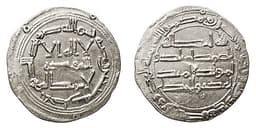
Abd al-Rahman I
Emperor · Medieval
72.2Total
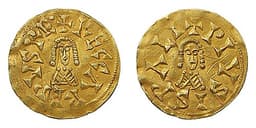
Reccared I
Emperor · Medieval
52.8Total
Basic Information
Born
731
559
Died
788
601
Era
Medieval
Medieval
Nationality
Al-Andalus
Visigothic Kingdom
Occupation
Emperor
Emperor
Civilization
Middle Eastern
Western
Score Comparison
Military (10%)
81.2
21.2
Political (20%)
69.6
45.0
Influence (20%)
72.0
62.0
Legacy (20%)
68.0
58.0
Leadership (15%)
78.2
68.0
Strategy (15%)
69.1
36.8
TOTAL
72.2
52.8
Abd al-Rahman I — Complete Timeline
750 AD
Escape from the Abbasid MassacrePolitical Action
Abd al-Rahman I, a surviving Umayyad prince, fled the Abbasid massacre of his family in Syria. He traveled across North Africa, evading Abbasid agents, and eventually reached the Iberian Peninsula, where he sought refuge.
Umayyad DynastyEscapeAbbasid Caliphate
Impact: regionaltragic
756 AD
Battle of AlamedaWar◆ Major
Abd al-Rahman I defeated the Abbasid governor Yusuf al-Fihri at the Battle of Alameda, near Cordoba. This victory secured his control over the city and solidified his position as the ruler of Al-Andalus.
Al-AndalusBattleUmayyad Emirate
Impact: regional
Establishment of the Emirate of CordobaPolitical Action
Abd al-Rahman I proclaimed himself emir of Cordoba, establishing an independent Umayyad emirate in Al-Andalus. This marked the beginning of a separate Islamic state in the Iberian Peninsula, independent from the Abbasid Caliphate.
Al-AndalusUmayyad EmirateIndependence
Impact: globalconstructive
760 AD
Suppression of RebellionsWar◆ Major
Abd al-Rahman I faced multiple rebellions from Arab and Berber factions in Al-Andalus. He suppressed these uprisings through military campaigns, consolidating his authority and establishing a centralized Umayyad state.
Al-AndalusRebellionConsolidation
Impact: regional
784 AD
Construction of the Great Mosque of CordobaCultural◆ Major
Abd al-Rahman I began the construction of the Great Mosque of Cordoba, a monumental architectural project. The mosque became a symbol of Umayyad power and a center of Islamic learning in Al-Andalus.
ArchitectureCordobaIslamic Culture
Impact: regionalconstructive
Reccared I — Complete Timeline
586 AD
Accession as Visigothic KingPolitical Action◆ Major
Reccared I succeeded his father Leovigild as king of the Visigoths. He inherited a powerful but religiously divided kingdom, with tensions between Arian Visigoths and Catholic Romans. Reccared chose to pursue religious unification to strengthen the realm.
Visigothic KingdomSuccessionReligious Policy
Impact: regional
589 AD
Suppression of Arian RevoltsWar◆ Major
Following his conversion, Reccared faced revolts from Arian nobles and bishops who opposed the change. He suppressed these uprisings militarily, executing or exiling the leaders. This consolidation of power ensured the success of the Catholic conversion and strengthened royal authority.
Visigothic KingdomRevoltReligious Conflict
Impact: regionaldestructive
Conversion to Catholicism at the Third Council of ToledoCultural
Reccared I publicly converted from Arianism to Catholicism at the Third Council of Toledo. He renounced Arianism and declared Catholicism the official religion of the Visigothic Kingdom. This conversion ended the religious schism between Visigoths and Romans, unifying the kingdom under one faith.
Visigothic KingdomReligious ConversionCouncil of Toledo
Impact: regionalconstructive
590 AD
Diplomatic Relations with the Byzantine EmpirePolitical Action
Reccared established diplomatic ties with the Byzantine Emperor Maurice, seeking to secure peace on the southern borders of Hispania. This d
Visigothic KingdomDiplomacyByzantine Relations
Impact: regionalconstructive
This comparison has not been analyzed yet.
One-time AI generation (~1 minute). Scores and timeline are already available below.
Rankings
🥇
Abd al-Rahman ILeader
Mil: 81.2Pol: 69.6Inf: 72.0
72.2
🥈
Reccared I
Mil: 21.2Pol: 45.0Inf: 62.0
52.8
+19.4 behind
How This Comparison Works
Algorithm
Each figure is scored on 6 dimensions (0—100 scale) based on structured historical data: Military (10%), Political (20%), Influence (20%), Legacy (20%), Leadership (15%), Strategy (15%). The weighted total produces the final ranking.
Data Sources
Scores are computed from structured sub-indicators in the database. Scale factors adjust for era (Ancient ×0.85, Modern ×1.0) and civilization size (Eastern ×1.05, Other ×0.80) to account for differences in population and military scale.
Maximum 3 Figures
Comparisons are limited to 2—3 figures to ensure readability and statistical meaningfulness.
Error Margins
±5 points per dimension — Sub-scores are derived from historical records with inherent uncertainty. Two figures within 5 points on a dimension should be considered roughly equivalent in that area.
Total Score Accuracy
±3 points overall — The weighted combination of 6 dimensions produces a total score with approximately ±3 points of uncertainty. Differences of less than 3 points are not statistically significant— the figures are effectively tied.
Known Limitations
- Historical records are incomplete and uneven across civilizations
- Figures from oral-tradition societies may be underrepresented
- Occupation labels can misclassify multi-role figures
- Scores measure capability and impact, not moral character
- Quantitative scoring is a comparison tool, not absolute truth
Capability Radar
Military (10%) — Battles & Warfare
Battles
75
10
Win Rate
80
10
Expansion
72
10
Political (20%) — Governance & Reform
Reform
80
70
Diplomacy
78
75
Economy
76
50
Influence (20%) — Cultural & Global Reach
Cultural
70
60
Global
68
50
Legacy (20%) — Historical Impact
Historical
75
65
Longevity
72
60
Leadership (15%) — Power & Stability
Tenure
75
60
Stability
74
65
Strategy (15%) — Tactics & Innovation
Strategy
82
10
Tactics
78
10
Reform
70
10
Similar Comparisons
Comments & Discussion
No comments yet. Be the first to share your thoughts!