Loading...
Abd el-Krim vs Vladimir Lenin
Vladimir Lenin leads by 9.4 pts · 2 figures compared
…
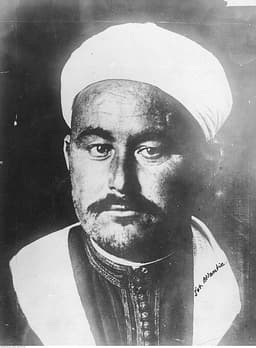
Abd el-Krim
Revolutionary · Modern
61.8Total
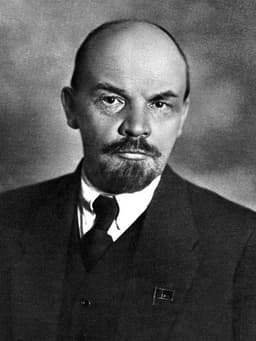
Vladimir Lenin
Revolutionary · Modern
71.2Total
Basic Information
Born
1882
1870
Died
1963
1924
Era
Modern
Modern
Nationality
Morocco
Russia
Occupation
Revolutionary
Revolutionary
Civilization
Middle Eastern
Western
Score Comparison
Military (10%)
75.0
30.0
Political (20%)
72.0
78.0
Influence (20%)
59.0
82.0
Legacy (20%)
50.0
72.0
Leadership (15%)
72.0
80.0
Strategy (15%)
55.0
60.0
TOTAL
61.8
71.2
Abd el-Krim — Complete Timeline
1921 AD
Battle of AnnualWar
Abd el-Krim's Riffian forces decisively defeated a Spanish army at Annual in Spanish Morocco. The Spanish suffered thousands of casualties and lost vast amounts of equipment. This victory established Abd el-Krim as a major military leader and led to the proclamation of the Rif Republic.
Rif WarSpanish ColonialismBattle
Impact: regional
1923 AD
Proclamation of the Rif RepublicPolitical Action◆ Major
Abd el-Krim formally proclaimed the independent Rif Republic in northern Morocco. He established a government and administrative system, challenging Spanish and French colonial rule. The republic was not internationally recognized but functioned as a de facto state.
Rif RepublicIndependenceAnti-Colonialism
Impact: regionalconstructive
1925 AD
Rif War against FranceWar◆ Major
Abd el-Krim's forces attacked French positions in Morocco, expanding the conflict beyond Spanish territory. The French responded with a massive military campaign, using superior firepower and chemical weapons. This led to the eventual defeat of the Rif Republic.
Rif WarFrench ColonialismChemical Weapons
Impact: regional
1926 AD
Surrender and Exile to RéunionWar◆ Major
After a prolonged campaign, Abd el-Krim surrendered to French forces. He was exiled to the island of R
Rif WarExileDefeat
Impact: regionaltragic
1947 AD
Release and Move to EgyptPolitical Action
Abd el-Krim was released by the French and allowed to move to Egypt. He settled in Cairo, where he continued to advocate for North African independence and became a symbolic figure for anti-colonial movements.
ExileAnti-ColonialismSymbol
Impact: regionalconstructive
Vladimir Lenin — Complete Timeline
1903 AD
Founding of the Bolshevik PartyPolitical Action
At the Second Congress of the Russian Social Democratic Labour Party in London, Lenin led a split that created the Bolshevik faction. The Bolsheviks advocated for a disciplined vanguard party of professional revolutionaries, a key element of Lenin's political strategy.
Political PartyRevolutionIdeology
Impact: global
1917 AD
April ThesesPolitical Action◆ Major
Lenin returned to Russia from exile and published the April Theses, calling for the overthrow of the Provisional Government, transfer of power to the soviets, and an end to World War I. This document set the Bolshevik agenda for the coming revolution.
RevolutionIdeologyPolitical Strategy
Impact: national
October RevolutionPolitical Action
Lenin led the Bolshevik seizure of power in Petrograd, capturing key government buildings and the Winter Palace. The revolution overthrew the Provisional Government and established the world's first socialist state, the Russian Soviet Federative Socialist Republic.
RevolutionCoupCommunism
Impact: global
1918 AD
Treaty of Brest-LitovskPolitical Action◆ Major
Lenin signed a separate peace treaty with the Central Powers, ceding vast territories including Ukraine, Belarus, and the Baltic states. The treaty ended Russia's involvement in World War I but caused significant territorial losses and internal opposition.
TreatyWorld War ITerritorial Loss
Impact: globaldestructive
1921 AD
New Economic Policy (NEP)Reform◆ Major
Lenin introduced the NEP, allowing limited private enterprise and market mechanisms to revive the war-torn Soviet economy. The policy replaced War Communism, permitting small-scale capitalism while the state retained control of major industries.
Economic ReformPolicyRecovery
Impact: nationalconstructive
1922 AD
Establishment of the Soviet UnionPolitical Action
Lenin oversaw the creation of the Union of Soviet Socialist Republics (USSR), a federation of Soviet republics. The new state consolidated Bolshevik control over much of the former Russian Empire and became a model for communist states worldwide.
State FormationCommunismFederation
Impact: global
Expert Analysis
Vladimir Lenin vs Abd el-Krim
### The Revolutionary’s Mirror: Lenin and Abd el-Krim
In the winter of 1917, a train carrying Vladimir Ilyich Ulyanov—Lenin—pulled into Petrograd’s Finland Station. He had been smuggled across Europe in a sealed carriage, a gift from the German High Command, who hoped he would destabilize their Russian enemy. Four years later, in the summer of 1921, a Moroccan schoolteacher turned guerrilla commander named Abd el-Krim watched from a hillside as 20,000 Spanish soldiers fled in panic at Annual, leaving behind their rifles, their artillery, and their pride. Both men were revolutionaries. Both sought to tear down an old world and build a new one. But one founded a superpower that would last seven decades; the other created a republic that lasted seven years. The difference is not merely one of scale. It is a story of geography, timing, and the brutal logic of power.
### Origins
Lenin was born in 1870 in Simbirsk, a provincial town on the Volga, into a family of minor nobility. His father was a school inspector; his brother, Alexander, was hanged for plotting to assassinate the Tsar. That execution—Lenin was seventeen—crystallized his hatred of autocracy and sent him into the underground world of Marxist circles. He was a man of books and pamphlets, of exile in Siberia and London libraries. His revolution was born in the cramped meeting rooms of European émigrés, where he argued over texts with Trotsky and Plekhanov.
Abd el-Krim, born in 1882 in Ajdir, a village in the Rif Mountains, came from a different world entirely. His father was a qadi, an Islamic judge, and he was educated in both Spanish schools and the Islamic University of Fez. He worked as a journalist and a judge for the Spanish colonial administration, a collaborator turned rebel. His revolution was not born in a library but in a prison cell—he was imprisoned by the Spanish for sedition in 1917, and when he escaped, he returned to the mountains with a rifle. His people were Berber tribesmen who had fought foreign invaders for centuries, from the Phoenicians to the Portuguese. The Rif was not a nation; it was a patchwork of clans and valleys, held together by blood and honor.
### Rise to Power
Lenin’s path to power was a paradox: a man who preached mass revolution, but who seized power through a small, disciplined coup. The key turning point came in 1903, at the Second Congress of the Russian Social Democratic Labour Party in London. Lenin split the party into Bolsheviks (the majority) and Mensheviks (the minority), demanding a vanguard of professional revolutionaries. For fourteen years, he waited, writing, plotting, surviving exile. The opportunity came in 1917, when the Tsar fell and the Provisional Government faltered. Lenin, arriving at the Finland Station, declared the April Theses: “No support for the Provisional Government!” He called for peace, land, and bread. By October, he had the guns. On the night of October 25, the Bolsheviks captured the Winter Palace with barely a fight.
Abd el-Krim’s rise was slower, more organic, and more violent. He did not have a party; he had a tribe, the Beni Urriaguel. After his escape from prison, he began a guerrilla campaign against the Spanish, attacking isolated outposts and ambushing patrols. The turning point came at the Battle of Annual in July 1921. The Spanish commander, General Silvestre, had pushed deep into the Rif with over 20,000 men, overconfident and poorly supplied. Abd el-Krim’s forces, armed with captured rifles and intimate knowledge of the terrain, encircled and annihilated them. The Spanish lost 13,000 men—the worst colonial defeat since Isandlwana. In 1923, Abd el-Krim proclaimed the independent Rif Republic, with himself as emir. He built a government, a tax system, and a rudimentary army.
### Leadership & Governance
Lenin ruled through the party. The Bolsheviks were a machine—a central committee, a secret police, a propaganda apparatus. Lenin was its engine: ruthless, pragmatic, and utterly convinced of his historical mission. He signed the Treaty of Brest-Litovsk in 1918, ceding vast territories to Germany, because he needed peace to consolidate power. He crushed the Kronstadt rebellion in 1921, killing former Bolshevik allies, because they demanded democracy. And then, in the same year, he pivoted again, introducing the New Economic Policy (NEP), allowing small-scale capitalism to revive the shattered economy. Lenin was a strategist, not a sentimentalist. He believed that the ends justified the means—and the ends were a world without capitalism.
Abd el-Krim ruled through charisma and kinship. He was a military leader of extraordinary skill—his score of 86.5 in leadership reflects the loyalty he inspired—but he governed a federation of tribes, not a centralized state. The Rif Republic had a flag, a treasury, and even a postal service, but its power rested on Abd el-Krim’s personal prestige and the threat of Spanish reprisal. He was a reformer: he banned polygamy, promoted education, and tried to unify the Berber dialects. But he faced a problem Lenin never had: he was fighting two empires. In 1925, he attacked French positions in Morocco, hoping to expel both colonial powers. It was a gamble. The French had a modern army, an air force, and no intention of losing their protectorate.
### Triumph & Tragedy
Lenin’s greatest triumph was the creation of the Soviet Union in 1922. He had taken a backward, war-torn empire and forged it into a new kind of state—a union of republics, ruled by a single party, dedicated to a global revolution. It was a masterpiece of political architecture. But his tragedy was that he did not live to see it. By 1922, he had suffered a series of strokes. He died in 1924, at the age of 53, leaving behind a succession crisis that would culminate in Stalin’s terror. Lenin’s last letters warned against Stalin’s brutality, but they were suppressed. The revolution he had built devoured its children.
Abd el-Krim’s triumph was Annual. It was a victory so complete that it shattered Spanish morale and made him a legend across the Islamic world. But his tragedy came swiftly. In 1925, France and Spain joined forces, deploying 250,000 troops against his 20,000. They used poison gas, aerial bombardment, and overwhelming firepower. Abd el-Krim surrendered in May 1926, after a year of desperate fighting. He was exiled to Réunion, a remote island in the Indian Ocean, where he spent 21 years. He was released in 1947, but the French, fearing his influence, diverted his ship to Egypt. He died in Cairo in 1963, still dreaming of a free Morocco.
### Character & Destiny
Lenin was a man of steel and ice. He did not drink, smoke, or indulge in sentiment. He lived for the revolution, and he expected others to do the same. His personality was shaped by his brother’s execution, his years of exile, and his absolute faith in Marxist theory. He was a theorist who became a tyrant, but a tyrant with a vision. His destiny was to create a system that would outlast him, but also to plant the seeds of its own corruption.
Abd el-Krim was a man of honor and pride. He was a tribal leader who dreamed of a modern state, a guerrilla who fought like a general. His personality was shaped by his dual education—Spanish and Islamic—and his dual loyalties—to his clan and to his people. He was a patriot who became a legend, but a legend who could not overcome the forces arrayed against him. His destiny was to be a symbol, not a ruler.
### Legacy
Lenin’s legacy is monumental and contested. He founded the Soviet Union, which shaped the 20th century, and his ideas—Marxism-Leninism—inspired revolutions from China to Cuba. But he also created a police state, a one-party dictatorship, and a system that killed millions. His mausoleum in Red Square remains a pilgrimage site for the faithful and a monument to a failed utopia.
Abd el-Krim’s legacy is quieter but no less profound. He is remembered as the father of Moroccan resistance, a hero of anti-colonialism, and a precursor to the independence movements that swept Africa and Asia. His Rif Republic was a brief experiment in self-rule, but it proved that colonial empires could be beaten. His influence can be seen in the Algerian FLN, the Palestine Liberation Organization, and every guerrilla leader who has fought against overwhelming odds.
### Conclusion
Lenin and Abd el-Krim were both revolutionaries, but they inhabited different worlds. Lenin had a continent, a railway network, and a party of thousands. Abd el-Krim had a mountain, a tribe, and a rifle. Lenin’s revolution succeeded because he seized a state that was already collapsing. Abd el-Krim’s revolution failed because he faced two empires that refused to collapse. In the end, one built a prison that lasted seventy years; the other built a dream that lasted seven. But both men remind us that history is not a story of good and evil. It is a story of power, timing, and the terrible price of trying to change the world.
Rankings
🥇
Vladimir LeninLeader
Mil: 30.0Pol: 78.0Inf: 82.0
71.2
🥈
Abd el-Krim
Mil: 75.0Pol: 72.0Inf: 59.0
61.8
+9.4 behind
How This Comparison Works
Algorithm
Each figure is scored on 6 dimensions (0—100 scale) based on structured historical data: Military (10%), Political (20%), Influence (20%), Legacy (20%), Leadership (15%), Strategy (15%). The weighted total produces the final ranking.
Data Sources
Scores are computed from structured sub-indicators in the database. Scale factors adjust for era (Ancient ×0.85, Modern ×1.0) and civilization size (Eastern ×1.05, Other ×0.80) to account for differences in population and military scale.
Maximum 3 Figures
Comparisons are limited to 2—3 figures to ensure readability and statistical meaningfulness.
Error Margins
±5 points per dimension — Sub-scores are derived from historical records with inherent uncertainty. Two figures within 5 points on a dimension should be considered roughly equivalent in that area.
Total Score Accuracy
±3 points overall — The weighted combination of 6 dimensions produces a total score with approximately ±3 points of uncertainty. Differences of less than 3 points are not statistically significant— the figures are effectively tied.
Known Limitations
- Historical records are incomplete and uneven across civilizations
- Figures from oral-tradition societies may be underrepresented
- Occupation labels can misclassify multi-role figures
- Scores measure capability and impact, not moral character
- Quantitative scoring is a comparison tool, not absolute truth
Capability Radar
Military (10%) — Battles & Warfare
Battles
75
20
Win Rate
70
35
Expansion
60
70
Political (20%) — Governance & Reform
Reform
70
95
Diplomacy
65
75
Economy
50
60
Influence (20%) — Cultural & Global Reach
Cultural
60
80
Global
55
90
Legacy (20%) — Historical Impact
Historical
70
95
Longevity
55
85
Leadership (15%) — Power & Stability
Tenure
55
55
Stability
45
40
Strategy (15%) — Tactics & Innovation
Strategy
80
55
Tactics
85
30
Reform
65
85
Similar Comparisons
Comments & Discussion
RifRebelRaters6/16/2026
Let's be real: comparing Lenin to Abd el-Krim is like comparing a nuclear reactor to a campfire. Lenin had the backing of German imperial gold, a disintegrating Russian army, and a railway network that let him hop from Zurich to revolution. Abd el-Krim fought with captured Spanish rifles and tribal levies against two European empires. The Rif Republic lasted 7 years against France and Spain combined; Lenin's USSR built an A-bomb in 28. Scale isn't everything—resilience matters. Abdelkrim's tacti
历史硬核粉6/16/2026
拿列宁跟阿卜杜·克里姆比?简直是对北非反抗精神的侮辱!列宁靠德国人密封列车送回俄国,搞十月革命时身边是武装工人和士兵。阿卜杜·克里姆呢?1921年阿努阿勒战役,他带着不到3000名里夫战士,用缴获的西班牙步枪就干掉了一万两千敌军!列宁的革命依赖欧洲工业化城市的无产阶级,阿卜杜·克里姆靠的是山地部落的游击传统。一个是博物馆里的理论家,一个是战场上的实干家。我站里夫雄狮,七年的共和国比七十年的官僚帝国更有血性。