Loading...
This comparison has not been analyzed yet.
One-time AI generation (~1 minute). Scores and timeline are already available below.
Abd Rabbuh Mansur Hadi vs Bobi Wine
Bobi Wine leads by 5.0 pts · 2 figures compared
…
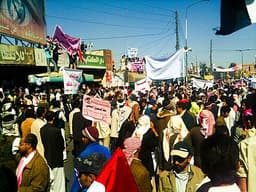
Abd Rabbuh Mansur Hadi
Politician · Modern
39.4Total

Bobi Wine
Politician · Modern
44.4Total
Basic Information
Born
1945
1982
Died
—
—
Era
Modern
Modern
Nationality
Yemen
Uganda
Occupation
Politician
Politician
Civilization
Middle Eastern
Other
Score Comparison
Military (10%)
47.1
50.0
Political (20%)
30.7
33.6
Influence (20%)
46.3
54.9
Legacy (20%)
35.8
40.8
Leadership (15%)
34.6
41.5
Strategy (15%)
43.4
42.1
TOTAL
39.4
44.4
Abd Rabbuh Mansur Hadi — Complete Timeline
1994 AD
Became Vice President of YemenPolitical Action◆ Major
Abd Rabbuh Mansur Hadi was appointed Vice President of Yemen by President Ali Abdullah Saleh after the 1994 civil war. He served as a loyal deputy for nearly two decades, handling military and security affairs.
AppointmentYemen Politics
Impact: national
2012 AD
Became President of Yemen after Saleh's resignationPolitical Action
Following the Arab Spring and Saleh's resignation, Hadi was elected as president in a single-candidate election. He inherited a fractured country facing economic crisis, tribal unrest, and a growing Houthi insurgency.
SuccessionYemenArab Spring
Impact: national
2015 AD
Fled to Saudi Arabia during the Houthi takeoverPolitical Action◆ Major
As Houthi forces advanced on Aden, Hadi fled the country and sought refuge in Saudi Arabia. He continued to claim the presidency from exile, while the Houthis established their own government in Sanaa.
ExileYemen Civil WarHouthi
Impact: nationaltragic
2022 AD
Resigned as president in exilePolitical Action◆ Major
Hadi resigned as president and transferred his powers to a newly formed Presidential Leadership Council, a Saudi-backed body aimed at unifying anti-Houthi factions. His resignation marked the end of his formal role in Yemeni politics.
ResignationYemenPresidential Council
Impact: national
Bobi Wine — Complete Timeline
2017 AD
Transition from Music to PoliticsPolitical Action
Bobi Wine, previously a successful musician known for socially conscious lyrics, announced his candidacy for the Kyadondo East parliamentary seat. He won the by-election in July 2017, marking his formal entry into Ugandan politics as an opposition figure.
UgandaPoliticsMusic
Impact: nationalconstructive
2018 AD
Arrest and Torture by Security ForcesPolitical Action◆ Major
Bobi Wine was arrested in Arua district during a by-election campaign. He was charged with treason and allegedly tortured while in military custody. The incident drew international condemnation and highlighted state repression of opposition figures in Uganda.
UgandaHuman RightsRepression
Impact: nationaltragic
2021 AD
Presidential Election Campaign 2021Political Action◆ Major
Bobi Wine ran as the National Unity Platform candidate in Uganda's presidential election against incumbent Yoweri Museveni. He received 35% of the vote according to official results, which his campaign disputed as fraudulent. The election was marked by widespread arrests and internet shutdowns.
UgandaElectionOpposition
Impact: national
This comparison has not been analyzed yet.
One-time AI generation (~1 minute). Scores and timeline are already available below.
Rankings
🥇
Bobi WineLeader
Mil: 50.0Pol: 33.6Inf: 54.9
44.4
🥈
Abd Rabbuh Mansur Hadi
Mil: 47.1Pol: 30.7Inf: 46.3
39.4
+5.0 behind
How This Comparison Works
Algorithm
Each figure is scored on 6 dimensions (0—100 scale) based on structured historical data: Military (10%), Political (20%), Influence (20%), Legacy (20%), Leadership (15%), Strategy (15%). The weighted total produces the final ranking.
Data Sources
Scores are computed from structured sub-indicators in the database. Scale factors adjust for era (Ancient ×0.85, Modern ×1.0) and civilization size (Eastern ×1.05, Other ×0.80) to account for differences in population and military scale.
Maximum 3 Figures
Comparisons are limited to 2—3 figures to ensure readability and statistical meaningfulness.
Error Margins
±5 points per dimension — Sub-scores are derived from historical records with inherent uncertainty. Two figures within 5 points on a dimension should be considered roughly equivalent in that area.
Total Score Accuracy
±3 points overall — The weighted combination of 6 dimensions produces a total score with approximately ±3 points of uncertainty. Differences of less than 3 points are not statistically significant— the figures are effectively tied.
Known Limitations
- Historical records are incomplete and uneven across civilizations
- Figures from oral-tradition societies may be underrepresented
- Occupation labels can misclassify multi-role figures
- Scores measure capability and impact, not moral character
- Quantitative scoring is a comparison tool, not absolute truth
Capability Radar
Military (10%) — Battles & Warfare
Battles
21
21
Win Rate
27
26
Expansion
26
30
Political (20%) — Governance & Reform
Reform
5
25
Diplomacy
10
30
Economy
5
15
Influence (20%) — Cultural & Global Reach
Cultural
5
40
Global
10
30
Legacy (20%) — Historical Impact
Historical
10
25
Longevity
5
20
Leadership (15%) — Power & Stability
Tenure
15
20
Stability
5
10
Strategy (15%) — Tactics & Innovation
Strategy
32
32
Tactics
33
35
Reform
36
35
Similar Comparisons
Comments & Discussion
No comments yet. Be the first to share your thoughts!