Loading...
This comparison has not been analyzed yet.
One-time AI generation (~1 minute). Scores and timeline are already available below.
Abdou Diouf vs Bakir Izetbegovic
Abdou Diouf leads by 15.4 pts · 2 figures compared
…

Abdou Diouf
Politician · Modern
54.3Total
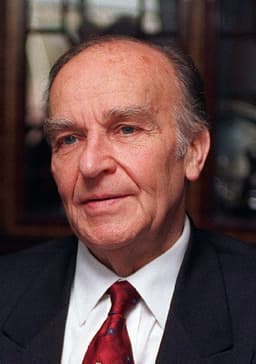
Bakir Izetbegovic
Politician · Modern
38.9Total
Basic Information
Born
1935
1956
Died
—
—
Era
Modern
Modern
Nationality
Senegal
Bosnia
Occupation
Politician
Politician
Civilization
Other
Western
Score Comparison
Military (10%)
37.5
50.0
Political (20%)
62.7
26.4
Influence (20%)
59.0
47.1
Legacy (20%)
45.8
35.0
Leadership (15%)
72.0
34.6
Strategy (15%)
41.8
42.1
TOTAL
54.3
38.9
Abdou Diouf — Complete Timeline
1981 AD
Introduction of Multiparty PoliticsReform◆ Major
Diouf's government legalized opposition parties, ending the de facto one-party system that had existed under Senghor. This reform allowed for greater political competition and laid the foundation for Senegal's democratic tradition.
DemocracyPolitical ReformSenegal
Impact: nationalprogressive
Succeeded Leopold Sedar Senghor as PresidentPolitical Action◆ Major
Diouf became President of Senegal on January 1, 1981, after Leopold Sedar Senghor voluntarily stepped down. This was a rare peaceful transfer of power in post-independence Africa, and Diouf continued Senghor's policies of political stability and economic liberalism.
SuccessionDemocracySenegal
Impact: nationalconstructive
1982 AD
Handling of Casamance ConflictWar◆ Major
Diouf's government faced a separatist insurgency in the Casamance region starting in 1982. The conflict, led by the Movement of Democratic Forces of Casamance (MFDC), resulted in thousands of deaths and displaced many. Diouf pursued both military and diplomatic approaches but failed to achieve a lasting peace.
ConflictSeparatismSenegal
Impact: regionaldestructive
2000 AD
Defeated by Abdoulaye Wade in 2000 ElectionPolitical Action◆ Major
After 19 years in power, Diouf lost the 2000 presidential election to opposition leader Abdoulaye Wade. Diouf conceded defeat gracefully, a rare act in Africa at the time, and peacefully handed over power, reinforcing Senegal's democratic credentials.
ElectionDemocracySenegal
Impact: nationalconstructive
2003 AD
Secretary-General of La FrancophoniePolitical Action
After leaving the presidency, Diouf served as Secretary-General of the International Organisation of La Francophonie from 2003 to 2014. He promoted French language and cultural cooperation among member states, enhancing his international profile.
DiplomacyFrancophonieInternational
Impact: globalconstructive
Bakir Izetbegovic — Complete Timeline
2010 AD
Election to the Presidency of Bosnia and HerzegovinaPolitical Action◆ Major
Bakir Izetbegovi
ElectionPresidencySDA
Impact: nationalconstructive
Advocacy for EU and NATO IntegrationPolitical Action◆ Major
During his presidency, Izetbegovi
EU IntegrationNATOReforms
Impact: regionalconstructive
2014 AD
Re-election to the PresidencyPolitical Action◆ Major
Izetbegović was re-elected as the Bosniak member of the Presidency in the 2014 general elections, securing a second term. His re-election reflected continued support for the SDA's platform of Bosniak unity and Euro-Atlantic integration.
Re-electionPresidencySDA
Impact: nationalconstructive
2015 AD
Controversial Statements on SrebrenicaPolitical Action◆ Major
Izetbegović made controversial statements regarding the Srebrenica genocide, including calling for the dissolution of the Republika Srpska entity. These remarks heightened ethnic tensions in Bosnia and were criticized by international officials for undermining the Dayton Peace Agreement.
SrebrenicaEthnic TensionsDayton
Impact: regionaldestructive
This comparison has not been analyzed yet.
One-time AI generation (~1 minute). Scores and timeline are already available below.
Rankings
🥇
Abdou DioufLeader
Mil: 37.5Pol: 62.7Inf: 59.0
54.3
🥈
Bakir Izetbegovic
Mil: 50.0Pol: 26.4Inf: 47.1
38.9
+15.4 behind
How This Comparison Works
Algorithm
Each figure is scored on 6 dimensions (0—100 scale) based on structured historical data: Military (10%), Political (20%), Influence (20%), Legacy (20%), Leadership (15%), Strategy (15%). The weighted total produces the final ranking.
Data Sources
Scores are computed from structured sub-indicators in the database. Scale factors adjust for era (Ancient ×0.85, Modern ×1.0) and civilization size (Eastern ×1.05, Other ×0.80) to account for differences in population and military scale.
Maximum 3 Figures
Comparisons are limited to 2—3 figures to ensure readability and statistical meaningfulness.
Error Margins
±5 points per dimension — Sub-scores are derived from historical records with inherent uncertainty. Two figures within 5 points on a dimension should be considered roughly equivalent in that area.
Total Score Accuracy
±3 points overall — The weighted combination of 6 dimensions produces a total score with approximately ±3 points of uncertainty. Differences of less than 3 points are not statistically significant— the figures are effectively tied.
Known Limitations
- Historical records are incomplete and uneven across civilizations
- Figures from oral-tradition societies may be underrepresented
- Occupation labels can misclassify multi-role figures
- Scores measure capability and impact, not moral character
- Quantitative scoring is a comparison tool, not absolute truth
Capability Radar
Military (10%) — Battles & Warfare
Battles
23
26
Win Rate
23
32
Expansion
27
36
Political (20%) — Governance & Reform
Reform
55
10
Diplomacy
65
15
Economy
50
10
Influence (20%) — Cultural & Global Reach
Cultural
40
5
Global
45
5
Legacy (20%) — Historical Impact
Historical
45
5
Longevity
30
5
Leadership (15%) — Power & Stability
Tenure
60
10
Stability
60
10
Strategy (15%) — Tactics & Innovation
Strategy
30
35
Tactics
32
41
Reform
34
45
Similar Comparisons
Comments & Discussion
No comments yet. Be the first to share your thoughts!