Loading...
Abdrabbuh Mansur Hadi vs Jovenel Moise
Abdrabbuh Mansur Hadi leads by 0.9 pts · 2 figures compared
…

Abdrabbuh Mansur Hadi
Politician · Modern
40.0Total
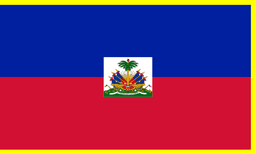
Jovenel Moise
Politician · Modern
39.1Total
Basic Information
Born
1945
1968
Died
—
—
Era
Modern
Modern
Nationality
Yemen
Haiti
Occupation
Politician
Politician
Civilization
Middle Eastern
Other
Score Comparison
Military (10%)
36.6
50.0
Political (20%)
25.0
29.3
Influence (20%)
46.3
45.5
Legacy (20%)
35.8
35.0
Leadership (15%)
45.0
34.6
Strategy (15%)
53.5
43.9
TOTAL
40.0
39.1
Abdrabbuh Mansur Hadi — Complete Timeline
2012 AD
Election as President of YemenPolitical Action◆ Major
Abdrabbuh Mansur Hadi was elected as the sole candidate in a February 2012 election, succeeding Ali Abdullah Saleh after the Arab Spring. The election was part of a transitional deal brokered by the Gulf Cooperation Council.
ElectionTransitionYemen
Impact: national
2014 AD
Houthi Takeover of SanaaWar
Houthi rebels seized control of the capital Sanaa in September 2014, forcing Hadi's government into a power-sharing agreement. This marked the beginning of the Yemeni Civil War and Hadi's loss of effective control.
Civil WarHouthisSanaa
Impact: nationaldestructive
2015 AD
Flight to Aden and Saudi ExilePolitical Action◆ Major
After Houthi forces advanced on Aden, Hadi fled to Saudi Arabia in March 2015, establishing a government-in-exile. This led to a Saudi-led military intervention to restore his government.
ExileSaudi InterventionCivil War
Impact: regionaltragic
2022 AD
Resignation and Transfer of PowerPolitical Action◆ Major
Hadi resigned as president in April 2022, transferring power to a Presidential Leadership Council. This was part of a UN-brokered truce and aimed at unifying anti-Houthi factions.
ResignationPeace ProcessTransition
Impact: national
Jovenel Moise — Complete Timeline
2011 AD
Election as PresidentPolitical Action◆ Major
Jovenel Moïse was elected President of Haiti in a runoff election, winning 67% of the vote. He was the candidate of the PHTK party, backed by outgoing President Michel Martelly. His election was marred by low turnout and allegations of fraud.
ElectionHaitiPHTK
Impact: national
2018 AD
Fuel Subsidy Removal ProtestsPolitical Action◆ Major
Moïse's government announced a 50% increase in fuel prices as part of IMF-backed reforms, triggering massive protests across Haiti. The protests turned violent, with demands for Moïse's resignation. The government eventually reversed the price hike.
ProtestsFuel PricesIMF
Impact: nationaldestructive
2020 AD
Rule by DecreePolitical Action◆ Major
After legislative elections were not held, Mo
DecreeAuthoritarianismConstitutional Crisis
Impact: nationaldestructive
2021 AD
AssassinationPolitical Action◆ Major
Jovenel Moïse was assassinated at his private residence in Port-au-Prince by a group of armed men. The attack killed him and wounded his wife. The assassination plunged Haiti into a political crisis and power vacuum, with disputed claims to the presidency.
AssassinationCrisisPower Vacuum
Impact: nationaltragic
Expert Analysis
Origins
Abdrabbuh Mansur Hadi was born in 1945 in Thamud, a remote village in Hadhramaut, Yemen. He joined the military and studied in the UK and Egypt, rising through the ranks of the Yemeni army. Hadi served as Vice President under Ali Abdullah Saleh from 1994 to 2011. Jovenel Moise was born on June 26, 1968, in Trou-du-Nord, Haiti. He studied at the Université Quisqueya and became a businessman, owning a banana plantation and a water bottling company. Moise entered politics as a protégé of then-President Michel Martelly.
Rise to Power
Hadi became President of Yemen in 2012 as the sole candidate in an election designed to transition power after Saleh's resignation during the Arab Spring. He inherited a country fractured by regional and sectarian divisions. Moise won the 2016 Haitian presidential election with 67% of the vote in a runoff, representing the PHTK party. His election was marred by allegations of fraud and low voter turnout, with only 21% of eligible voters participating.
Leadership & Governance
Hadi's leadership was defined by his inability to unify Yemen or counter the Houthi insurgency. He fled to Saudi Arabia in 2015 after Houthi forces advanced on Aden, ruling from exile. His governance relied heavily on Saudi support and a military coalition. Moise, on the other hand, governed Haiti through decree after the expiration of parliament's mandate in 2020. He faced massive protests in 2018 after removing fuel subsidies, leading to violent crackdowns. Both leaders scored low in political effectiveness: Hadi with a Political score of 25.0 and Moise with 29.3.
Triumph & Tragedy
Hadi's greatest success was his role in the 2011 transition that removed Saleh, but his presidency was overshadowed by the Houthi takeover of Sanaa in 2014 and the subsequent civil war. His flight to Aden and Saudi exile marked a low point. Moise's triumph was his election, but his assassination in 2021 by a group of armed men at his home was a tragic failure of state security. He scored 50.0 in Military, reflecting his death's impact, while Hadi scored 36.6.
Character & Destiny
Hadi was seen as a weak leader, unable to assert authority over Yemen's warring factions. His dependence on Saudi Arabia and his indecisiveness contributed to the fragmentation of the state. Moise was autocratic, ruling by decree and ignoring opposition. His assassination highlighted the instability of Haitian politics. Both leaders' character flaws—Hadi's lack of resolve and Moise's authoritarianism—led to their downfall.
Legacy
Hadi's legacy is one of a failed state: his presidency saw the collapse of Yemen into civil war, famine, and humanitarian crisis. Moise's legacy is that of a leader whose assassination deepened Haiti's political chaos. Neither left enduring institutions. Hadi scored 46.3 in Influence and 35.8 in Legacy; Moise scored 45.5 and 35.0, respectively.
Conclusion
While both leaders failed, Hadi's impact on Yemen's civil war—a conflict that killed hundreds of thousands and caused a regional proxy war—exceeds Moise's impact on Haiti. Hadi's total score of 40.0 versus Moise's 39.1 reflects this. Hadi's presidency was more consequential, albeit in a negative sense, due to the scale of the catastrophe he oversaw.
Rankings
🥇
Abdrabbuh Mansur HadiLeader
Mil: 36.6Pol: 25.0Inf: 46.3
40.0
🥈
Jovenel Moise
Mil: 50.0Pol: 29.3Inf: 45.5
39.1
+0.9 behind
How This Comparison Works
Algorithm
Each figure is scored on 6 dimensions (0—100 scale) based on structured historical data: Military (10%), Political (20%), Influence (20%), Legacy (20%), Leadership (15%), Strategy (15%). The weighted total produces the final ranking.
Data Sources
Scores are computed from structured sub-indicators in the database. Scale factors adjust for era (Ancient ×0.85, Modern ×1.0) and civilization size (Eastern ×1.05, Other ×0.80) to account for differences in population and military scale.
Maximum 3 Figures
Comparisons are limited to 2—3 figures to ensure readability and statistical meaningfulness.
Error Margins
±5 points per dimension — Sub-scores are derived from historical records with inherent uncertainty. Two figures within 5 points on a dimension should be considered roughly equivalent in that area.
Total Score Accuracy
±3 points overall — The weighted combination of 6 dimensions produces a total score with approximately ±3 points of uncertainty. Differences of less than 3 points are not statistically significant— the figures are effectively tied.
Known Limitations
- Historical records are incomplete and uneven across civilizations
- Figures from oral-tradition societies may be underrepresented
- Occupation labels can misclassify multi-role figures
- Scores measure capability and impact, not moral character
- Quantitative scoring is a comparison tool, not absolute truth
Capability Radar
Military (10%) — Battles & Warfare
Battles
5
20
Win Rate
5
27
Expansion
5
29
Political (20%) — Governance & Reform
Reform
10
10
Diplomacy
20
10
Economy
10
5
Influence (20%) — Cultural & Global Reach
Cultural
5
5
Global
10
5
Legacy (20%) — Historical Impact
Historical
10
5
Longevity
5
5
Leadership (15%) — Power & Stability
Tenure
30
15
Stability
5
5
Strategy (15%) — Tactics & Innovation
Strategy
5
28
Tactics
5
32
Reform
5
39
Similar Comparisons
Comments & Discussion
No comments yet. Be the first to share your thoughts!