Loading...
This comparison has not been analyzed yet.
One-time AI generation (~1 minute). Scores and timeline are already available below.
Abdul Ghani Baradar vs Wangari Maathai
Wangari Maathai leads by 11.0 pts · 2 figures compared
…
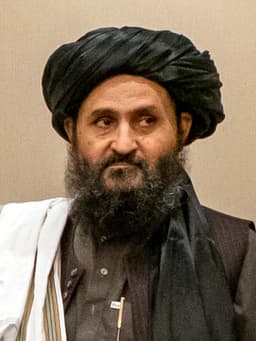
Abdul Ghani Baradar
Politician · Modern
48.8Total

Wangari Maathai
Politician · Modern
59.8Total
Basic Information
Born
1968
1940
Died
—
—
Era
Modern
Modern
Nationality
Afghanistan
Kenya
Occupation
Politician
Politician
Civilization
Middle Eastern
Other
Score Comparison
Military (10%)
47.5
50.0
Political (20%)
40.8
68.0
Influence (20%)
54.9
72.0
Legacy (20%)
45.0
52.0
Leadership (15%)
58.8
62.2
Strategy (15%)
41.0
43.1
TOTAL
48.8
59.8
Abdul Ghani Baradar — Complete Timeline
1994 AD
Co-founded the Taliban MovementPolitical Action
Abdul Ghani Baradar co-founded the Taliban movement alongside Mullah Omar in Kandahar. He played a key role in organizing the group's early military campaigns and establishing its ideological framework, becoming a top military commander.
AfghanistanTalibanFounding
Impact: global
2010 AD
Captured in Karachi by US-Pakistan ForcesPolitical Action◆ Major
Abdul Ghani Baradar was captured in a joint US-Pakistan intelligence operation in Karachi, Pakistan, in February 2010. His arrest was a major blow to the Taliban's leadership and disrupted their command structure during the war.
AfghanistanTalibanCapture
Impact: global
2018 AD
Released from Pakistani CustodyPolitical Action◆ Major
Abdul Ghani Baradar was released from Pakistani custody in October 2018 at the request of the US. His release was part of efforts to facilitate peace negotiations between the Taliban and the US, leading to the Doha Agreement.
AfghanistanTalibanPeace Process
Impact: global
2020 AD
Signed the Doha Agreement with the USPolitical Action
Abdul Ghani Baradar signed the Doha Agreement on behalf of the Taliban in February 2020. The agreement outlined the withdrawal of US troops from Afghanistan in exchange for Taliban security guarantees, paving the way for the Taliban's return to power.
AfghanistanPeace AgreementUS-Taliban
Impact: global
2021 AD
Appointed Deputy Prime Minister of AfghanistanPolitical Action◆ Major
Abdul Ghani Baradar was appointed Deputy Prime Minister of the Taliban-led government in Afghanistan in September 2021. He became a key figure in the new administration, overseeing economic and political affairs.
AfghanistanTalibanGovernment
Impact: national
Wangari Maathai — Complete Timeline
1977 AD
Founding of the Green Belt MovementCultural◆ Major
Wangari Maathai founded the Green Belt Movement, an environmental organization focused on tree planting, conservation, and women's rights. The movement mobilized rural women to plant millions of trees across Kenya, combating deforestation and soil erosion. It became a model for grassroots environmental activism worldwide.
EnvironmentalismWomen's EmpowermentTree Planting
Impact: globalconstructive
1989 AD
Protest Against the Construction of a Skyscraper in Uhuru ParkPolitical Action◆ Major
Wangari Maathai led a protest against the construction of a 60-story skyscraper in Nairobi's Uhuru Park. She argued the project would destroy a public green space. The protest drew international attention and led to the project's cancellation, but Maathai faced harassment and threats from the Moi government.
Environmental ProtestUhuru ParkCivil Disobedience
Impact: nationalconstructive
2002 AD
Election to the Kenyan ParliamentPolitical Action◆ Major
Wangari Maathai was elected to the Kenyan Parliament as a member for Tetu constituency. She served as Assistant Minister for Environment and Natural Resources. Her election marked a transition from activism to formal political power, allowing her to influence environmental policy directly.
ParliamentEnvironmental PolicyPolitical Office
Impact: nationalconstructive
2004 AD
Awarded the Nobel Peace PrizeCultural
Wangari Maathai was awarded the Nobel Peace Prize for her contribution to sustainable development, democracy, and peace. She was the first African woman to receive the prize. The Nobel Committee recognized the link between environmental stewardship and conflict prevention.
Nobel PrizePeaceEnvironment
Impact: globalconstructive
This comparison has not been analyzed yet.
One-time AI generation (~1 minute). Scores and timeline are already available below.
Rankings
🥇
Wangari MaathaiLeader
Mil: 50.0Pol: 68.0Inf: 72.0
59.8
🥈
Abdul Ghani Baradar
Mil: 47.5Pol: 40.8Inf: 54.9
48.8
+11.0 behind
How This Comparison Works
Algorithm
Each figure is scored on 6 dimensions (0—100 scale) based on structured historical data: Military (10%), Political (20%), Influence (20%), Legacy (20%), Leadership (15%), Strategy (15%). The weighted total produces the final ranking.
Data Sources
Scores are computed from structured sub-indicators in the database. Scale factors adjust for era (Ancient ×0.85, Modern ×1.0) and civilization size (Eastern ×1.05, Other ×0.80) to account for differences in population and military scale.
Maximum 3 Figures
Comparisons are limited to 2—3 figures to ensure readability and statistical meaningfulness.
Error Margins
±5 points per dimension — Sub-scores are derived from historical records with inherent uncertainty. Two figures within 5 points on a dimension should be considered roughly equivalent in that area.
Total Score Accuracy
±3 points overall — The weighted combination of 6 dimensions produces a total score with approximately ±3 points of uncertainty. Differences of less than 3 points are not statistically significant— the figures are effectively tied.
Known Limitations
- Historical records are incomplete and uneven across civilizations
- Figures from oral-tradition societies may be underrepresented
- Occupation labels can misclassify multi-role figures
- Scores measure capability and impact, not moral character
- Quantitative scoring is a comparison tool, not absolute truth
Capability Radar
Military (10%) — Battles & Warfare
Battles
30
22
Win Rate
40
24
Expansion
30
29
Political (20%) — Governance & Reform
Reform
25
60
Diplomacy
50
70
Economy
20
30
Influence (20%) — Cultural & Global Reach
Cultural
30
65
Global
40
70
Legacy (20%) — Historical Impact
Historical
40
70
Longevity
30
60
Leadership (15%) — Power & Stability
Tenure
40
20
Stability
15
40
Strategy (15%) — Tactics & Innovation
Strategy
40
29
Tactics
35
31
Reform
20
38
Similar Comparisons
Comments & Discussion
No comments yet. Be the first to share your thoughts!