Loading...
This comparison has not been analyzed yet.
One-time AI generation (~1 minute). Scores and timeline are already available below.
Abdul Haq vs Fuad Chehab
Fuad Chehab leads by 5.5 pts · 2 figures compared
…

Abdul Haq
General · Modern
44.4Total
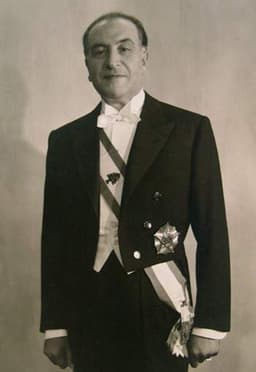
Fuad Chehab
General · Modern
49.9Total
Basic Information
Born
1958
1902
Died
—
1973
Era
Modern
Modern
Nationality
Afghanistan
Lebanon
Occupation
General
General
Civilization
Middle Eastern
Middle Eastern
Score Comparison
Military (10%)
20.0
10.2
Political (20%)
35.1
70.0
Influence (20%)
54.1
54.1
Legacy (20%)
44.2
44.2
Leadership (15%)
43.8
72.0
Strategy (15%)
60.0
30.3
TOTAL
44.4
49.9
Abdul Haq — Complete Timeline
1979 AD
Leadership in the Soviet-Afghan WarWar◆ Major
Abdul Haq emerged as a key mujahideen commander in the Soviet-Afghan War, leading operations in and around Kabul. He was known for his guerrilla tactics, including attacks on Soviet supply lines and military convoys, and became a symbol of resistance.
MujahideenGuerrilla WarfareResistance
Impact: regional
1996 AD
Opposition to the TalibanPolitical Action◆ Major
After the Taliban's rise, Abdul Haq became a vocal opponent, organizing anti-Taliban resistance from Pakistan. He sought to unite former mujahideen factions and advocated for international support to counter the Taliban's rule.
Anti-TalibanResistancePolitical Opposition
Impact: national
2001 AD
Attempted Return to Afghanistan and ExecutionPolitical Action◆ Major
Abdul Haq attempted to enter Afghanistan to rally anti-Taliban forces after the 9/11 attacks. He was captured by the Taliban near Logar province and executed. His death removed a key moderate figure who could have played a role in post-Taliban Afghanistan.
ExecutionTalibanPost-9/11
Impact: nationaltragic
Fuad Chehab — Complete Timeline
1958 AD
Launched Chehabist reforms and modernizationReform◆ Major
President Chehab implemented a series of reforms known as Chehabism, including administrative modernization, economic planning, and strengthening state institutions. He established the Central Bank of Lebanon and the Civil Service Board.
ReformModernizationState Building
Impact: nationalconstructive
Elected President of LebanonPolitical Action◆ Major
Fuad Chehab was elected President of Lebanon on September 23, 1958, succeeding Camille Chamoun. His election ended the 1958 crisis and was supported by both Christian and Muslim factions seeking stability.
PresidencyElectionStabilization
Impact: nationalconstructive
Created the Deuxième Bureau intelligence agencyPolitical Action
Chehab expanded the role of the Deuxi
IntelligenceSecurityAuthoritarianism
Impact: national
1960 AD
Presided over the 1960s economic boomOther
Under Chehab's presidency, Lebanon experienced a period of economic growth and stability, with Beirut becoming a major financial and tourism hub. His policies attracted foreign investment and expanded the middle class.
Economic GrowthBeirutProsperity
Impact: nationalconstructive
1964 AD
Refused to amend constitution for a second termPolitical Action
Chehab declined to seek a second term as president, respecting the constitutional limit. He retired from politics in 1964, setting a precedent for peaceful transitions of power in Lebanon.
ConstitutionTerm LimitRetirement
Impact: nationalconstructive
This comparison has not been analyzed yet.
One-time AI generation (~1 minute). Scores and timeline are already available below.
Rankings
🥇
Fuad ChehabLeader
Mil: 10.2Pol: 70.0Inf: 54.1
49.9
🥈
Abdul Haq
Mil: 20.0Pol: 35.1Inf: 54.1
44.4
+5.5 behind
How This Comparison Works
Algorithm
Each figure is scored on 6 dimensions (0—100 scale) based on structured historical data: Military (10%), Political (20%), Influence (20%), Legacy (20%), Leadership (15%), Strategy (15%). The weighted total produces the final ranking.
Data Sources
Scores are computed from structured sub-indicators in the database. Scale factors adjust for era (Ancient ×0.85, Modern ×1.0) and civilization size (Eastern ×1.05, Other ×0.80) to account for differences in population and military scale.
Maximum 3 Figures
Comparisons are limited to 2—3 figures to ensure readability and statistical meaningfulness.
Error Margins
±5 points per dimension — Sub-scores are derived from historical records with inherent uncertainty. Two figures within 5 points on a dimension should be considered roughly equivalent in that area.
Total Score Accuracy
±3 points overall — The weighted combination of 6 dimensions produces a total score with approximately ±3 points of uncertainty. Differences of less than 3 points are not statistically significant— the figures are effectively tied.
Known Limitations
- Historical records are incomplete and uneven across civilizations
- Figures from oral-tradition societies may be underrepresented
- Occupation labels can misclassify multi-role figures
- Scores measure capability and impact, not moral character
- Quantitative scoring is a comparison tool, not absolute truth
Capability Radar
Military (10%) — Battles & Warfare
Battles
45
5
Win Rate
40
5
Expansion
30
5
Political (20%) — Governance & Reform
Reform
15
65
Diplomacy
35
60
Economy
10
50
Influence (20%) — Cultural & Global Reach
Cultural
30
30
Global
25
25
Legacy (20%) — Historical Impact
Historical
35
35
Longevity
20
30
Leadership (15%) — Power & Stability
Tenure
25
55
Stability
15
45
Strategy (15%) — Tactics & Innovation
Strategy
45
10
Tactics
50
10
Reform
20
20
Similar Comparisons
Comments & Discussion
No comments yet. Be the first to share your thoughts!