Loading...
Analysis will be generated on first visit.
Scores and timeline are available below. The page will refresh automatically when ready.
Abdul Qadeer Khan vs Julius Caesar
Julius Caesar leads by 15.2 pts · 2 figures compared
…

Abdul Qadeer Khan
General · Modern
68.1Total
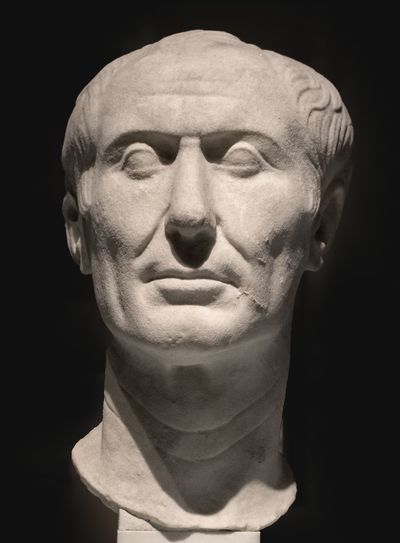
Julius Caesar
General · Ancient
83.3Total
Basic Information
Born
1936
-100
Died
—
-44
Era
Modern
Ancient
Nationality
Pakistan
Roman Republic
Occupation
General
General
Civilization
Indian
Western
Score Comparison
Military (10%)
55.7
88.0
Political (20%)
72.5
78.0
Influence (20%)
76.5
85.0
Legacy (20%)
65.8
82.0
Leadership (15%)
72.0
82.0
Strategy (15%)
58.4
88.0
TOTAL
68.1
83.3
Rankings
🥇
Julius CaesarLeader
Mil: 88.0Pol: 78.0Inf: 85.0
83.3
🥈
Abdul Qadeer Khan
Mil: 55.7Pol: 72.5Inf: 76.5
68.1
+15.2 behind
How This Comparison Works
Algorithm
Each figure is scored on 6 dimensions (0—100 scale) based on structured historical data: Military (10%), Political (20%), Influence (20%), Legacy (20%), Leadership (15%), Strategy (15%). The weighted total produces the final ranking.
Data Sources
Scores are computed from structured sub-indicators in the database. Scale factors adjust for era (Ancient ×0.85, Modern ×1.0) and civilization size (Eastern ×1.05, Other ×0.80) to account for differences in population and military scale.
Maximum 3 Figures
Comparisons are limited to 2—3 figures to ensure readability and statistical meaningfulness.
Error Margins
±5 points per dimension — Sub-scores are derived from historical records with inherent uncertainty. Two figures within 5 points on a dimension should be considered roughly equivalent in that area.
Total Score Accuracy
±3 points overall — The weighted combination of 6 dimensions produces a total score with approximately ±3 points of uncertainty. Differences of less than 3 points are not statistically significant— the figures are effectively tied.
Known Limitations
- Historical records are incomplete and uneven across civilizations
- Figures from oral-tradition societies may be underrepresented
- Occupation labels can misclassify multi-role figures
- Scores measure capability and impact, not moral character
- Quantitative scoring is a comparison tool, not absolute truth
Capability Radar
Military (10%) — Battles & Warfare
Battles
47
95
Win Rate
53
92
Expansion
50
97
Political (20%) — Governance & Reform
Reform
71
90
Diplomacy
73
85
Economy
75
82
Influence (20%) — Cultural & Global Reach
Cultural
30
88
Global
60
94
Legacy (20%) — Historical Impact
Historical
65
95
Longevity
55
96
Leadership (15%) — Power & Stability
Tenure
66
75
Stability
76
60
Strategy (15%) — Tactics & Innovation
Strategy
56
94
Tactics
57
96
Reform
64
88
Analysis will be generated on first visit.
Scores and timeline are available below. The page will refresh automatically when ready.
Abdul Qadeer Khan — Complete Timeline
1976 AD
Establishment of the Khan Research LaboratoriesInvention
Abdul Qadeer Khan founded the Khan Research Laboratories (KRL) in Kahuta, a secret facility dedicated to uranium enrichment. The lab became the center of Pakistan's nuclear weapons program, developing centrifuge technology for weapons-grade material.
KRLUranium EnrichmentNuclear Program
Impact: globalconstructive
1998 AD
First Nuclear Test (Chagai-I)Invention◆ Major
Pakistan conducted its first nuclear tests at the Chagai test site in Balochistan, using designs and materials developed under A.Q. Khan's leadership. The tests made Pakistan a nuclear-armed state, altering the strategic balance in South Asia.
Nuclear TestChagaiNuclear Power
Impact: globalconstructive
2004 AD
Confession of Nuclear ProliferationPolitical Action◆ Major
A.Q. Khan confessed on national television to running a clandestine nuclear proliferation network that supplied technology to Iran, Libya, and North Korea. He was placed under house arrest, damaging Pakistan's international reputation.
ProliferationConfessionInternational Scandal
Impact: globaldestructive
House Arrest and Legal ProceedingsPolitical Action◆ Major
After his confession, A.Q. Khan was placed under house arrest in Islamabad. He faced no formal trial, and his detention was widely seen as a compromise to avoid revealing state involvement in proliferation. He remained under restriction until his death.
House ArrestLegal LimboProliferation
Impact: nationaltragic
Similar Comparisons
Comments & Discussion
No comments yet. Be the first to share your thoughts!