Loading...
This comparison has not been analyzed yet.
One-time AI generation (~1 minute). Scores and timeline are already available below.
Abdul Rahman al-Iryani vs Yuan Shikai
Yuan Shikai leads by 9.6 pts · 2 figures compared
…
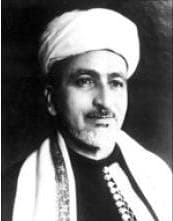
Abdul Rahman al-Iryani
Politician · Modern
50.4Total
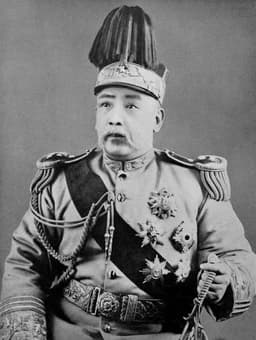
Yuan Shikai
Politician · Modern
60.0Total
Basic Information
Born
1910
1859
Died
1998
1916
Era
Modern
Modern
Nationality
North Yemen
China
Occupation
Politician
Politician
Civilization
Middle Eastern
Eastern
Score Comparison
Military (10%)
48.6
45.0
Political (20%)
54.7
72.0
Influence (20%)
49.4
57.2
Legacy (20%)
40.8
54.0
Leadership (15%)
72.0
72.0
Strategy (15%)
39.9
61.2
TOTAL
50.4
60.0
Abdul Rahman al-Iryani — Complete Timeline
1967 AD
Became President of North YemenPolitical Action◆ Major
Abdul Rahman al-Iryani became President of the Yemen Arab Republic after the deposition of Abdullah al-Sallal. He led a moderate republican government during the final years of the North Yemen Civil War.
YemenPresidentCivil War
Impact: nationalconstructive
1970 AD
Ended the North Yemen Civil WarPolitical Action
Al-Iryani negotiated a peace agreement with royalist forces, ending the eight-year North Yemen Civil War. The settlement integrated some royalists into the republican government, stabilizing the country.
YemenPeaceCivil War
Impact: nationalconstructive
1974 AD
Resigned and Went into ExilePolitical Action◆ Major
Abdul Rahman al-Iryani resigned as president following a bloodless coup led by Ibrahim al-Hamdi. He went into exile in Syria, ending his political career. His resignation marked a shift to military rule.
YemenResignationCoup
Impact: national
Yuan Shikai — Complete Timeline
1901 AD
Command of the Beiyang ArmyReform◆ Major
Yuan Shikai took command of the Beiyang Army, the most modern military force in late Qing China. He expanded and trained the army, which became the basis for his political power and later dominated Chinese politics.
Military reformBeiyang Army
Impact: national
1912 AD
Appointed First President of the Republic of ChinaPolitical Action
Yuan Shikai became the first president of the Republic of China after negotiating the abdication of the Qing emperor. He used his control of the Beiyang Army to pressure the revolutionary government into accepting his leadership.
PresidencyRepublic of China
Impact: national
1915 AD
Declaration of the Empire of ChinaPolitical Action◆ Major
Yuan Shikai declared himself emperor of the Empire of China, attempting to restore the monarchy. This move sparked widespread opposition from provincial leaders and foreign powers, leading to the collapse of his regime.
Monarchy restorationPolitical crisis
Impact: nationaldestructive
Signing of the Twenty-One DemandsPolitical Action◆ Major
Yuan Shikai accepted most of Japan's Twenty-One Demands, which expanded Japanese influence in China. The agreement granted Japan economic rights in Manchuria and Shandong, and was seen as a national humiliation.
DiplomacyJapanese imperialism
Impact: globaltragic
1916 AD
Death and Collapse of the Beiyang GovernmentPolitical Action◆ Major
Yuan Shikai died of uremia, leaving no clear successor. His death led to the fragmentation of the Beiyang Army into warlord factions, plunging China into a period of civil war and political instability.
Warlord eraPolitical fragmentation
Impact: nationaltragic
This comparison has not been analyzed yet.
One-time AI generation (~1 minute). Scores and timeline are already available below.
Rankings
🥇
Yuan ShikaiLeader
Mil: 45.0Pol: 72.0Inf: 57.2
60.0
🥈
Abdul Rahman al-Iryani
Mil: 48.6Pol: 54.7Inf: 49.4
50.4
+9.6 behind
How This Comparison Works
Algorithm
Each figure is scored on 6 dimensions (0—100 scale) based on structured historical data: Military (10%), Political (20%), Influence (20%), Legacy (20%), Leadership (15%), Strategy (15%). The weighted total produces the final ranking.
Data Sources
Scores are computed from structured sub-indicators in the database. Scale factors adjust for era (Ancient ×0.85, Modern ×1.0) and civilization size (Eastern ×1.05, Other ×0.80) to account for differences in population and military scale.
Maximum 3 Figures
Comparisons are limited to 2—3 figures to ensure readability and statistical meaningfulness.
Error Margins
±5 points per dimension — Sub-scores are derived from historical records with inherent uncertainty. Two figures within 5 points on a dimension should be considered roughly equivalent in that area.
Total Score Accuracy
±3 points overall — The weighted combination of 6 dimensions produces a total score with approximately ±3 points of uncertainty. Differences of less than 3 points are not statistically significant— the figures are effectively tied.
Known Limitations
- Historical records are incomplete and uneven across civilizations
- Figures from oral-tradition societies may be underrepresented
- Occupation labels can misclassify multi-role figures
- Scores measure capability and impact, not moral character
- Quantitative scoring is a comparison tool, not absolute truth
Capability Radar
Military (10%) — Battles & Warfare
Battles
22
45
Win Rate
23
55
Expansion
30
50
Political (20%) — Governance & Reform
Reform
40
55
Diplomacy
50
70
Economy
35
50
Influence (20%) — Cultural & Global Reach
Cultural
20
40
Global
15
35
Legacy (20%) — Historical Impact
Historical
25
65
Longevity
20
40
Leadership (15%) — Power & Stability
Tenure
55
60
Stability
55
30
Strategy (15%) — Tactics & Innovation
Strategy
30
65
Tactics
36
60
Reform
38
80
Similar Comparisons
Comments & Discussion
No comments yet. Be the first to share your thoughts!