Loading...
This comparison has not been analyzed yet.
One-time AI generation (~1 minute). Scores and timeline are already available below.
Abdul Rahman al-Iryani vs Zhu Rongji
Zhu Rongji leads by 14.8 pts · 2 figures compared
…
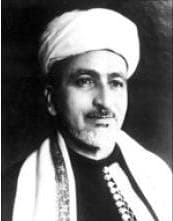
Abdul Rahman al-Iryani
Politician · Modern
50.4Total

Zhu Rongji
Politician · Modern
65.2Total
Basic Information
Born
1910
1928
Died
1998
—
Era
Modern
Modern
Nationality
North Yemen
China
Occupation
Politician
Politician
Civilization
Middle Eastern
Eastern
Score Comparison
Military (10%)
48.6
12.5
Political (20%)
54.7
84.4
Influence (20%)
49.4
82.0
Legacy (20%)
40.8
65.0
Leadership (15%)
72.0
72.0
Strategy (15%)
39.9
37.0
TOTAL
50.4
65.2
Abdul Rahman al-Iryani — Complete Timeline
1967 AD
Became President of North YemenPolitical Action◆ Major
Abdul Rahman al-Iryani became President of the Yemen Arab Republic after the deposition of Abdullah al-Sallal. He led a moderate republican government during the final years of the North Yemen Civil War.
YemenPresidentCivil War
Impact: nationalconstructive
1970 AD
Ended the North Yemen Civil WarPolitical Action
Al-Iryani negotiated a peace agreement with royalist forces, ending the eight-year North Yemen Civil War. The settlement integrated some royalists into the republican government, stabilizing the country.
YemenPeaceCivil War
Impact: nationalconstructive
1974 AD
Resigned and Went into ExilePolitical Action◆ Major
Abdul Rahman al-Iryani resigned as president following a bloodless coup led by Ibrahim al-Hamdi. He went into exile in Syria, ending his political career. His resignation marked a shift to military rule.
YemenResignationCoup
Impact: national
Zhu Rongji — Complete Timeline
1987 AD
Became Mayor of ShanghaiPolitical Action◆ Major
Zhu Rongji was appointed Mayor of Shanghai, where he implemented market-oriented reforms and improved infrastructure. His success in transforming Shanghai's economy earned him national recognition.
ShanghaiEconomic ReformUrban Development
Impact: regionalconstructive
1991 AD
Appointed Vice Premier for economic affairsPolitical Action◆ Major
Zhu Rongji was promoted to Vice Premier, tasked with tackling inflation and reforming state-owned enterprises. He implemented tight monetary policies and began restructuring the banking system.
Economic ReformVice PremierInflation Control
Impact: nationalconstructive
1998 AD
Became Premier of the People's Republic of ChinaPolitical Action◆ Major
Zhu Rongji became Premier, succeeding Li Peng. He accelerated economic reforms, including joining the World Trade Organization, privatizing state enterprises, and reducing tariffs.
PremierEconomic ReformWTO Accession
Impact: globalconstructive
2001 AD
Oversaw China's accession to the WTOPolitical Action
Under Zhu Rongji's leadership, China joined the World Trade Organization, committing to extensive trade liberalization. This integration into the global economy spurred rapid economic growth and foreign investment.
WTOGlobalizationEconomic Growth
Impact: globalconstructive
2003 AD
Retired from politicsPolitical Action
Zhu Rongji stepped down as Premier after two terms, retiring from public life. He was succeeded by Wen Jiabao, and his reforms continued to shape China's economy.
RetirementPolitical TransitionEconomic Legacy
Impact: national
This comparison has not been analyzed yet.
One-time AI generation (~1 minute). Scores and timeline are already available below.
Rankings
🥇
Zhu RongjiLeader
Mil: 12.5Pol: 84.4Inf: 82.0
65.2
🥈
Abdul Rahman al-Iryani
Mil: 48.6Pol: 54.7Inf: 49.4
50.4
+14.8 behind
How This Comparison Works
Algorithm
Each figure is scored on 6 dimensions (0—100 scale) based on structured historical data: Military (10%), Political (20%), Influence (20%), Legacy (20%), Leadership (15%), Strategy (15%). The weighted total produces the final ranking.
Data Sources
Scores are computed from structured sub-indicators in the database. Scale factors adjust for era (Ancient ×0.85, Modern ×1.0) and civilization size (Eastern ×1.05, Other ×0.80) to account for differences in population and military scale.
Maximum 3 Figures
Comparisons are limited to 2—3 figures to ensure readability and statistical meaningfulness.
Error Margins
±5 points per dimension — Sub-scores are derived from historical records with inherent uncertainty. Two figures within 5 points on a dimension should be considered roughly equivalent in that area.
Total Score Accuracy
±3 points overall — The weighted combination of 6 dimensions produces a total score with approximately ±3 points of uncertainty. Differences of less than 3 points are not statistically significant— the figures are effectively tied.
Known Limitations
- Historical records are incomplete and uneven across civilizations
- Figures from oral-tradition societies may be underrepresented
- Occupation labels can misclassify multi-role figures
- Scores measure capability and impact, not moral character
- Quantitative scoring is a comparison tool, not absolute truth
Capability Radar
Military (10%) — Battles & Warfare
Battles
22
14
Win Rate
23
16
Expansion
30
23
Political (20%) — Governance & Reform
Reform
40
95
Diplomacy
50
75
Economy
35
98
Influence (20%) — Cultural & Global Reach
Cultural
20
50
Global
15
80
Legacy (20%) — Historical Impact
Historical
25
85
Longevity
20
70
Leadership (15%) — Power & Stability
Tenure
55
70
Stability
55
80
Strategy (15%) — Tactics & Innovation
Strategy
30
20
Tactics
36
24
Reform
38
30
Similar Comparisons
Comments & Discussion
No comments yet. Be the first to share your thoughts!