Loading...
This comparison has not been analyzed yet.
One-time AI generation (~1 minute). Scores and timeline are already available below.
Abdullahi Yusuf Ahmed vs Yen Chia-kan
Abdullahi Yusuf Ahmed leads by 7.7 pts · 2 figures compared
…
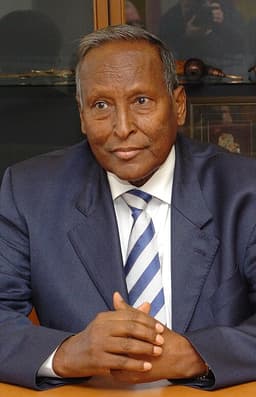
Abdullahi Yusuf Ahmed
Politician · Modern
42.8Total
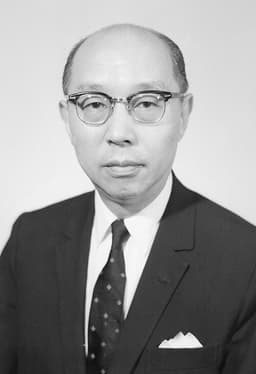
Yen Chia-kan
Politician · Modern
35.1Total
Basic Information
Born
1934
1905
Died
—
1993
Era
Modern
Modern
Nationality
Somalia
China
Occupation
Politician
Politician
Civilization
Other
Eastern
Score Comparison
Military (10%)
36.6
15.4
Political (20%)
35.1
26.4
Influence (20%)
47.1
45.5
Legacy (20%)
38.3
35.8
Leadership (15%)
48.4
45.0
Strategy (15%)
52.8
25.6
TOTAL
42.8
35.1
Abdullahi Yusuf Ahmed — Complete Timeline
2004 AD
Became First President of Transitional Federal GovernmentPolitical Action◆ Major
Abdullahi Yusuf Ahmed was elected as the first president of the Transitional Federal Government (TFG) of Somalia, established in Kenya. This was an attempt to restore central governance after decades of civil war and state collapse.
Transitional GovernmentSomaliaPresidency
Impact: nationalconstructive
2006 AD
Ethiopian Military InterventionWar◆ Major
As president, Abdullahi Yusuf requested and facilitated Ethiopian military intervention to oust the Islamic Courts Union from Mogadishu. This intervention led to a protracted insurgency and further destabilized southern Somalia.
Ethiopian InterventionIslamic CourtsWar
Impact: regionaldestructive
2008 AD
Resigned from PresidencyPolitical Action◆ Major
Facing internal divisions, a stalled peace process, and the rise of the Islamic Courts Union, Abdullahi Yusuf resigned as president. His resignation highlighted the failure of the TFG to establish effective control over Somalia.
ResignationPolitical FailureSomalia
Impact: nationaldestructive
Yen Chia-kan — Complete Timeline
1966 AD
Vice Presidency of the Republic of ChinaPolitical Action◆ Major
Yen Chia-kan served as Vice President under Chiang Kai-shek from 1966 to 1975. He held the position during a period of political stability and economic growth in Taiwan.
Vice PresidentROCChiang Kai-shek
Impact: national
1975 AD
Presidency of the Republic of ChinaPolitical Action◆ Major
Upon the death of Chiang Kai-shek, Yen Chia-kan succeeded him as President of the Republic of China. He served from 1975 to 1978, overseeing the transition of power to Chiang Ching-kuo.
PresidentSuccessionROC
Impact: national
1978 AD
Resignation from PresidencyPolitical Action
Yen Chia-kan resigned the presidency in 1978, allowing Chiang Ching-kuo to assume the office. This peaceful transfer of power was a key moment in Taiwan's political development.
ResignationPower TransitionROC
Impact: nationalconstructive
This comparison has not been analyzed yet.
One-time AI generation (~1 minute). Scores and timeline are already available below.
Rankings
🥇
Abdullahi Yusuf AhmedLeader
Mil: 36.6Pol: 35.1Inf: 47.1
42.8
🥈
Yen Chia-kan
Mil: 15.4Pol: 26.4Inf: 45.5
35.1
+7.7 behind
How This Comparison Works
Algorithm
Each figure is scored on 6 dimensions (0—100 scale) based on structured historical data: Military (10%), Political (20%), Influence (20%), Legacy (20%), Leadership (15%), Strategy (15%). The weighted total produces the final ranking.
Data Sources
Scores are computed from structured sub-indicators in the database. Scale factors adjust for era (Ancient ×0.85, Modern ×1.0) and civilization size (Eastern ×1.05, Other ×0.80) to account for differences in population and military scale.
Maximum 3 Figures
Comparisons are limited to 2—3 figures to ensure readability and statistical meaningfulness.
Error Margins
±5 points per dimension — Sub-scores are derived from historical records with inherent uncertainty. Two figures within 5 points on a dimension should be considered roughly equivalent in that area.
Total Score Accuracy
±3 points overall — The weighted combination of 6 dimensions produces a total score with approximately ±3 points of uncertainty. Differences of less than 3 points are not statistically significant— the figures are effectively tied.
Known Limitations
- Historical records are incomplete and uneven across civilizations
- Figures from oral-tradition societies may be underrepresented
- Occupation labels can misclassify multi-role figures
- Scores measure capability and impact, not moral character
- Quantitative scoring is a comparison tool, not absolute truth
Capability Radar
Military (10%) — Battles & Warfare
Battles
5
15
Win Rate
5
16
Expansion
5
19
Political (20%) — Governance & Reform
Reform
20
10
Diplomacy
25
15
Economy
15
10
Influence (20%) — Cultural & Global Reach
Cultural
10
5
Global
10
5
Legacy (20%) — Historical Impact
Historical
20
10
Longevity
10
5
Leadership (15%) — Power & Stability
Tenure
30
20
Stability
10
15
Strategy (15%) — Tactics & Innovation
Strategy
5
25
Tactics
5
26
Reform
5
29
Similar Comparisons
Comments & Discussion
No comments yet. Be the first to share your thoughts!