Loading...
This comparison has not been analyzed yet.
One-time AI generation (~1 minute). Scores and timeline are already available below.
Abdulqawi Yusuf vs Charles De Geer
Charles De Geer leads by 9.1 pts · 2 figures compared
…

Abdulqawi Yusuf
Politician · Modern
42.5Total
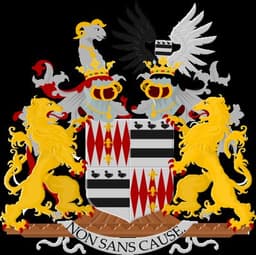
Charles De Geer
Politician · Modern
51.6Total
Basic Information
Born
1948
1720
Died
—
1778
Era
Modern
Modern
Nationality
Somalia
Sweden
Occupation
Politician
Politician
Civilization
Other
Western
Score Comparison
Military (10%)
50.0
49.0
Political (20%)
27.9
53.8
Influence (20%)
50.2
51.8
Legacy (20%)
39.2
45.0
Leadership (15%)
45.0
68.0
Strategy (15%)
41.8
42.6
TOTAL
42.5
51.6
Abdulqawi Yusuf — Complete Timeline
2009 AD
Elected Judge of the International Court of JusticePolitical Action◆ Major
Abdulqawi Yusuf was elected as a judge of the International Court of Justice (ICJ) in 2009, becoming the first Somali to serve on the court. He was re-elected in 2018 for a second nine-year term, contributing to international legal jurisprudence.
International LawICJJudicial Appointment
Impact: globalconstructive
2015 AD
Served as ICJ Vice-PresidentPolitical Action◆ Major
Abdulqawi Yusuf was elected Vice-President of the International Court of Justice in 2015, serving until 2018. In this role, he assisted in the administration of the court and participated in major cases, including advisory opinions on Kosovo and the Chagos Archipelago.
ICJLeadershipInternational Law
Impact: globalconstructive
2018 AD
Elected ICJ PresidentPolitical Action
Abdulqawi Yusuf was elected President of the International Court of Justice in 2018, becoming the first African to hold the position since 1994. He presided over the court's proceedings and represented it internationally until his term ended in 2021.
ICJPresidencyInternational Law
Impact: globalconstructive
Charles De Geer — Complete Timeline
1738 AD
Leader of the Hat PartyPolitical Action◆ Major
Charles De Geer became the leader of the Hat Party in the Swedish Riksdag, advocating for a more aggressive foreign policy against Russia and closer ties with France. His leadership shaped Swedish politics during the Age of Liberty.
Swedish PoliticsHat PartyAge of Liberty
Impact: national
1740 AD
Industrial Expansion in SwedenReform◆ Major
De Geer expanded his family's ironworks and textile mills, becoming one of Sweden's leading industrialists. His enterprises boosted Swedish exports and economic growth during the 18th century.
IndustryEconomySwedish History
Impact: nationalconstructive
1741 AD
Hat Party's War PolicyPolitical Action◆ Major
De Geer supported the Hat Party's decision to declare war on Russia in 1741, known as the Hats' Russian War. The war ended in Swedish defeat and territorial losses, damaging the party's reputation.
WarHat PartyForeign Policy
Impact: nationaldestructive
This comparison has not been analyzed yet.
One-time AI generation (~1 minute). Scores and timeline are already available below.
Rankings
🥇
Charles De GeerLeader
Mil: 49.0Pol: 53.8Inf: 51.8
51.6
🥈
Abdulqawi Yusuf
Mil: 50.0Pol: 27.9Inf: 50.2
42.5
+9.1 behind
How This Comparison Works
Algorithm
Each figure is scored on 6 dimensions (0—100 scale) based on structured historical data: Military (10%), Political (20%), Influence (20%), Legacy (20%), Leadership (15%), Strategy (15%). The weighted total produces the final ranking.
Data Sources
Scores are computed from structured sub-indicators in the database. Scale factors adjust for era (Ancient ×0.85, Modern ×1.0) and civilization size (Eastern ×1.05, Other ×0.80) to account for differences in population and military scale.
Maximum 3 Figures
Comparisons are limited to 2—3 figures to ensure readability and statistical meaningfulness.
Error Margins
±5 points per dimension — Sub-scores are derived from historical records with inherent uncertainty. Two figures within 5 points on a dimension should be considered roughly equivalent in that area.
Total Score Accuracy
±3 points overall — The weighted combination of 6 dimensions produces a total score with approximately ±3 points of uncertainty. Differences of less than 3 points are not statistically significant— the figures are effectively tied.
Known Limitations
- Historical records are incomplete and uneven across civilizations
- Figures from oral-tradition societies may be underrepresented
- Occupation labels can misclassify multi-role figures
- Scores measure capability and impact, not moral character
- Quantitative scoring is a comparison tool, not absolute truth
Capability Radar
Military (10%) — Battles & Warfare
Battles
24
29
Win Rate
24
35
Expansion
29
33
Political (20%) — Governance & Reform
Reform
10
55
Diplomacy
30
50
Economy
10
70
Influence (20%) — Cultural & Global Reach
Cultural
10
30
Global
20
20
Legacy (20%) — Historical Impact
Historical
15
40
Longevity
10
30
Leadership (15%) — Power & Stability
Tenure
20
60
Stability
15
45
Strategy (15%) — Tactics & Innovation
Strategy
28
38
Tactics
36
40
Reform
38
45
Similar Comparisons
Comments & Discussion
No comments yet. Be the first to share your thoughts!