Loading...
Abebe Aregai vs Afonso de Albuquerque
Afonso de Albuquerque leads by 21.4 pts · 2 figures compared
…
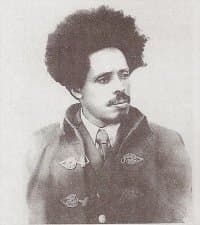
Abebe Aregai
General · Modern
58.2Total
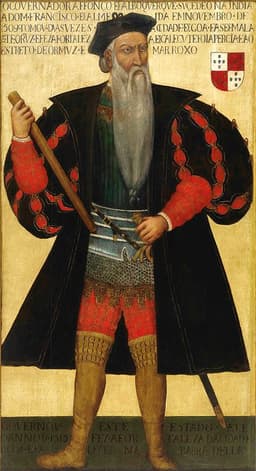
Afonso de Albuquerque
General · Medieval
79.6Total
Basic Information
Born
1903
1453
Died
1960
1515
Era
Modern
Medieval
Nationality
Ethiopia
Portugal
Occupation
General
General
Civilization
Other
Western
Score Comparison
Military (10%)
70.0
77.5
Political (20%)
53.8
88.0
Influence (20%)
62.0
80.0
Legacy (20%)
50.0
75.0
Leadership (15%)
62.0
78.0
Strategy (15%)
58.0
82.0
TOTAL
58.2
79.6
Abebe Aregai — Complete Timeline
1936 AD
Led Arbegnoch Resistance against Italian OccupationWar
After the Italian conquest, Abebe Aregai organized and led the Arbegnoch (Patriots) guerrilla resistance in Shewa. His forces harassed Italian supply lines and conducted hit-and-run attacks for five years.
ResistanceGuerrilla WarfareItalian Occupation
Impact: regionalconstructive
1957 AD
Appointed Prime Minister of EthiopiaPolitical Action◆ Major
Emperor Haile Selassie appointed Abebe Aregai as Prime Minister of Ethiopia. He served until his death in 1960, overseeing post-war reconstruction and modernization efforts.
Prime MinisterGovernmentReconstruction
Impact: nationalconstructive
1960 AD
Killed during 1960 Coup AttemptPolitical Action◆ Major
Abebe Aregai was assassinated during an attempted coup d'
CoupAssassinationEthiopia
Impact: nationaltragic
Afonso de Albuquerque — Complete Timeline
1503 AD
First voyage to IndiaWar◆ Major
Afonso de Albuquerque led a fleet to India, establishing the first Portuguese fort at Cochin. This voyage laid the foundation for Portuguese control of the Indian Ocean trade.
ExplorationColonialismIndia
Impact: global
1510 AD
Conquest of GoaWar◆ Major
Albuquerque captured Goa from the Sultan of Bijapur. He made Goa the capital of Portuguese India, a position it held for over 400 years.
ConquestColonialismIndia
Impact: regional
1511 AD
Conquest of MalaccaWar◆ Major
Albuquerque led a Portuguese fleet to capture the strategic port of Malacca. This gave Portugal control of the spice trade route between the Indian Ocean and the Pacific.
ConquestSpice TradeSoutheast Asia
Impact: global
1513 AD
Siege of AdenWar
Albuquerque attempted to capture Aden in Yemen but failed. This failure prevented Portugal from controlling the entrance to the Red Sea and limited their influence in the region.
SiegeFailureRed Sea
Impact: regional
1515 AD
Death at seaOther◆ Major
Afonso de Albuquerque died at sea off the coast of Goa, possibly from illness or poison. His death left the Portuguese Empire in the Indian Ocean without its most capable leader.
DeathLeadershipEmpire
Impact: regionaltragic
Expert Analysis
Afonso de Albuquerque vs Abebe Aregai
# The Conqueror and the Patriot: Two Paths to Empire
The Portuguese admiral lay dying on the deck of his flagship, the waters of the Indian Ocean lapping against the hull as Goa faded on the horizon. Afonso de Albuquerque, the founder of Portugal's Eastern empire, had just learned that his greatest rival had been appointed his successor. Four centuries later, in the highlands of Shewa, another military leader slipped through the forest with a band of ragged fighters, striking Italian supply lines and vanishing into the mist. Abebe Aregai had no fleet, no cannons, no royal patronage—only the conviction that his country would not be erased. One man built an empire from the sea; the other defended a nation from the mountains. Their lives, separated by centuries and continents, ask the same question: what does it mean to conquer, and what does it mean to resist?
Origins
Albuquerque was born in 1453, the year Constantinople fell, into a Portugal already drunk on exploration. His father was a courtier, his family connected to the royal household, and young Afonso learned early that the world beyond Europe was a prize waiting to be claimed. Portugal had spent decades perfecting the caravel, charting the African coast, and dreaming of India's spices. Albuquerque absorbed this ambition like a second skin—he was not merely a soldier but an instrument of a kingdom's will.
Abebe Aregai came into the world in 1903, when Ethiopia was the last independent kingdom in Africa, a Christian island in a sea of European colonies. His people had fought off Italians once before, at Adwa in 1896, but the memory of that victory was already fading into legend. Abebe grew up in a feudal society where loyalty was owed to lords and emperors, not to abstract nations. He was a product of the Ethiopian highlands—hard, resilient, and suspicious of outsiders. Where Albuquerque saw the world as a map to be redrawn, Abebe saw it as a home to be defended.
Rise to Power
Albuquerque's first voyage to India in 1503 was a proving ground. He arrived not as a conqueror but as a negotiator, securing permission to build a fort at Cochin. The Portuguese were still learning the rhythms of the Indian Ocean—the monsoon winds, the rival sultanates, the complex networks of Hindu and Muslim traders. Albuquerque watched, calculated, and waited. His opportunity came in 1510, when he captured Goa from the Sultan of Bijapur. The victory was brutal, the slaughter immense, but Albuquerque understood something his contemporaries did not: to rule the sea, one must control the land. Goa became the capital of Portuguese India, a fortress from which he could project power across the ocean.
Abebe Aregai's rise was slower, harder, and more desperate. When Italian forces invaded Ethiopia in 1935, the Emperor Haile Selassie fled into exile, and the regular army collapsed. Abebe refused to surrender. In the forests of Shewa, he gathered the *Arbegnoch*—the Patriots—and began a guerrilla war that would last five years. He had no navy, no artillery, no supply lines. He had only the terrain and the loyalty of men who would rather die than kneel. By 1937, his forces controlled large parts of the countryside, ambushing Italian columns and melting back into the hills. He was not a general in the European sense; he was a chieftain leading a people's war.
Leadership & Governance
Albuquerque governed with a vision that bordered on obsession. He understood that the spice trade was the lifeblood of Portugal's empire, and he pursued it with ruthless logic. The conquest of Malacca in 1511 gave Portugal control of the Strait of Malacca, the choke point through which all Asian trade flowed. He built fortresses, appointed governors, and married Portuguese soldiers to local women, creating a mixed-race population loyal to Lisbon. His failure at Aden in 1513, where he tried but failed to capture the entrance to the Red Sea, was a strategic wound that never healed—without Aden, the Ottomans could still threaten Portuguese shipping. Yet even in defeat, Albuquerque thought in terms of systems, not battles.
Abebe Aregai governed differently. After the war, Emperor Haile Selassie appointed him Prime Minister in 1957, a role that required not conquest but administration. Ethiopia was a feudal empire struggling to modernize, and Abebe was caught between tradition and change. He oversaw infrastructure projects, reformed the military, and tried to build a government that could survive the emperor's eventual death. He was not a visionary like Albuquerque; he was a pragmatist, a fixer, a man who knew that survival mattered more than glory.
Triumph & Tragedy
Albuquerque's greatest triumph was the conquest of Malacca in 1511. He sailed into the harbor with eighteen ships, bombarded the city, and stormed the walls with a force of barely a thousand men. The victory gave Portugal control of the spice trade for a century. His greatest tragedy came four years later, when he died at sea, possibly poisoned, possibly from illness, having just learned that his political enemies in Lisbon had replaced him. He was buried in Goa, but his heart was broken.
Abebe Aregai's triumph was survival itself. He led a guerrilla war against a European power and won—not by defeating the Italians in battle, but by outlasting them. When the British liberated Ethiopia in 1941, Abebe emerged from the forests as a hero. His tragedy came in 1960, when a coup attempt by the Imperial Bodyguard caught him off guard. He was killed while trying to negotiate, shot down by men who had once served under him. He died not on a battlefield but in a palace, defending a government that would itself fall fourteen years later.
Character & Destiny
Albuquerque was a man of the Renaissance—ambitious, calculating, and utterly convinced of his own rightness. He wrote letters to King Manuel I filled with grand plans for diverting the Nile, conquering Mecca, and uniting Christendom against Islam. He was also cruel, ordering massacres and torturing prisoners. His destiny was to build an empire that would outlast him, but also to die alone, betrayed by the court he had served.
Abebe Aregai was a man of the twentieth century—nationalist, patient, and deeply tied to his land. He did not dream of conquering the world; he dreamed of freeing his country. His destiny was to become a symbol of resistance, but also to be killed by the very modernity he had helped bring to Ethiopia. One built an empire of ships and forts; the other built a memory of defiance.
Legacy
Albuquerque's legacy is visible on every map of the Indian Ocean. Goa remained Portuguese until 1961. The forts he built still stand. The mixed-race communities he encouraged still exist. But his empire was always fragile, dependent on ships that took months to sail from Lisbon. When the British and Dutch arrived in the seventeenth century, Portuguese power crumbled. Albuquerque built an empire of the sea, and the sea eventually took it back.
Abebe Aregai's legacy is harder to see but deeper. He proved that a small nation could resist a great power, not by matching its strength but by refusing to surrender. His guerrilla tactics inspired anti-colonial movements across Africa. When Emperor Haile Selassie fell in 1974, and when the Derg turned Ethiopia into a Soviet client state, the memory of the *Arbegnoch* remained—a reminder that Ethiopia had never been conquered, not truly, not forever.
Conclusion
Two men, two worlds, two kinds of conquest. Albuquerque sailed across oceans to build an empire that lasted four centuries but never truly belonged to the land it ruled. Abebe Aregai fought in the mountains to defend a country that had stood for millennia and would stand for millennia more. One conquered with cannons and forts; the other conquered with patience and blood. And in the end, both died betrayed—Albuquerque by his king, Abebe by his own people. Perhaps that is the final lesson: that empire and resistance are both acts of faith, and faith is always fragile. The sea does not remember the ships that cross it. The mountains do not forget the feet that climb them.
Rankings
🥇
Afonso de AlbuquerqueLeader
Mil: 77.5Pol: 88.0Inf: 80.0
79.6
🥈
Abebe Aregai
Mil: 70.0Pol: 53.8Inf: 62.0
58.2
+21.4 behind
How This Comparison Works
Algorithm
Each figure is scored on 6 dimensions (0—100 scale) based on structured historical data: Military (10%), Political (20%), Influence (20%), Legacy (20%), Leadership (15%), Strategy (15%). The weighted total produces the final ranking.
Data Sources
Scores are computed from structured sub-indicators in the database. Scale factors adjust for era (Ancient ×0.85, Modern ×1.0) and civilization size (Eastern ×1.05, Other ×0.80) to account for differences in population and military scale.
Maximum 3 Figures
Comparisons are limited to 2—3 figures to ensure readability and statistical meaningfulness.
Error Margins
±5 points per dimension — Sub-scores are derived from historical records with inherent uncertainty. Two figures within 5 points on a dimension should be considered roughly equivalent in that area.
Total Score Accuracy
±3 points overall — The weighted combination of 6 dimensions produces a total score with approximately ±3 points of uncertainty. Differences of less than 3 points are not statistically significant— the figures are effectively tied.
Known Limitations
- Historical records are incomplete and uneven across civilizations
- Figures from oral-tradition societies may be underrepresented
- Occupation labels can misclassify multi-role figures
- Scores measure capability and impact, not moral character
- Quantitative scoring is a comparison tool, not absolute truth
Capability Radar
Military (10%) — Battles & Warfare
Battles
65
85
Win Rate
60
80
Expansion
40
95
Political (20%) — Governance & Reform
Reform
45
80
Diplomacy
60
85
Economy
40
80
Influence (20%) — Cultural & Global Reach
Cultural
45
70
Global
35
85
Legacy (20%) — Historical Impact
Historical
55
85
Longevity
40
80
Leadership (15%) — Power & Stability
Tenure
55
70
Stability
50
65
Strategy (15%) — Tactics & Innovation
Strategy
75
95
Tactics
70
90
Reform
50
75
Similar Comparisons
Comments & Discussion
东方战略家6/16/2026
阿尔布开克是典型的海洋帝国建造者,他的红海封锁和香料垄断展示了葡萄牙的全球野心。但阿贝贝·阿雷盖更能代表第三世界抵抗叙事的真实面目:没有船炮,只靠地形和民心。阿尔布开克赢了海战,输了人心——他在印度的暴政直接导致后续葡萄牙势力的崩溃。军事才能不等于持久影响力。
HistoryBuffBlunt6/16/2026
Albuquerque died bitter when his rival replaced him—hardly a triumphant conqueror's end. Abebe Aregai survived Mussolini’s army, held out until 1941, then became a minister who helped suppress the 1960 coup. Both were pragmatists, but one built forts that lasted, the other a reputation that faded. I’d take Goa over guerrilla stories any day—at least the Portuguese left churches and trade routes.
TheConqCritic6/16/2026
The comparison romanticizes both men, but Abebe Aregai was a warlord, not a pure patriot—he fought Italians, yes, but also crushed rival Ethiopian lords for Haile Selassie’s centralization. Albuquerque at least built institutions like impressment systems and mixed-race garrisons. One created a durable imperial framework, the other a fleeting guerrilla myth. Let’s not pretend mountain skirmishes equal naval empire-building.
数据拆台手6/16/2026
所谓“爱国者”与“征服者”的二分法太廉价了。阿雷盖在1941年后当了内政部长,搞的是镇压本国异议分子,跟阿尔布开克在果阿的强制改宗与劫掠码头半斤八两。数据说话:阿尔布开克控制印度洋贸易三十年,葡萄牙获利涨了五倍;阿雷盖的山区游击从未切断意军补给线超过两周。
ClassicsSage6/16/2026
Put down the romantic history books—this is a mismatch of scale. Albuquerque commanded fleets, orchestrated sieges of Hormuz and Malacca, and wrote detailed strategic letters; Abebe Aregai hid in Shewa forests dodging Italian columns. One reshaped global trade routes, the other delayed fascist occupation by months. Compare them to Alexander vs. a local bandit chief. We need military historians, not mythmakers.