Loading...
This comparison has not been analyzed yet.
One-time AI generation (~1 minute). Scores and timeline are already available below.
Aboud Jumbe vs Siraj-ul-Haq
Aboud Jumbe leads by 1.8 pts · 2 figures compared
…

Aboud Jumbe
Politician · Modern
38.1Total
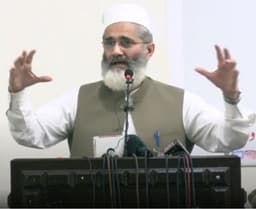
Siraj-ul-Haq
Politician · Modern
36.3Total
Basic Information
Born
1920
1962
Died
—
—
Era
Modern
Modern
Nationality
Tanzania
Pakistan
Occupation
Politician
Politician
Civilization
Other
Indian
Score Comparison
Military (10%)
25.6
10.9
Political (20%)
29.3
25.0
Influence (20%)
47.1
47.1
Legacy (20%)
37.5
36.7
Leadership (15%)
41.5
45.0
Strategy (15%)
38.0
37.8
TOTAL
38.1
36.3
Aboud Jumbe — Complete Timeline
1972 AD
Became President of ZanzibarPolitical Action◆ Major
Aboud Jumbe became the second President of Zanzibar after the assassination of Abeid Karume. He served from 1972 to 1984, leading the island's government within the union with Tanganyika.
PresidencyZanzibarGovernment
Impact: regionalconstructive
Oversaw Union with TanganyikaPolitical Action◆ Major
As President, Jumbe continued the union between Zanzibar and Tanganyika, which had been formed in 1964. He worked to maintain the delicate balance of power between the two entities within the United Republic of Tanzania.
UnionTanzaniaZanzibar
Impact: nationalconstructive
1984 AD
Resigned as PresidentPolitical Action◆ Major
Jumbe resigned as President of Zanzibar following political pressure and disagreements with the mainland government. He was succeeded by Ali Hassan Mwinyi, marking a transition in Zanzibar's leadership.
ResignationPolitical Change
Impact: regional
Siraj-ul-Haq — Complete Timeline
2014 AD
Elected Emir of Jamaat-e-Islami PakistanPolitical Action◆ Major
Siraj-ul-Haq was elected as the Emir (chief) of Jamaat-e-Islami Pakistan, succeeding Syed Munawar Hassan. His leadership focused on Islamic revivalism and political activism, positioning the party as a key religious-political force.
Jamaat-e-IslamiEmirIslamic Politics
Impact: nationalconstructive
Led Opposition to Military OperationsPolitical Action◆ Major
Siraj-ul-Haq led Jamaat-e-Islami's opposition to military operations in North Waziristan, advocating for peace talks with Taliban. His stance was controversial, drawing criticism from security-focused factions.
Military OperationsPeace TalksTaliban
Impact: nationaldestructive
2015 AD
Elected SenatorPolitical Action
Siraj-ul-Haq was elected to the Senate of Pakistan, representing Khyber Pakhtunkhwa. As a senator, he advocated for Islamic legislation and opposed government policies he deemed un-Islamic.
SenatorParliamentIslamic Legislation
Impact: nationalconstructive
2017 AD
Formed Muttahida Majlis-e-Amal AlliancePolitical Action◆ Major
Siraj-ul-Haq played a key role in reviving the Muttahida Majlis-e-Amal, an alliance of religious parties. The alliance aimed to consolidate the religious vote and challenge secular parties in elections.
MMAReligious AllianceElections
Impact: nationalconstructive
This comparison has not been analyzed yet.
One-time AI generation (~1 minute). Scores and timeline are already available below.
Rankings
🥇
Aboud JumbeLeader
Mil: 25.6Pol: 29.3Inf: 47.1
38.1
🥈
Siraj-ul-Haq
Mil: 10.9Pol: 25.0Inf: 47.1
36.3
+1.8 behind
How This Comparison Works
Algorithm
Each figure is scored on 6 dimensions (0—100 scale) based on structured historical data: Military (10%), Political (20%), Influence (20%), Legacy (20%), Leadership (15%), Strategy (15%). The weighted total produces the final ranking.
Data Sources
Scores are computed from structured sub-indicators in the database. Scale factors adjust for era (Ancient ×0.85, Modern ×1.0) and civilization size (Eastern ×1.05, Other ×0.80) to account for differences in population and military scale.
Maximum 3 Figures
Comparisons are limited to 2—3 figures to ensure readability and statistical meaningfulness.
Error Margins
±5 points per dimension — Sub-scores are derived from historical records with inherent uncertainty. Two figures within 5 points on a dimension should be considered roughly equivalent in that area.
Total Score Accuracy
±3 points overall — The weighted combination of 6 dimensions produces a total score with approximately ±3 points of uncertainty. Differences of less than 3 points are not statistically significant— the figures are effectively tied.
Known Limitations
- Historical records are incomplete and uneven across civilizations
- Figures from oral-tradition societies may be underrepresented
- Occupation labels can misclassify multi-role figures
- Scores measure capability and impact, not moral character
- Quantitative scoring is a comparison tool, not absolute truth
Capability Radar
Military (10%) — Battles & Warfare
Battles
23
21
Win Rate
29
25
Expansion
33
29
Political (20%) — Governance & Reform
Reform
15
15
Diplomacy
25
15
Economy
15
10
Influence (20%) — Cultural & Global Reach
Cultural
10
10
Global
10
10
Legacy (20%) — Historical Impact
Historical
15
10
Longevity
10
10
Leadership (15%) — Power & Stability
Tenure
20
20
Stability
10
15
Strategy (15%) — Tactics & Innovation
Strategy
34
35
Tactics
34
34
Reform
42
37
Similar Comparisons
Comments & Discussion
No comments yet. Be the first to share your thoughts!