Loading...
Abu Muslim al-Khurasani vs Subutai
Subutai leads by 2.6 pts · 2 figures compared
…

Abu Muslim al-Khurasani
General · Medieval
65.0Total
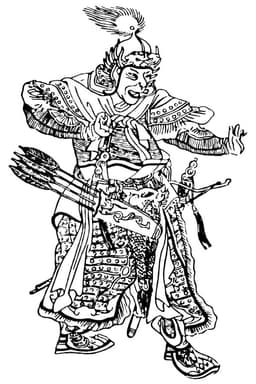
Subutai
General · Medieval
67.6Total
Basic Information
Born
718
1175
Died
755
1248
Era
Medieval
Medieval
Nationality
Abbasid Caliphate
Mongol Empire
Occupation
General
General
Civilization
Middle Eastern
Eastern
Score Comparison
Military (10%)
90.0
88.0
Political (20%)
65.0
68.0
Influence (20%)
60.0
62.0
Legacy (20%)
56.0
55.0
Leadership (15%)
62.0
70.0
Strategy (15%)
80.0
88.9
TOTAL
65.0
67.6
Abu Muslim al-Khurasani — Complete Timeline
747 AD
Leader of the Abbasid Revolution in KhorasanPolitical Action◆ Major
Abu Muslim al-Khurasani emerged as the leader of the Abbasid revolutionary movement in Khorasan. He organized and mobilized a diverse coalition of disaffected groups, including Arabs, Persians, and Shia Muslims, against Umayyad rule.
Abbasid RevolutionKhorasanUmayyad
Impact: regional
750 AD
Battle of the ZabWar◆ Major
Abu Muslim's forces, under the command of Qahtaba ibn Shabib, defeated the Umayyad army at the Battle of the Zab in Iraq. This victory led to the fall of the Umayyad Caliphate and the establishment of the Abbasid Caliphate.
BattleAbbasidUmayyad
Impact: regional
Governor of KhorasanPolitical Action◆ Major
After the Abbasid victory, Abu Muslim was appointed governor of Khorasan, the heartland of the revolution. He ruled the province with near-autonomous power, building a strong army and administering the region effectively.
GovernorshipKhorasanAbbasid
Impact: regional
755 AD
Execution by Caliph al-MansurPolitical Action◆ Major
Caliph al-Mansur, fearing Abu Muslim's growing power and popularity, lured him to the court and had him executed. This act eliminated a powerful rival but also sparked rebellions in Khorasan and other regions.
ExecutionAbbasidPower Struggle
Impact: regionaltragic
Subutai — Complete Timeline
1220 AD
The Great Raid (with Jebe)War◆ Major
Subutai and Jebe led a 20,000-man army on a reconnaissance-in-force through the Caucasus and into the Russian steppes. They defeated a coalition of Rus' princes at the Battle of the Kalka River in 1223, demonstrating Mongol military reach.
CaucasusKalka RiverRus'
Impact: regional
1221 AD
Battle of the Indus RiverWar◆ Major
Subutai commanded the Mongol army that defeated the Khwarezmian forces of Jalal al-Din at the Indus River. The victory destroyed the last major resistance in the Khwarezmian Empire, allowing the Mongols to control Persia and Central Asia.
Khwarezmian EmpireJalal al-DinCentral Asia
Impact: global
1234 AD
Conquest of the Jin DynastyWar◆ Major
Subutai served as the primary commander in the final campaign against the Jin Dynasty of northern China. He directed the siege of Kaifeng and the capture of the Jin emperor, completing the Mongol conquest of northern China.
Jin DynastyChinaSiege of Kaifeng
Impact: global
1241 AD
Battle of MohiWar◆ Major
Subutai led the Mongol invasion of Hungary, defeating King B
Mongol Invasion of EuropeHungaryBéla IV
Impact: regional
Battle of LegnicaWar
While Subutai commanded the main army in Hungary, a Mongol detachment under his overall strategy defeated a Polish-German army at Legnica. The victory eliminated the Polish threat and secured the Mongols' northern flank during the invasion of Hungary.
PolandLegnicaMongol Invasion of Europe
Impact: regional
Expert Analysis
Origins
Abu Muslim al-Khurasani was born around 718-720 CE in the region of Khorasan, possibly of Persian or Kurdish origin. His early life remains obscure, but he was likely a slave or client of the Abbasid family. He was educated in the revolutionary ideology of the Hashimiyya movement, which sought to overthrow the Umayyad Caliphate. His background as a mawla (non-Arab convert) gave him insight into the grievances of the Persian population.
Subutai was born around 1175 CE, likely in the Mongol steppes, to the Uriankhai clan. He was a commoner who rose through merit, starting as a servant to Genghis Khan. His early life was shaped by the harsh nomadic lifestyle, and he learned warfare from childhood. He joined Genghis Khan's band as a teenager and quickly proved his tactical acumen.
Rise to Power
Abu Muslim's rise began when he was appointed by the Abbasid leader Ibrahim al-Imam as the chief propagandist and military commander in Khorasan around 747 CE. He organized a diverse coalition of disaffected Arabs, Persians, and converted locals. In 748, he raised the black banner of the Abbasids and captured Merv. His forces, under Qahtaba ibn Shabib, defeated the Umayyad army at the Battle of the Zab (750 CE), leading to the fall of the Umayyad dynasty. Abu Muslim was then appointed governor of Khorasan, wielding near-autonomous power.
Subutai rose through the Mongol military hierarchy under Genghis Khan. He was promoted to commander after leading a successful campaign against the Merkits around 1200. His first major independent command was in 1219 during the invasion of the Khwarezmian Empire. He and Jebe led a 20,000-man army on a reconnaissance-in-force through the Caucasus and Russia (1220-1223), defeating a coalition of Rus' and Cuman forces at the Kalka River. This raid made his reputation as a daring strategist.
Leadership & Governance
Abu Muslim's leadership was charismatic and pragmatic. He effectively managed the diverse ethnic and religious groups in Khorasan, granting autonomy to local elites. He maintained a strong military force loyal to him personally. However, his governance was authoritarian; he suppressed dissent ruthlessly, executing potential rivals. His political score of 65.0 reflects his inability to navigate the Abbasid court's intrigues.
Subutai's leadership style was decentralized and flexible. He delegated authority to trusted subordinates and adapted tactics to each enemy. He implemented the Mongol system of decimal organization and used sophisticated communication through messengers. He was known for his discipline and strategic vision, but he never sought political power, remaining a loyal general. His political score of 68.0 is slightly higher than Abu Muslim's, but he lacked independent political ambition.
Triumph & Tragedy
Abu Muslim's greatest triumph was leading the Abbasid Revolution, which overthrew the Umayyad Caliphate and established a new dynasty that lasted 500 years. He conquered much of Iran and Central Asia. His tragedy was his execution by Caliph al-Mansur in 755 CE after being lured to Baghdad. His downfall came from his own success: his power threatened the caliph, and his lack of political maneuvering led to his demise. He scored 90.0 in military but only 62.0 in leadership, reflecting his inability to secure his position.
Subutai's triumphs include the conquest of the Jin Dynasty (1234), the Battle of Mohi (1241) where he decimated the Hungarian army, and the destruction of the Khwarezmian Empire. He conquered more territory than any commander in history, estimated at over 30 million square kilometers. His tragedy was the death of Genghis Khan in 1227, which limited his later campaigns. He also faced the challenge of coordinating with rival Mongol princes. He scored 88.9 in strategy and 88.0 in military, but his legacy score of 55.0 is lower due to his obscurity outside military history.
Character & Destiny
Abu Muslim was ambitious and decisive but also suspicious and vengeful. He built a personal power base that alienated the caliph. His character led him to overreach; he believed he could remain independent while serving the Abbasids. This miscalculation cost him his life. Historians view him as a brilliant revolutionary but a poor courtier.
Subutai was loyal, disciplined, and strategically patient. He never sought the throne and always served the Khan. His character allowed him to survive the turbulent Mongol succession. He died of old age around 1248, having retired after the death of Ögedei Khan. His destiny was to be the greatest general of the Mongol Empire, but his name is less known than Genghis or Kublai.
Legacy
Abu Muslim's legacy is mixed. He enabled the Abbasid Caliphate, which ushered in a golden age of Islamic culture and science. However, his execution highlighted the dangers of overcentralization. He became a symbol for later Persian and Turkic revolts against Arab dominance. His influence on Iran's national identity is significant, though his specific contributions are often overshadowed by the caliphs.
Subutai's legacy is primarily military. His campaigns demonstrated the effectiveness of mobility, intelligence, and psychological warfare. He influenced later Mongol and Chinese military doctrine. However, his conquests caused immense destruction and loss of life. In modern Mongolia, he is celebrated as a national hero. His strategic principles are studied in military academies.
Conclusion
Comparing the two, Subutai had greater impact on world history. His military score of 88.0 and strategy of 88.9 reflect his unmatched conquests, while Abu Muslim's 90.0 military score is high but his overall total of 65.0 is lower than Subutai's 67.6. Subutai's campaigns reshaped Eurasia, enabling the Mongol Empire to connect East and West. Abu Muslim's revolution was significant but limited to the Islamic world. Therefore, Subutai emerges as the more consequential figure.
Rankings
🥇
SubutaiLeader
Mil: 88.0Pol: 68.0Inf: 62.0
67.6
🥈
Abu Muslim al-Khurasani
Mil: 90.0Pol: 65.0Inf: 60.0
65.0
+2.6 behind
How This Comparison Works
Algorithm
Each figure is scored on 6 dimensions (0—100 scale) based on structured historical data: Military (10%), Political (20%), Influence (20%), Legacy (20%), Leadership (15%), Strategy (15%). The weighted total produces the final ranking.
Data Sources
Scores are computed from structured sub-indicators in the database. Scale factors adjust for era (Ancient ×0.85, Modern ×1.0) and civilization size (Eastern ×1.05, Other ×0.80) to account for differences in population and military scale.
Maximum 3 Figures
Comparisons are limited to 2—3 figures to ensure readability and statistical meaningfulness.
Error Margins
±5 points per dimension — Sub-scores are derived from historical records with inherent uncertainty. Two figures within 5 points on a dimension should be considered roughly equivalent in that area.
Total Score Accuracy
±3 points overall — The weighted combination of 6 dimensions produces a total score with approximately ±3 points of uncertainty. Differences of less than 3 points are not statistically significant— the figures are effectively tied.
Known Limitations
- Historical records are incomplete and uneven across civilizations
- Figures from oral-tradition societies may be underrepresented
- Occupation labels can misclassify multi-role figures
- Scores measure capability and impact, not moral character
- Quantitative scoring is a comparison tool, not absolute truth
Capability Radar
Military (10%) — Battles & Warfare
Battles
85
95
Win Rate
90
98
Expansion
85
98
Political (20%) — Governance & Reform
Reform
80
60
Diplomacy
85
75
Economy
70
55
Influence (20%) — Cultural & Global Reach
Cultural
65
60
Global
75
80
Legacy (20%) — Historical Impact
Historical
80
85
Longevity
70
75
Leadership (15%) — Power & Stability
Tenure
70
70
Stability
60
65
Strategy (15%) — Tactics & Innovation
Strategy
85
99
Tactics
80
97
Reform
75
85
Similar Comparisons
Comments & Discussion
No comments yet. Be the first to share your thoughts!