Loading...
This comparison has not been analyzed yet.
One-time AI generation (~1 minute). Scores and timeline are already available below.
Adolf Frederick of Sweden vs Frederick I of Prussia
Frederick I of Prussia leads by 14.2 pts · 2 figures compared
…

Adolf Frederick of Sweden
Emperor · Modern
40.7Total
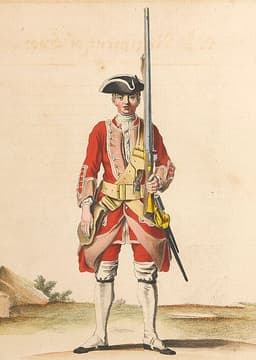
Frederick I of Prussia
Emperor · Modern
54.9Total
Basic Information
Born
1710
1657
Died
1771
1713
Era
Modern
Modern
Nationality
Sweden
Prussia
Occupation
Emperor
Emperor
Civilization
Western
Western
Score Comparison
Military (10%)
47.6
50.0
Political (20%)
26.4
72.0
Influence (20%)
45.5
53.3
Legacy (20%)
33.3
45.8
Leadership (15%)
45.0
68.0
Strategy (15%)
55.5
41.0
TOTAL
40.7
54.9
Adolf Frederick of Sweden — Complete Timeline
1751 AD
Accession to the ThronePolitical Action◆ Major
Adolf Frederick became King of Sweden following the death of King Frederick I. His reign was marked by the Age of Liberty, where the Swedish parliament (Riksdag) held significant power. Adolf Frederick was largely a figurehead, with real authority exercised by the parliamentary factions.
AccessionMonarchySweden
Impact: national
1756 AD
Coup of 1756Political Action◆ Major
Adolf Frederick attempted a coup to restore royal authority, supported by his wife Queen Louisa Ulrika. The coup failed due to lack of military support, and the king was forced to accept further limitations on his power. This event deepened the power of the parliamentary Caps and Hats factions.
CoupAge of LibertyParliamentary Power
Impact: nationaldestructive
1771 AD
Death from OvereatingOther
Adolf Frederick died after consuming a large meal consisting of lobster, caviar, sauerkraut, and champagne, followed by 14 servings of his favorite dessert, semla. His death was attributed to digestive complications. This event became a famous anecdote illustrating his lack of political power and personal indulgence.
DeathAnecdoteOvereating
Frederick I of Prussia — Complete Timeline
1694 AD
Founded the University of HalleCultural◆ Major
Frederick I founded the University of Halle, which became a center of Pietism and Enlightenment thought. The university attracted scholars like Christian Thomasius and August Hermann Francke.
PrussiaEducationEnlightenment
Impact: regionalconstructive
1699 AD
Commissioned the Berlin Palace ExpansionCultural
Frederick I commissioned the expansion of the Berlin Palace, transforming it into a Baroque residence. The project, designed by architect Andreas Schl
PrussiaArchitectureBaroque
Impact: nationalconstructive
1701 AD
Crowned King in Prussia at KönigsbergPolitical Action◆ Major
Frederick crowned himself King in Prussia at K
PrussiaCoronationKingdom
Impact: regionalconstructive
Established the Order of the Black EagleCultural
Frederick I established the Order of the Black Eagle, the highest order of chivalry in Prussia. It was awarded for military and civil merit, symbolizing the prestige of the new kingdom.
PrussiaChivalryHonors
Impact: nationalconstructive
1713 AD
Supported the Great Northern War as an Ally of RussiaWar◆ Major
Frederick I allied with Russia and other powers against Sweden in the Great Northern War. Prussia gained territory including Stettin and parts of Swedish Pomerania, though Frederick died before the war ended.
PrussiaGreat Northern WarTerritorial Expansion
Impact: regionalconstructive
This comparison has not been analyzed yet.
One-time AI generation (~1 minute). Scores and timeline are already available below.
Rankings
🥇
Frederick I of PrussiaLeader
Mil: 50.0Pol: 72.0Inf: 53.3
54.9
🥈
Adolf Frederick of Sweden
Mil: 47.6Pol: 26.4Inf: 45.5
40.7
+14.2 behind
How This Comparison Works
Algorithm
Each figure is scored on 6 dimensions (0—100 scale) based on structured historical data: Military (10%), Political (20%), Influence (20%), Legacy (20%), Leadership (15%), Strategy (15%). The weighted total produces the final ranking.
Data Sources
Scores are computed from structured sub-indicators in the database. Scale factors adjust for era (Ancient ×0.85, Modern ×1.0) and civilization size (Eastern ×1.05, Other ×0.80) to account for differences in population and military scale.
Maximum 3 Figures
Comparisons are limited to 2—3 figures to ensure readability and statistical meaningfulness.
Error Margins
±5 points per dimension — Sub-scores are derived from historical records with inherent uncertainty. Two figures within 5 points on a dimension should be considered roughly equivalent in that area.
Total Score Accuracy
±3 points overall — The weighted combination of 6 dimensions produces a total score with approximately ±3 points of uncertainty. Differences of less than 3 points are not statistically significant— the figures are effectively tied.
Known Limitations
- Historical records are incomplete and uneven across civilizations
- Figures from oral-tradition societies may be underrepresented
- Occupation labels can misclassify multi-role figures
- Scores measure capability and impact, not moral character
- Quantitative scoring is a comparison tool, not absolute truth
Capability Radar
Military (10%) — Battles & Warfare
Battles
24
15
Win Rate
24
10
Expansion
31
35
Political (20%) — Governance & Reform
Reform
10
55
Diplomacy
15
65
Economy
10
50
Influence (20%) — Cultural & Global Reach
Cultural
5
30
Global
5
30
Legacy (20%) — Historical Impact
Historical
5
45
Longevity
5
40
Leadership (15%) — Power & Stability
Tenure
20
60
Stability
15
45
Strategy (15%) — Tactics & Innovation
Strategy
34
15
Tactics
34
10
Reform
41
40
Similar Comparisons
Comments & Discussion
No comments yet. Be the first to share your thoughts!