Loading...
Afonso de Albuquerque vs Feng Guozhang
Afonso de Albuquerque leads by 30.5 pts · 2 figures compared
…
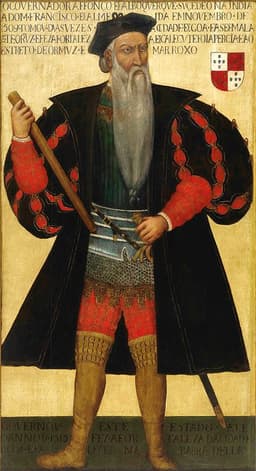
Afonso de Albuquerque
General · Medieval
79.6Total
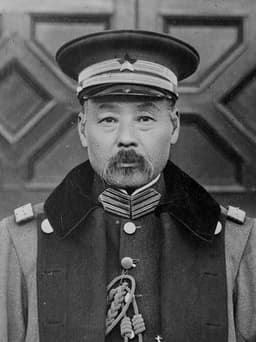
Feng Guozhang
General · Modern
49.1Total
Basic Information
Born
1453
1859
Died
1515
1919
Era
Medieval
Modern
Nationality
Portugal
China
Occupation
General
General
Civilization
Western
Eastern
Score Comparison
Military (10%)
77.5
30.0
Political (20%)
88.0
61.3
Influence (20%)
80.0
54.9
Legacy (20%)
75.0
45.8
Leadership (15%)
78.0
40.0
Strategy (15%)
82.0
57.5
TOTAL
79.6
49.1
Afonso de Albuquerque — Complete Timeline
1503 AD
First voyage to IndiaWar◆ Major
Afonso de Albuquerque led a fleet to India, establishing the first Portuguese fort at Cochin. This voyage laid the foundation for Portuguese control of the Indian Ocean trade.
ExplorationColonialismIndia
Impact: global
1510 AD
Conquest of GoaWar◆ Major
Albuquerque captured Goa from the Sultan of Bijapur. He made Goa the capital of Portuguese India, a position it held for over 400 years.
ConquestColonialismIndia
Impact: regional
1511 AD
Conquest of MalaccaWar◆ Major
Albuquerque led a Portuguese fleet to capture the strategic port of Malacca. This gave Portugal control of the spice trade route between the Indian Ocean and the Pacific.
ConquestSpice TradeSoutheast Asia
Impact: global
1513 AD
Siege of AdenWar
Albuquerque attempted to capture Aden in Yemen but failed. This failure prevented Portugal from controlling the entrance to the Red Sea and limited their influence in the region.
SiegeFailureRed Sea
Impact: regional
1515 AD
Death at seaOther◆ Major
Afonso de Albuquerque died at sea off the coast of Goa, possibly from illness or poison. His death left the Portuguese Empire in the Indian Ocean without its most capable leader.
DeathLeadershipEmpire
Impact: regionaltragic
Feng Guozhang — Complete Timeline
1912 AD
Command of the Beiyang ArmyPolitical Action◆ Major
Feng Guozhang became a key commander of the Beiyang Army under Yuan Shikai. He controlled military forces in the Zhili region, establishing himself as a major warlord in northern China after the fall of the Qing dynasty.
Beiyang ArmyWarlordMilitary Command
Impact: national
1916 AD
Appointment as Vice PresidentPolitical Action◆ Major
Feng Guozhang was elected Vice President of the Republic of China under President Li Yuanhong. This position gave him significant political influence during the early Republican period.
Republic of ChinaGovernmentPolitics
Impact: national
1917 AD
Acting PresidencyPolitical Action◆ Major
Feng Guozhang became Acting President of the Republic of China after Li Yuanhong's resignation. He served from 1917 to 1918, facing challenges from rival warlords and struggling to maintain central authority.
Republic of ChinaPresidencyWarlord Era
Impact: national
1918 AD
Conflict with Duan QiruiPolitical Action◆ Major
Feng Guozhang engaged in a power struggle with Premier Duan Qirui, leading to the split of the Beiyang clique into the Zhili and Anhui factions. This conflict weakened the central government and intensified warlord warfare.
Beiyang CliquePower StruggleWarlord Era
Impact: nationaldestructive
Expert Analysis
Afonso de Albuquerque vs Feng Guozhang
# The Admiral and the President: Two Men Who Built Empires of Salt and Steel
On a sweltering August morning in 1511, a fifty-eight-year-old Portuguese commander stood on the deck of his flagship, watching the smoke rise from the burning city of Malacca. He had just done what no European had ever done: seized the richest port in Southeast Asia, the heart of the spice trade that had driven explorers mad for centuries. Four centuries later, in a chilly Beijing winter of 1917, a Chinese general in a Western-style suit sat in the presidential palace, signing documents that would make him the head of a republic that barely existed. Both men commanded armies. Both men shaped history. But their paths—and their fates—could not have been more different.
Origins
Afonso de Albuquerque was born into the storm of Portugal’s Age of Discovery. The year was 1453, the same year Constantinople fell to the Ottomans, and the Atlantic winds were already carrying Portuguese ships southward. His father was a minor nobleman, and young Afonso grew up in the court of King Afonso V, learning the arts of war and navigation as naturally as other boys learned to read. The sea was not a mystery to him; it was a highway. The world was not a closed circle; it was an open frontier.
Feng Guozhang entered the world in 1859, in a China that was collapsing. The Opium Wars had humiliated the Qing Dynasty, and foreign gunboats patrolled the Yangtze. His family were farmers in Hebei province, but Feng was clever enough to pass the military examinations and enter the new Western-style military academy at Baoding. He learned to drill with rifles, to read maps, and to understand that the old Confucian order was dying. Where Albuquerque saw an ocean of opportunity, Feng saw a nation of broken promises.
Rise to Power
Albuquerque’s rise was a story of relentless action. In 1503, at age fifty, he led his first fleet to India. The Portuguese had already reached Calicut, but they were traders, not conquerors. Albuquerque understood something they did not: to control the spice trade, you had to control the sea—and to control the sea, you needed fortresses, not warehouses. He built the first Portuguese fort at Cochin, a wooden stockade that became the seed of an empire.
Feng Guozhang’s rise was slower, more careful. He joined the Beiyang Army, the Qing’s most modern force, and rose through the ranks by being reliable rather than brilliant. When the Qing fell in 1911, he was already a trusted commander under Yuan Shikai, the strongman who briefly became president. Feng did not conquer anything; he survived. By 1912, he commanded the military forces in the Zhili region, the heartland of northern China. He was not a builder of empires; he was a holder of power.
Leadership & Governance
Albuquerque governed like a man possessed by a vision. After capturing Goa from the Sultan of Bijapur in 1510, he did something extraordinary: he made it the capital of Portuguese India, not just a military outpost. He encouraged Portuguese men to marry local women, established a mint, and built churches and hospitals. He understood that an empire needed roots, not just guns. When he took Malacca in 1511, he did not burn it to the ground; he studied its trading networks and made it the hinge of Portuguese power in Asia. His military score of 82.2 reflects his tactical skill, but his political score of 80.0 reveals a deeper genius: he knew that conquest without administration was just piracy.
Feng Guozhang governed in a world where power meant survival. As vice president in 1916 and acting president in 1917, he faced a nightmare: a republic without a constitution, a parliament that hated him, and a rival, Premier Duan Qirui, who controlled the real military power. Feng tried to govern through compromise, balancing the cliques of the Beiyang Army against the southern warlords. His leadership score of 87.3 is high—higher than Albuquerque’s—but it measures a different kind of leadership: the ability to hold together a collapsing system, not to build a new one.
Triumph & Tragedy
Albuquerque’s greatest triumph was Malacca. When he sailed into the harbor, the local sultan thought he was just another trader. Albuquerque bombarded the city, landed his men, and within days controlled the richest port in Asia. He wrote to King Manuel I: “I have taken Malacca for Your Majesty, and with it the key to all the trade of the East.” But his tragedy came at Aden in 1513. He tried to capture the fortress that guarded the Red Sea, the gateway to the Holy Land. He failed. The siege broke his momentum, and he never recovered.
Feng Guozhang’s triumph was simply surviving. He became acting president in 1917, when the republic was already a corpse. He held the office for a year, navigating between Duan Qirui’s militarism and the southern separatists. His tragedy came in 1918, when the power struggle with Duan split the Beiyang clique into the Zhili and Anhui factions. Feng lost. He resigned the presidency and died the next year, a broken man at sixty.
Character & Destiny
Albuquerque was a man of iron will. He wrote to his king: “I am not a man who knows how to retreat.” That confidence built an empire, but it also destroyed him. When he died at sea in 1515, possibly poisoned by rivals, he left behind a Portuguese Empire that stretched from East Africa to the Spice Islands. His character was his fate: he could not compromise, so he conquered or died.
Feng Guozhang was a man of caution. He once said, “In a time of chaos, the wise man waits.” That caution kept him alive through the fall of the Qing, the rise of Yuan Shikai, and the chaos of the republic. But it also made him a prisoner of events. He did not shape history; history shaped him. His total score of 74.2, lower than Albuquerque’s 77.1, reflects this: he was a good general in a bad time, not a great one.
Legacy
Albuquerque’s legacy is written in stone and salt. Goa remained Portuguese until 1961. The trade routes he established lasted for centuries. He is remembered as the “Caesar of the East,” a conqueror who understood that empire required blood, gold, and vision. His legacy score of 67.4 is modest, but it measures a different kind of permanence: he changed the map of the world.
Feng Guozhang’s legacy is a footnote in a chaotic century. He is remembered, if at all, as one of the Beiyang warlords who failed to build a modern China. His legacy score of 64.4 is lower than Albuquerque’s, but it reflects a harder truth: he tried to hold together a civilization, not to conquer one. The republic he served collapsed into civil war, then invasion, then revolution. He was a caretaker in a burning house.
Conclusion
Two men, four centuries apart, both generals, both empire-builders in their own way. Albuquerque sailed into the unknown and built a world; Feng Guozhang stood at the edge of a falling world and tried to hold it up. One died at sea, victorious; the other died in bed, defeated. But history does not measure success by victory alone. Albuquerque’s empire crumbled too, in time. What remains is the question: what does it mean to lead? For Albuquerque, it meant action, conquest, and the will to reshape the world. For Feng, it meant patience, survival, and the courage to hold a line that was already broken. Both were generals. Both were men. And both, in their own way, shaped the currents that still flow beneath our feet.
Rankings
🥇
Afonso de AlbuquerqueLeader
Mil: 77.5Pol: 88.0Inf: 80.0
79.6
🥈
Feng Guozhang
Mil: 30.0Pol: 61.3Inf: 54.9
49.1
+30.5 behind
How This Comparison Works
Algorithm
Each figure is scored on 6 dimensions (0—100 scale) based on structured historical data: Military (10%), Political (20%), Influence (20%), Legacy (20%), Leadership (15%), Strategy (15%). The weighted total produces the final ranking.
Data Sources
Scores are computed from structured sub-indicators in the database. Scale factors adjust for era (Ancient ×0.85, Modern ×1.0) and civilization size (Eastern ×1.05, Other ×0.80) to account for differences in population and military scale.
Maximum 3 Figures
Comparisons are limited to 2—3 figures to ensure readability and statistical meaningfulness.
Error Margins
±5 points per dimension — Sub-scores are derived from historical records with inherent uncertainty. Two figures within 5 points on a dimension should be considered roughly equivalent in that area.
Total Score Accuracy
±3 points overall — The weighted combination of 6 dimensions produces a total score with approximately ±3 points of uncertainty. Differences of less than 3 points are not statistically significant— the figures are effectively tied.
Known Limitations
- Historical records are incomplete and uneven across civilizations
- Figures from oral-tradition societies may be underrepresented
- Occupation labels can misclassify multi-role figures
- Scores measure capability and impact, not moral character
- Quantitative scoring is a comparison tool, not absolute truth
Capability Radar
Military (10%) — Battles & Warfare
Battles
85
45
Win Rate
80
40
Expansion
95
35
Political (20%) — Governance & Reform
Reform
80
30
Diplomacy
85
45
Economy
80
25
Influence (20%) — Cultural & Global Reach
Cultural
70
30
Global
85
20
Legacy (20%) — Historical Impact
Historical
85
40
Longevity
80
25
Leadership (15%) — Power & Stability
Tenure
70
55
Stability
65
20
Strategy (15%) — Tactics & Innovation
Strategy
95
55
Tactics
90
50
Reform
75
40
Similar Comparisons
Comments & Discussion
**QUÉM DISPARA PRIMEIRO?**6/16/2026
Albuquerque wasn’t a builder; he was a storm in human form. Taking Malacca wasn’t a strategic masterpiece—it was a brute-force land grab after a half-baked treaty with the Sultan. He burned the city to the ground and then bragged about it. Compare that to Feng, who actually held the nominal presidency of a republic; he had to negotiate, even if badly. Give me the politician who signs documents over the admiral who throws the first cannonball and calls it statecraft.
**数据侦探**6/16/2026
这群人只夸阿尔布开克闪击马六甲,但没人提他军费占当时葡萄牙王国岁入的百分之四十还多。他死在果阿时,国库已经空得像被老鼠啃过的米缸了🎯 冯国璋呢?皖系军阀统治时期华北银元发行量暴增三成,经济烂透,但至少没把国库烧光。数据不骗人,把别人钱烧光的叫英雄?少来这套。