Loading...
Afonso de Albuquerque vs Samori Toure
Afonso de Albuquerque leads by 9.1 pts · 2 figures compared
…
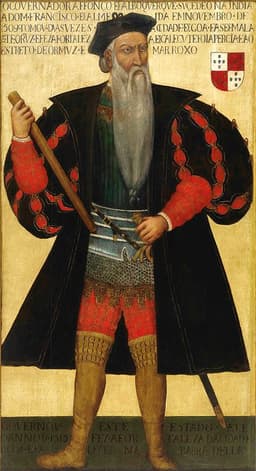
Afonso de Albuquerque
General · Medieval
79.6Total
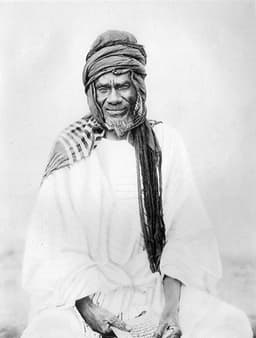
Samori Toure
General · Modern
70.5Total
Basic Information
Born
1453
1830
Died
1515
1900
Era
Medieval
Modern
Nationality
Portugal
Wassoulou Empire
Occupation
General
General
Civilization
Western
Other
Score Comparison
Military (10%)
77.5
60.0
Political (20%)
88.0
78.0
Influence (20%)
80.0
68.0
Legacy (20%)
75.0
72.0
Leadership (15%)
78.0
72.0
Strategy (15%)
82.0
70.0
TOTAL
79.6
70.5
Afonso de Albuquerque — Complete Timeline
1503 AD
First voyage to IndiaWar◆ Major
Afonso de Albuquerque led a fleet to India, establishing the first Portuguese fort at Cochin. This voyage laid the foundation for Portuguese control of the Indian Ocean trade.
ExplorationColonialismIndia
Impact: global
1510 AD
Conquest of GoaWar◆ Major
Albuquerque captured Goa from the Sultan of Bijapur. He made Goa the capital of Portuguese India, a position it held for over 400 years.
ConquestColonialismIndia
Impact: regional
1511 AD
Conquest of MalaccaWar◆ Major
Albuquerque led a Portuguese fleet to capture the strategic port of Malacca. This gave Portugal control of the spice trade route between the Indian Ocean and the Pacific.
ConquestSpice TradeSoutheast Asia
Impact: global
1513 AD
Siege of AdenWar
Albuquerque attempted to capture Aden in Yemen but failed. This failure prevented Portugal from controlling the entrance to the Red Sea and limited their influence in the region.
SiegeFailureRed Sea
Impact: regional
1515 AD
Death at seaOther◆ Major
Afonso de Albuquerque died at sea off the coast of Goa, possibly from illness or poison. His death left the Portuguese Empire in the Indian Ocean without its most capable leader.
DeathLeadershipEmpire
Impact: regionaltragic
Samori Toure — Complete Timeline
1878 AD
Establishment of the Wassoulou EmpirePolitical Action
Samori Toure founded the Wassoulou Empire in West Africa, uniting various Mandinka states under his rule. He established a centralized administration and a professional army, creating a powerful state that resisted French expansion.
EmpireWassoulouUnification
Impact: regionalconstructive
1880 AD
Military Reforms and ModernizationReform◆ Major
Samori Toure modernized his army by importing firearms from European traders and establishing a standing army of up to 35,000 men. He organized his forces into regular units and introduced new tactics, making them effective against French troops.
Military ReformFirearmsArmy
Impact: regionalconstructive
1882 AD
First Franco-Wassoulou WarWar◆ Major
Samori Toure's forces fought the French army in the first major conflict between the Wassoulou Empire and France. The war ended with a treaty in 1886, recognizing Samori's control over the Niger River region.
WarFranceTreaty
Impact: regional
1891 AD
Second Franco-Wassoulou WarWar◆ Major
The French resumed hostilities, forcing Samori to retreat eastward. He employed a scorched-earth strategy, destroying villages and crops to deny resources to the French, prolonging the conflict for years.
WarScorched EarthRetreat
Impact: regionaltragic
1898 AD
Capture and ExileWar
Samori Toure was captured by French forces after a long campaign. He was exiled to Gabon, where he died in 1900. His capture ended the Wassoulou Empire and marked the completion of French conquest in West Africa.
CaptureExileEnd of Empire
Impact: regionaltragic
Expert Analysis
Afonso de Albuquerque vs Samori Toure
# The Lion and the Admiral: Two Visions of Empire
On a sweltering morning in 1898, an aging West African ruler sat in chains, watching the coast of his homeland disappear over the horizon. Samori Toure, who had outrun French armies for nearly two decades, was being shipped to an exile from which he would never return. Four centuries earlier and half a world away, another conqueror had died at sea, but under very different circumstances—Afonso de Albuquerque, the architect of Portugal’s eastern empire, expired off the coast of Goa in 1515, his body failing him just as his vision of oceanic dominion reached its zenith. Both men built empires. Both fought against impossible odds. Yet one died a captive, the other a legend. The difference was not merely in their fates, but in the worlds they inhabited and the forces they dared to challenge.
Origins
Samori Toure was born around 1830 into the chaos of West Africa’s declining empires. The son of a Dyula trader, he grew up in a region where Islam, traditional beliefs, and European encroachment created a volatile mix. He learned warfare as a young man, serving under local chiefs before striking out on his own. His world was one of fragmented states, shifting alliances, and the slow, inexorable pressure of French colonialism. Everything he built would be defined by that pressure.
Afonso de Albuquerque, born in 1453 near Lisbon, came from the opposite end of fortune’s spectrum. He was a son of Portugal’s nobility, raised in the court of King Afonso V, where the recent conquest of Ceuta in North Africa had kindled dreams of a global Christian empire. He learned mathematics, navigation, and the arts of war from men who believed the world was theirs to claim. He was not reacting to a threat; he was pursuing an opportunity.
Rise to Power
Samori’s ascent was a masterclass in improvisation. In 1878, he established the Wassoulou Empire by uniting Mandinka states through a combination of diplomacy, marriage alliances, and military pressure. He had no navy, no colonial bureaucracy, no European backing. He had only his wits, his personal magnetism, and a willingness to learn from his enemies. By 1880, he had reformed his army, importing firearms from European traders and creating a standing force of up to 30,000 men. He drilled them in European tactics, built fortifications, and established a centralized tax system to fund his war machine.
Albuquerque’s rise followed a more conventional path for a Portuguese nobleman. He fought in North Africa, served in the court, and in 1503 led his first voyage to India, establishing a fort at Cochin. His breakthrough came not through slow consolidation but through a single, audacious act: in 1510, he captured Goa from the Sultan of Bijapur. This was not a defensive move. It was a declaration that Portugal would not merely trade in the Indian Ocean—it would rule it.
Leadership & Governance
As rulers, the two men could not have been more different. Samori governed through consensus and adaptation. He was a political animal, with a leadership score of 78.4, who understood that his empire’s survival depended on keeping fractious chieftains loyal while outmaneuvering the French. He practiced what might be called guerrilla statecraft: moving his capital eastward as the French advanced, employing scorched-earth tactics in 1891 that destroyed villages and crops to deny supplies to his enemies. He was a pragmatist who married strategic retreat to political survival.
Albuquerque, with a leadership score of 84.3, ruled through sheer force of will. He was a builder, not a survivor. After taking Goa, he made it the capital of Portuguese India, establishing a municipal government, encouraging mixed marriages, and creating a permanent European settlement. In 1511, he captured Malacca, the jewel of the spice trade, and with it control of the Strait of Malacca. He understood that empire required more than forts—it required a network of bases, alliances with local rulers, and a fleet that could project power across oceans. His only failure came in 1513, when he failed to capture Aden, which would have given Portugal command of the Red Sea. It was a rare strategic misstep, but it revealed the limits of even his ambition.
Triumph & Tragedy
Samori’s greatest triumph was simply surviving. From 1882, when the First Franco-Wassoulou War began, he fought the French to a standstill for years. He used the terrain, the climate, and his people’s loyalty to delay an empire that had conquered much of West Africa. His tragedy came in 1898, when he was finally captured and exiled to Gabon, where he died two years later. His empire dissolved, his people scattered, and his name became a footnote in French colonial history.
Albuquerque’s triumph was more tangible. He created the Portuguese Estado da India, a maritime empire that would last for centuries. His conquest of Malacca in 1511 gave Europe its first direct access to the spice trade, breaking the monopoly of Venetian and Ottoman intermediaries. His tragedy was quieter: he died at sea in 1515, possibly poisoned, possibly of illness, just as his plans for a final assault on the Red Sea were taking shape. He never saw the full fruit of his labor.
Character & Destiny
What drove these men? Samori was a survivor who became a visionary. He saw that the old ways of African warfare—massed infantry, ritualized battles—were obsolete against French firepower. He adapted, modernized, and fought a war of movement that baffled his enemies. But he was also limited by his resources. He could import rifles, but he could not manufacture them. He could train soldiers, but he could not build a navy. His destiny was to delay the inevitable, not to prevent it.
Albuquerque was a visionary who acted like a survivor. He believed that Portugal’s small population could dominate the Indian Ocean not through numbers but through bases, alliances, and terror. He burned coastal towns, executed prisoners, and forced local rulers to submit. His cruelty was calculated, his ambition boundless. But he also understood that empire required administration, not just conquest. He was a builder in the midst of destruction.
Legacy
Samori Toure is remembered today as a symbol of African resistance. His legacy score of 73.9 reflects a reputation that grew after his death, as post-colonial African nations sought heroes who had fought European domination. He is honored in Guinea, Mali, and Ivory Coast, where schools and streets bear his name. But his empire was ephemeral, and his methods—scorched earth, constant retreat—could not outlast the French.
Albuquerque’s legacy is more complex. His conquests laid the foundation for Portuguese dominance in Asia, but his methods—massacre, enslavement, forced conversion—have earned him a darker reputation in modern times. His legacy score of 67.4 is lower than Samori’s, perhaps because his empire was built on violence that cannot be romanticized. Yet his strategic vision—control of choke points, naval supremacy, permanent bases—became the model for all subsequent European empires in Asia.
Conclusion
In the end, the difference between Samori Toure and Afonso de Albuquerque was not one of courage or intelligence. Both were extraordinary men. But Samori fought against the tide of history, while Albuquerque rode it. The one built an empire to resist change; the other built one to accelerate it. Samori’s tragedy was that he was born into a world that was being erased, while Albuquerque’s was that he helped erase it. One died a prisoner, the other a legend. Both left behind a question that still haunts us: what does it mean to build something that outlasts you, when the world you built it for no longer exists?
Rankings
🥇
Afonso de AlbuquerqueLeader
Mil: 77.5Pol: 88.0Inf: 80.0
79.6
🥈
Samori Toure
Mil: 60.0Pol: 78.0Inf: 68.0
70.5
+9.1 behind
How This Comparison Works
Algorithm
Each figure is scored on 6 dimensions (0—100 scale) based on structured historical data: Military (10%), Political (20%), Influence (20%), Legacy (20%), Leadership (15%), Strategy (15%). The weighted total produces the final ranking.
Data Sources
Scores are computed from structured sub-indicators in the database. Scale factors adjust for era (Ancient ×0.85, Modern ×1.0) and civilization size (Eastern ×1.05, Other ×0.80) to account for differences in population and military scale.
Maximum 3 Figures
Comparisons are limited to 2—3 figures to ensure readability and statistical meaningfulness.
Error Margins
±5 points per dimension — Sub-scores are derived from historical records with inherent uncertainty. Two figures within 5 points on a dimension should be considered roughly equivalent in that area.
Total Score Accuracy
±3 points overall — The weighted combination of 6 dimensions produces a total score with approximately ±3 points of uncertainty. Differences of less than 3 points are not statistically significant— the figures are effectively tied.
Known Limitations
- Historical records are incomplete and uneven across civilizations
- Figures from oral-tradition societies may be underrepresented
- Occupation labels can misclassify multi-role figures
- Scores measure capability and impact, not moral character
- Quantitative scoring is a comparison tool, not absolute truth
Capability Radar
Military (10%) — Battles & Warfare
Battles
85
75
Win Rate
80
65
Expansion
95
60
Political (20%) — Governance & Reform
Reform
80
75
Diplomacy
85
80
Economy
80
60
Influence (20%) — Cultural & Global Reach
Cultural
70
65
Global
85
55
Legacy (20%) — Historical Impact
Historical
85
70
Longevity
80
60
Leadership (15%) — Power & Stability
Tenure
70
70
Stability
65
55
Strategy (15%) — Tactics & Innovation
Strategy
95
85
Tactics
90
80
Reform
75
70
Similar Comparisons
Comments & Discussion
Historian3686/16/2026
Albuquerque's strategic brilliance is overrated. Yes, he took Malacca and Goa, but his "closed sea" doctrine was naval fantasy—you can't blockade an ocean with 30 ships. His Portuguese Empire relied on local collaboration, not superior force. Samori Toure, fighting with muskets against Maxim guns, built a modern state that rivaled European logistics. One died in bed, one was paraded as a trophy. The real genius was the one who fought the industrial machine, not the one who bullied Indian princes