Loading...
Afonso I of Portugal vs Wanli Emperor
Afonso I of Portugal leads by 21.0 pts · 2 figures compared
…
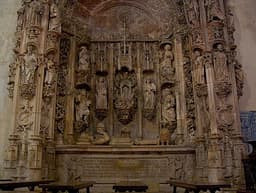
Afonso I of Portugal
Emperor · Medieval
66.3Total
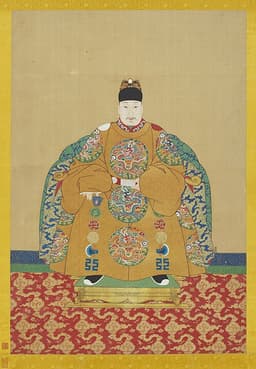
Wanli Emperor
Emperor · Medieval
45.3Total
Basic Information
Born
1109
1563
Died
1185
1620
Era
Medieval
Medieval
Nationality
Portugal
China
Occupation
Emperor
Emperor
Civilization
Western
Eastern
Score Comparison
Military (10%)
74.7
21.2
Political (20%)
60.0
30.8
Influence (20%)
68.0
53.3
Legacy (20%)
65.0
45.0
Leadership (15%)
72.0
67.0
Strategy (15%)
58.0
39.6
TOTAL
66.3
45.3
Afonso I of Portugal — Complete Timeline
1139 AD
Battle of OuriqueWar
Afonso Henriques defeated a larger Almoravid army at Ourique. According to tradition, he was acclaimed King of Portugal on the battlefield. This victory established his reputation and laid the foundation for Portuguese independence.
ReconquistaIndependenceBattle
Impact: regionalconstructive
1143 AD
Treaty of ZamoraPolitical Action
Afonso I signed the Treaty of Zamora with King Alfonso VII of Le
IndependenceDiplomacyTreaty
Impact: regionalconstructive
1147 AD
Conquest of LisbonWar◆ Major
Afonso I, with the help of Crusaders on the Second Crusade, besieged and captured Lisbon from the Moors. This conquest made Lisbon the capital of Portugal and a major port, expanding the kingdom southward.
ReconquistaConquestCapital
Impact: regionalconstructive
1169 AD
Battle of BadajozWar◆ Major
Afonso I attacked Badajoz but was defeated by the Leonese army. He was captured and forced to surrender most of his conquests in Galicia and Extremadura. This defeat limited Portuguese expansion eastward.
ReconquistaDefeatCapture
Impact: regionaldestructive
1179 AD
Papal Recognition of PortugalPolitical Action
Pope Alexander III issued the bull Manifestis Probatum, formally recognizing Afonso I as King of Portugal and placing the kingdom under papal protection. This confirmed Portugal's independence and legitimacy.
IndependencePapacyLegitimacy
Impact: regionalconstructive
Wanli Emperor — Complete Timeline
1572 AD
Longest reign of the Ming dynastyPolitical Action◆ Major
Wanli ascended the throne at age nine, beginning a 48-year reign. His early years were guided by Grand Secretary Zhang Juzheng, who implemented reforms that temporarily strengthened the Ming state.
ReignImperial successionMing dynasty
Impact: national
1573 AD
Zhang Juzheng's reformsReform◆ Major
Grand Secretary Zhang Juzheng implemented the Single Whip tax reform, consolidating various taxes into a single silver payment. He also reformed the civil service examination system and reduced government waste.
Tax reformAdministrative reformZhang Juzheng
Impact: nationalconstructive
1584 AD
Impeachment of Zhang JuzhengPolitical Action◆ Major
After Zhang Juzheng's death, Wanli approved the posthumous impeachment of his former mentor. Zhang's family was persecuted, his property confiscated, and his reforms were partially reversed.
Political purgeZhang JuzhengReversal of reforms
Impact: nationaldestructive
1586 AD
Succession dispute over the heir apparentPolitical Action◆ Major
Wanli favored his younger son Zhu Changxun over the eldest Zhu Changluo as heir. This triggered a prolonged succession dispute with Confucian officials, leading to factional strife and further imperial withdrawal.
Succession crisisFactionalismImperial family
Impact: nationaldestructive
1592 AD
Imjin WarWar◆ Major
Japan invaded Korea, prompting Wanli to dispatch Ming forces to aid the Joseon dynasty. The war lasted until 1598, with Ming and Korean forces eventually repelling the Japanese invasion at great cost.
Imjin WarKoreaJapan invasion
Impact: regional
1600 AD
Grand Secretariat vacancy crisisPolitical Action◆ Major
Wanli withdrew from active governance, refusing to appoint officials to fill vacancies in the Grand Secretariat and other key posts. This paralyzed the Ming bureaucracy and weakened central administration.
Government paralysisBureaucratic crisisImperial withdrawal
Impact: nationaldestructive
Expert Analysis
Origins
**Afonso I of Portugal** was born in 1109, the son of Henry of Burgundy and Teresa of León. His father died when he was young, and Afonso grew up under the tutelage of his mother, who ruled as regent. The Countship of Portugal was a feudal territory within the Kingdom of León. Afonso's formative years were marked by political intrigue and the desire to assert independence from Leonese overlordship. He was educated in military and political affairs, preparing for his role as a future ruler.
**Wanli Emperor** (born Zhu Yijun in 1563) ascended the Ming throne at age nine. He was the son of the Longqing Emperor and Empress Dowager Li. His early education was overseen by Grand Secretary Zhang Juzheng, who became his mentor and regent. Wanli received a rigorous Confucian education, but his childhood was constrained by court rituals and the dominance of eunuchs and officials. His upbringing instilled a sense of duty but also a growing resentment toward the bureaucracy.
Rise to Power
Afonso I's rise began after the death of his father. He assumed control of the County of Portugal in 1128 after defeating his mother's forces at the Battle of São Mamede. He then turned his attention to expanding southward against the Moors. The turning point came in 1139 at the Battle of Ourique, where Afonso's smaller army defeated a larger Almoravid force. According to tradition, he was acclaimed King of Portugal on the battlefield. However, formal recognition came later: the Treaty of Zamora in 1143 with King Alfonso VII of León and Castile acknowledged Portugal's independence. Papal recognition followed in 1179 with the bull Manifestis Probatum from Pope Alexander III, solidifying his sovereignty.
Wanli Emperor's rise was different: he inherited the throne at age nine in 1572. His early reign was dominated by Zhang Juzheng, who implemented significant reforms. Wanli initially supported Zhang, but after Zhang's death in 1582, Wanli approved his posthumous impeachment, turning against his mentor. This marked a shift in Wanli's rule: he became increasingly disengaged from governance, leading to a gradual decline in Ming administration.
Leadership & Governance
Afonso I was a hands-on military leader who personally led campaigns against the Moors. His governance focused on consolidating Portuguese territory and establishing institutions. He founded the first Portuguese monasteries and granted charters to towns, promoting settlement and economic development. His leadership style was autocratic but effective in a frontier kingdom. For example, the Conquest of Lisbon in 1147 with Crusader aid demonstrated his ability to leverage external alliances. However, his overreach at the Battle of Badajoz in 1169, where he was captured, showed the risks of his aggressive expansionism.
Wanli Emperor's leadership was marked by a withdrawal from active governance. After Zhang Juzheng's death, Wanli refused to appoint officials to fill vacancies in the Grand Secretariat, leading to a paralyzed bureaucracy. He preferred to stay within the Forbidden City, engaging in leisure activities. His governance score of 30.8 reflects this neglect. However, during the Imjin War (1592-1598), Wanli did authorize Ming intervention to aid Korea against Japanese invasion, showing occasional decisive action. His leadership score of 67.0 is higher than his political score, indicating some capacity for leadership when engaged.
Triumph & Tragedy
Afonso I's greatest triumph was securing Portuguese independence and expanding its territory. He conquered Lisbon, making it the capital, and pushed the southern frontier to the Tagus River. His legacy as the founder of Portugal is undisputed. However, his tragedy was the failed campaign at Badajoz, which resulted in his capture and loss of conquests in Galicia. He also faced internal revolts from his sons, leading to family strife.
Wanli Emperor's triumph was his long reign and the initial success of Zhang Juzheng's reforms, which improved fiscal stability. The Ming intervention in the Imjin War was a strategic success. His tragedy was the gradual decline of the Ming dynasty during his reign. The Grand Secretariat vacancy crisis and his neglect of governance led to corruption, fiscal problems, and the rise of factionalism. His military score of 21.2 reflects the decline of Ming military power despite the Imjin War.
Character & Destiny
Afonso I was ambitious, courageous, and determined. His character drove him to break free from Leonese suzerainty and establish a kingdom. He was also pragmatic, seeking alliances with the Church and Crusaders. However, his aggression sometimes led to overreach. Historical assessments portray him as a founder figure, with his destiny tied to the creation of Portugal.
Wanli Emperor was intelligent but passive. He resented the constraints of his role and withdrew from responsibility. His character led to a paralyzed government. Historians often blame him for the Ming decline, though some argue that structural factors were at play. His destiny was to preside over a dynasty in decay, with his inaction sealing its fate.
Legacy
Afonso I's legacy is monumental: he founded Portugal, which became a global empire. His military score of 74.7 and leadership score of 72.0 reflect his effectiveness. The kingdom he established lasted until 1910, and his name is revered in Portuguese history. The Treaty of Zamora and papal recognition set precedents for state sovereignty.
Wanli Emperor's legacy is mixed. His reign saw the beginning of the Ming decline. His political score of 30.8 and military score of 21.2 indicate his weaknesses. However, Zhang Juzheng's reforms had lasting impact, and the Imjin War demonstrated Ming military capability. Wanli is often cited as a cautionary example of imperial neglect. His influence score of 53.3 reflects his long reign's impact, but his legacy score of 45.0 is lower.
Conclusion
Afonso I of Portugal had a greater impact than Wanli Emperor. Afonso's total score of 66.3 versus Wanli's 45.3 reflects this. Afonso founded a nation that shaped world history through exploration and empire. Wanli, despite his long reign, presided over decline. While Wanli's early reforms were beneficial, his later neglect was detrimental. Afonso's active leadership and military success contrast sharply with Wanli's passivity. Therefore, Afonso I stands as a more consequential historical figure.
Rankings
🥇
Afonso I of PortugalLeader
Mil: 74.7Pol: 60.0Inf: 68.0
66.3
🥈
Wanli Emperor
Mil: 21.2Pol: 30.8Inf: 53.3
45.3
+21.0 behind
How This Comparison Works
Algorithm
Each figure is scored on 6 dimensions (0—100 scale) based on structured historical data: Military (10%), Political (20%), Influence (20%), Legacy (20%), Leadership (15%), Strategy (15%). The weighted total produces the final ranking.
Data Sources
Scores are computed from structured sub-indicators in the database. Scale factors adjust for era (Ancient ×0.85, Modern ×1.0) and civilization size (Eastern ×1.05, Other ×0.80) to account for differences in population and military scale.
Maximum 3 Figures
Comparisons are limited to 2—3 figures to ensure readability and statistical meaningfulness.
Error Margins
±5 points per dimension — Sub-scores are derived from historical records with inherent uncertainty. Two figures within 5 points on a dimension should be considered roughly equivalent in that area.
Total Score Accuracy
±3 points overall — The weighted combination of 6 dimensions produces a total score with approximately ±3 points of uncertainty. Differences of less than 3 points are not statistically significant— the figures are effectively tied.
Known Limitations
- Historical records are incomplete and uneven across civilizations
- Figures from oral-tradition societies may be underrepresented
- Occupation labels can misclassify multi-role figures
- Scores measure capability and impact, not moral character
- Quantitative scoring is a comparison tool, not absolute truth
Capability Radar
Military (10%) — Battles & Warfare
Battles
70
15
Win Rate
75
10
Expansion
75
5
Political (20%) — Governance & Reform
Reform
70
20
Diplomacy
75
30
Economy
65
25
Influence (20%) — Cultural & Global Reach
Cultural
70
30
Global
65
20
Legacy (20%) — Historical Impact
Historical
80
40
Longevity
85
30
Leadership (15%) — Power & Stability
Tenure
80
70
Stability
60
20
Strategy (15%) — Tactics & Innovation
Strategy
70
10
Tactics
65
10
Reform
60
5
Similar Comparisons
Comments & Discussion
No comments yet. Be the first to share your thoughts!