Loading...
This comparison has not been analyzed yet.
One-time AI generation (~1 minute). Scores and timeline are already available below.
Agamemnon vs Burnaburiash I
Agamemnon leads by 9.3 pts · 2 figures compared
…

Agamemnon
Emperor · Ancient
52.4Total
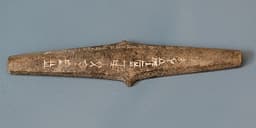
Burnaburiash I
Emperor · Ancient
43.1Total
Basic Information
Born
-1210
-1500
Died
-1180
-1480
Era
Ancient
Ancient
Nationality
Mycenae
Kassite Dynasty
Occupation
Emperor
Emperor
Civilization
Western
Middle Eastern
Score Comparison
Military (10%)
70.0
25.9
Political (20%)
37.9
40.8
Influence (20%)
55.0
47.1
Legacy (20%)
52.0
38.3
Leadership (15%)
48.4
62.2
Strategy (15%)
57.5
36.8
TOTAL
52.4
43.1
Agamemnon — Complete Timeline
1190 BC
Led the Greek Expedition to TroyWar
Agamemnon, as the most powerful Greek king, assembled and commanded the coalition of Greek forces that sailed to Troy to retrieve Helen. He served as the supreme commander throughout the ten-year war.
Trojan WarCommandCoalition
Impact: global
Sacrificed Iphigenia at AulisCultural◆ Major
To appease the goddess Artemis and gain favorable winds for the fleet, Agamemnon sacrificed his daughter Iphigenia at Aulis. This act caused deep resentment in his wife Clytemnestra.
SacrificeFamilyMythology
Impact: regionaltragic
1185 BC
Quarreled with Achilles over BriseisPolitical Action◆ Major
Agamemnon seized the war prize Briseis from Achilles, causing the hero to withdraw from battle. This quarrel nearly cost the Greeks the war and is the central theme of Homer's Iliad.
IliadQuarrelAchilles
Impact: regionaldestructive
1180 BC
Captured and Sacked TroyWar
After a ten-year siege, Agamemnon's forces used the Trojan Horse stratagem to enter and destroy Troy. The victory brought immense wealth and glory to Mycenae.
Trojan WarVictorySack
Impact: global
Murdered by Clytemnestra and AegisthusPolitical Action◆ Major
Upon returning to Mycenae, Agamemnon was killed in his bath by his wife Clytemnestra and her lover Aegisthus. This murder was revenge for Iphigenia's sacrifice and continued the curse on the House of Atreus.
AssassinationRevengeCurse
Impact: regionaltragic
Burnaburiash I — Complete Timeline
1490 BC
Treaty with AssyriaPolitical Action◆ Major
Burnaburiash I established a formal treaty with the Assyrian king, likely defining borders and trade relations. This agreement stabilized the northern frontier of the Kassite kingdom and set a precedent for diplomatic relations between the two powers.
Kassite DynastyAssyriaDiplomacy
Impact: regionalconstructive
This comparison has not been analyzed yet.
One-time AI generation (~1 minute). Scores and timeline are already available below.
Rankings
🥇
AgamemnonLeader
Mil: 70.0Pol: 37.9Inf: 55.0
52.4
🥈
Burnaburiash I
Mil: 25.9Pol: 40.8Inf: 47.1
43.1
+9.3 behind
How This Comparison Works
Algorithm
Each figure is scored on 6 dimensions (0—100 scale) based on structured historical data: Military (10%), Political (20%), Influence (20%), Legacy (20%), Leadership (15%), Strategy (15%). The weighted total produces the final ranking.
Data Sources
Scores are computed from structured sub-indicators in the database. Scale factors adjust for era (Ancient ×0.85, Modern ×1.0) and civilization size (Eastern ×1.05, Other ×0.80) to account for differences in population and military scale.
Maximum 3 Figures
Comparisons are limited to 2—3 figures to ensure readability and statistical meaningfulness.
Error Margins
±5 points per dimension — Sub-scores are derived from historical records with inherent uncertainty. Two figures within 5 points on a dimension should be considered roughly equivalent in that area.
Total Score Accuracy
±3 points overall — The weighted combination of 6 dimensions produces a total score with approximately ±3 points of uncertainty. Differences of less than 3 points are not statistically significant— the figures are effectively tied.
Known Limitations
- Historical records are incomplete and uneven across civilizations
- Figures from oral-tradition societies may be underrepresented
- Occupation labels can misclassify multi-role figures
- Scores measure capability and impact, not moral character
- Quantitative scoring is a comparison tool, not absolute truth
Capability Radar
Military (10%) — Battles & Warfare
Battles
60
10
Win Rate
55
10
Expansion
50
10
Political (20%) — Governance & Reform
Reform
20
30
Diplomacy
45
50
Economy
35
30
Influence (20%) — Cultural & Global Reach
Cultural
70
20
Global
65
20
Legacy (20%) — Historical Impact
Historical
75
30
Longevity
80
20
Leadership (15%) — Power & Stability
Tenure
40
40
Stability
20
40
Strategy (15%) — Tactics & Innovation
Strategy
65
10
Tactics
50
10
Reform
30
10
Similar Comparisons
Comments & Discussion
No comments yet. Be the first to share your thoughts!