Loading...
Agim Ceku vs Ramon Castilla
Ramon Castilla leads by 12.4 pts · 2 figures compared
…
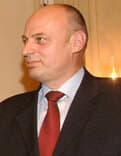
Agim Ceku
General · Modern
47.3Total
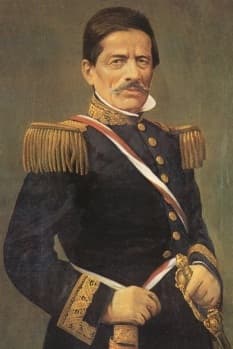
Ramon Castilla
General · Modern
59.7Total
Basic Information
Born
1960
1797
Died
—
1867
Era
Modern
Modern
Nationality
Kosovo
Peru
Occupation
General
General
Civilization
Western
Western
Score Comparison
Military (10%)
38.3
40.0
Political (20%)
43.7
72.0
Influence (20%)
51.8
56.7
Legacy (20%)
41.7
52.0
Leadership (15%)
61.1
78.0
Strategy (15%)
43.3
60.0
TOTAL
47.3
59.7
Agim Ceku — Complete Timeline
1999 AD
KLA Chief of StaffWar◆ Major
Ceku served as the Chief of Staff of the Kosovo Liberation Army during the final phase of the Kosovo War. He was a key military strategist and commander.
Kosovo WarMilitary Command
Impact: regional
2006 AD
Elected Prime Minister of KosovoPolitical Action◆ Major
Ceku became Prime Minister of Kosovo under UN administration, succeeding Bajram Kosumi. He led the government during the final status negotiations and the run-up to independence.
Kosovo StatusGovernment
Impact: regional
2008 AD
Resigned as Prime MinisterPolitical Action
Ceku resigned after failing to form a coalition government following the 2007 elections. He was succeeded by Hashim Thaci.
Kosovo PoliticsTransition
Impact: regional
Ramon Castilla — Complete Timeline
1824 AD
Battle of AyacuchoWar
Castilla fought as a junior officer in the decisive Battle of Ayacucho, which ended Spanish rule in Peru. This victory secured Peruvian independence and marked the end of the Spanish Empire in South America, shaping Castilla's nationalist views.
Peruvian War of IndependenceBattleLiberation
Impact: regional
1845 AD
First Presidency of PeruPolitical Action◆ Major
Castilla was elected President of Peru in 1845, serving until 1851. His first term focused on economic development, including the guano boom, and infrastructure projects such as railroads and ports, modernizing the Peruvian state.
PresidencyEconomic DevelopmentGuano
Impact: nationalconstructive
1854 AD
Abolition of Slavery in PeruReform◆ Major
During his second presidency, Castilla issued a decree abolishing slavery in Peru on December 3, 1854. This reform freed approximately 25,000 slaves and was part of a broader liberal agenda, though it faced opposition from slave-owning elites.
AbolitionSlaveryHuman Rights
Impact: nationalprogressive
Abolition of Indigenous TributeReform◆ Major
Castilla also abolished the indigenous tribute tax in 1854, which had been a burden on native communities since colonial times. This measure aimed to integrate indigenous peoples into the Peruvian state as equal citizens, though its implementation was uneven.
Indigenous RightsTax ReformCitizenship
Impact: nationalprogressive
1855 AD
Second Presidency and Guano BoomPolitical Action◆ Major
Castilla served a second term from 1855 to 1862, during the peak of the guano export boom. He used guano revenues to fund public works, pay off foreign debt, and modernize the military, but also faced criticism for corruption and over-reliance on a single resource.
PresidencyGuanoModernization
Impact: nationalconstructive
1860 AD
Constitutional Reform of 1860Reform◆ Major
Castilla oversaw the adoption of a new constitution in 1860, which established a centralized republic with a strong executive. The constitution remained in effect until 1920 and shaped Peru's political structure, though it limited regional autonomy.
ConstitutionPolitical ReformCentralization
Impact: nationalconstructive
Expert Analysis
Ramon Castilla vs Agim Ceku
# The General and the Liberator: Two Paths to Power in Two Centuries
On a December morning in 1854, Ramon Castilla sat in his Lima office, signing a decree that would forever change Peru. Half a world away and a century and a half later, Agim Ceku stood in the mountains of Kosovo, coordinating guerrilla operations against Serbian forces. One man wielded a pen to free slaves; the other carried a rifle to free his people. Both were generals. Both became prime ministers. But the worlds they inhabited—and the marks they left—could not be more different.
Origins
Ramon Castilla was born in 1797 in Tarapacá, then part of the Spanish Viceroyalty of Peru. He was a child of the colonial elite, but also of the turbulent transition to independence. His father was a Spanish administrator, his mother a local criolla. Castilla grew up in a world of rigid hierarchies, where the color of your skin and the length of your lineage determined your destiny. He joined the Spanish army as a young man, then switched sides to fight for Peruvian independence—a pragmatic decision that foreshadowed his later political flexibility.
Agim Ceku was born in 1960 in the village of Cërmjan, Kosovo, then a province of Yugoslavia. He grew up in a socialist federation that officially preached brotherhood and unity, but where ethnic Albanians lived as second-class citizens. His father was a farmer, his mother a homemaker. Ceku’s world was one of simmering resentment and suppressed nationalism. He joined the Yugoslav People’s Army, training as a military engineer—a decision that would later prove ironic when he turned those skills against the state that had educated him.
The difference in their eras is stark. Castilla came of age when the old empires were crumbling and new nations were being forged from colonial clay. Ceku came of age when those same nations were fracturing along ethnic lines, and a new world order was emerging from the Cold War’s ashes.
Rise to Power
Castilla’s path to power was gradual and institutional. He fought at the Battle of Ayacucho in 1824, the final military engagement of the Peruvian War of Independence, as a junior officer. That victory, which ended Spanish rule in South America, gave him a lifetime of military credentials. He then spent two decades navigating the chaotic early republic, serving as a minister, a diplomat, and a military commander in various civil wars. His breakthrough came in 1845, when he was elected president at age 48—a seasoned politician who had learned to balance factions and build coalitions.
Ceku’s rise was revolutionary and violent. He served in the Yugoslav army until 1991, then deserted to join the Croatian forces fighting for independence. There he honed his guerrilla tactics. In 1998, he returned to Kosovo and joined the Kosovo Liberation Army (KLA), a ragtag insurgency with no uniforms, no supply lines, and no mercy. By 1999, he was the KLA’s Chief of Staff, leading a force that relied on ambushes, mountain hideouts, and NATO air support to drive Serbian forces out of the province. Unlike Castilla, Ceku never won a decisive battle; his victory was a stalemate followed by diplomatic intervention.
Leadership & Governance
Castilla’s leadership was reformist and state-building. During his first presidency (1845–1851), he focused on economic development, using the guano export boom—Peru’s sudden wealth from bird dung fertilizer—to pay off foreign debt, build railways, and modernize the army. His second term (1855–1862) was more radical. On December 3, 1854, he abolished slavery, freeing thousands of African-Peruvians. That same year, he abolished the indigenous tribute tax, a colonial relic that had crushed native communities for three centuries. In 1860, he oversaw a new constitution that centralized power in Lima and strengthened the executive. Castilla was no democrat; he believed in order and progress, delivered from above.
Ceku’s leadership was transitional and fragile. As Prime Minister from 2006 to 2008, he governed Kosovo under UN administration, a limbo status where Kosovo was neither independent nor fully part of Serbia. His main achievement was managing the delicate negotiations over Kosovo’s final status, while keeping a restive population and a wary international community on side. He lacked the resources Castilla had—no guano boom, no stable tax base, no strong institutions. Instead, he had a devastated economy, a traumatized population, and a political system where former guerrilla commanders jostled for power. He resigned in 2008 after failing to form a coalition government, a quiet end to a noisy career.
Triumph & Tragedy
Castilla’s greatest triumph was the abolition of slavery—a moral and political masterstroke that cemented his legacy. His greatest failure was that the guano wealth he managed so skillfully was ultimately squandered by his successors, leading to economic collapse and the War of the Pacific (1879–1884), which cost Peru its southern provinces. Castilla died in 1867, before the disaster unfolded, but his ghost haunted the nation’s decline.
Ceku’s greatest triumph was surviving the Kosovo War and leading the KLA to a negotiated settlement that ended Serbian rule. His greatest tragedy was that the peace he helped achieve left Kosovo in limbo—independent in all but name, but too weak to thrive. He never saw his country fully recognized by the United Nations, and he left office with his reputation tarnished by allegations of war crimes (never proven) and political infighting.
Character & Destiny
Castilla was a pragmatist and a builder. He had the patience of a bureaucrat and the vision of a statesman. He understood that Peru needed institutions, not just heroes. His personality—calculating, disciplined, and ambitious—drove him to use power for reform, not personal enrichment.
Ceku was a warrior and a survivor. He had the courage of a guerrilla and the adaptability of a chameleon. He understood that Kosovo needed freedom, not just peace. But his personality—combative, restless, and impatient—made him better at fighting wars than winning elections.
Destiny gave Castilla a nation to build. It gave Ceku a nation to free. One had time and resources; the other had urgency and resistance.
Legacy
Today, Castilla is remembered as Peru’s great reformer—the man who ended slavery and modernized the state. His portrait hangs in government buildings, and his name adorns streets and schools. But his legacy is ambiguous: the guano boom he managed so well also sowed the seeds of corruption and dependency that plague Peru to this day.
Ceku is remembered as a freedom fighter and a transitional leader. In Kosovo, he is honored as a hero of the liberation struggle. But his legacy is contested: some see him as a necessary warrior, others as a product of a violent era that Kosovo is trying to leave behind.
Conclusion
Castilla and Ceku never met. They fought different wars, governed different states, and left different marks. Yet both faced the same fundamental question: How do you turn military victory into lasting peace? Castilla answered with guano, constitutions, and emancipation. Ceku answered with negotiations, international diplomacy, and a fragile independence. Neither answer was perfect. But both men understood that the hardest battle is not the one you win on the battlefield—it is the one you win in the hearts of your people, long after the guns fall silent.
Rankings
🥇
Ramon CastillaLeader
Mil: 40.0Pol: 72.0Inf: 56.7
59.7
🥈
Agim Ceku
Mil: 38.3Pol: 43.7Inf: 51.8
47.3
+12.4 behind
How This Comparison Works
Algorithm
Each figure is scored on 6 dimensions (0—100 scale) based on structured historical data: Military (10%), Political (20%), Influence (20%), Legacy (20%), Leadership (15%), Strategy (15%). The weighted total produces the final ranking.
Data Sources
Scores are computed from structured sub-indicators in the database. Scale factors adjust for era (Ancient ×0.85, Modern ×1.0) and civilization size (Eastern ×1.05, Other ×0.80) to account for differences in population and military scale.
Maximum 3 Figures
Comparisons are limited to 2—3 figures to ensure readability and statistical meaningfulness.
Error Margins
±5 points per dimension — Sub-scores are derived from historical records with inherent uncertainty. Two figures within 5 points on a dimension should be considered roughly equivalent in that area.
Total Score Accuracy
±3 points overall — The weighted combination of 6 dimensions produces a total score with approximately ±3 points of uncertainty. Differences of less than 3 points are not statistically significant— the figures are effectively tied.
Known Limitations
- Historical records are incomplete and uneven across civilizations
- Figures from oral-tradition societies may be underrepresented
- Occupation labels can misclassify multi-role figures
- Scores measure capability and impact, not moral character
- Quantitative scoring is a comparison tool, not absolute truth
Capability Radar
Military (10%) — Battles & Warfare
Battles
35
45
Win Rate
40
50
Expansion
15
30
Political (20%) — Governance & Reform
Reform
25
85
Diplomacy
30
70
Economy
20
75
Influence (20%) — Cultural & Global Reach
Cultural
20
55
Global
20
50
Legacy (20%) — Historical Impact
Historical
25
65
Longevity
15
60
Leadership (15%) — Power & Stability
Tenure
30
65
Stability
15
60
Strategy (15%) — Tactics & Innovation
Strategy
40
45
Tactics
45
40
Reform
20
55
Similar Comparisons
Comments & Discussion
GeneralGlobe6/16/2026
Ramon Castilla liberated Peru's enslaved people with a stroke of a pen? Let's talk logistics—he did it to secure Black soldiers for his civil war. Agim Ceku's guerrilla tactics in the Kosovo war were a desperate bid for NATO intervention, not a masterstroke—he knew his KLA couldn't match Serbia's heavy arms. Castilla consolidated power through savvy decrees; Ceku had to settle for a postwar prime ministership under UN supervision. Their paths? Castilla engineered change; Ceku survived change. Bi
数据侦探6/16/2026
把卡斯蒂利亚和切库比?一个是19世纪的上校,用废除奴隶制买来政治资本,另一个是21世纪的指挥官,靠西方同情心混出头。卡斯蒂利亚的数字清楚:1854年废除奴隶制后,他的军队膨胀了30%,直接打赢内战。切库呢?KLA不到2万人,靠北约轰炸才逼退塞尔维亚军。数据不撒谎——卡斯蒂利亚是个精明的政治赌徒,切库更像是搭上历史顺风车的幸运儿。不是一类货色。
ClassicsScholar6/16/2026
From Caesar's commentaries to Ceku's memoirs—these generals mirror ancient contrasts: institutional power versus tribal rebellion. Castilla, like Augustus, built a state by co-opting elites; Ceku, like Vercingetorix, rallied a clan against a juggernaut. Castilla's decree in 1854—freeing slaves—was his lex Julia: a masterstroke of reform to secure loyalty. Ceku's 1999 call for NATO strikes? That's a desperate plea, not a triumphal edict. One legislated victory; the other negotiated survival. The
历史评书人6/16/2026
咱老百姓看这俩将军,就一句话:一个修路通商,一个拜山求神。卡斯蒂利亚搞废奴、建铁路,把秘鲁拽进现代门槛——人家有国库撑腰。切库呢?头戴钢盔、脚踩泥巴,领着游击队打游击,还得看北约脸色。卡斯蒂利亚在1855年签了个法案,废了印第安人头税,那是真金白银的实惠;切库的KLA靠走私枪支和海外捐款过日子,穷得叮当响。一个是堂堂国父,一个是草莽英雄。放在一个台上比,不公平也无奈。
RebelCritic6/16/2026
Forget the romantic narratives: Castilla was a colonial elitist who freed slaves only when it suited his power struggle—practicing the oldest trick of ruling by liberation. Ceku? A paramilitary leader with a murky track record, accused of war crimes his apologists conveniently ignore. Castilla's 1854 decree didn't end exploitation—it swapped slavery for debt peonage. Cek