Loading...
Agim Ceku vs Shi Dakai
Shi Dakai leads by 12.3 pts · 2 figures compared
…

Agim Ceku
General · Modern
47.3Total
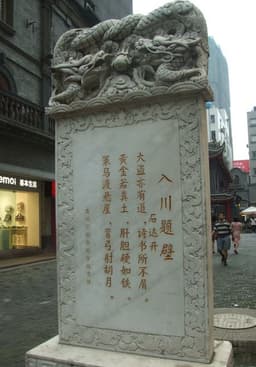
Shi Dakai
General · Modern
59.6Total
Basic Information
Born
1960
1831
Died
—
1863
Era
Modern
Modern
Nationality
Kosovo
China
Occupation
General
General
Civilization
Western
Eastern
Score Comparison
Military (10%)
38.3
76.0
Political (20%)
43.7
45.0
Influence (20%)
51.8
56.7
Legacy (20%)
41.7
54.0
Leadership (15%)
61.1
72.0
Strategy (15%)
43.3
68.1
TOTAL
47.3
59.6
Agim Ceku — Complete Timeline
1999 AD
KLA Chief of StaffWar◆ Major
Ceku served as the Chief of Staff of the Kosovo Liberation Army during the final phase of the Kosovo War. He was a key military strategist and commander.
Kosovo WarMilitary Command
Impact: regional
2006 AD
Elected Prime Minister of KosovoPolitical Action◆ Major
Ceku became Prime Minister of Kosovo under UN administration, succeeding Bajram Kosumi. He led the government during the final status negotiations and the run-up to independence.
Kosovo StatusGovernment
Impact: regional
2008 AD
Resigned as Prime MinisterPolitical Action
Ceku resigned after failing to form a coalition government following the 2007 elections. He was succeeded by Hashim Thaci.
Kosovo PoliticsTransition
Impact: regional
Shi Dakai — Complete Timeline
1851 AD
Jintian UprisingWar◆ Major
Shi Dakai joined the Taiping Rebellion at its inception in Jintian, Guangxi. As a core leader, he helped organize the rebel forces and was appointed Wing King, becoming one of the key military commanders of the Taiping Heavenly Kingdom.
Taiping RebellionUprisingMilitary Command
Impact: national
1854 AD
Battle of XiangtanWar◆ Major
Shi Dakai led Taiping forces to a major victory at Xiangtan, Hunan, defeating Qing imperial troops. This battle secured Taiping control over key territories in the Yangtze River valley and demonstrated his military skill.
Taiping RebellionBattleVictory
Impact: regional
1856 AD
Tianjing IncidentPolitical Action
Shi Dakai returned to Tianjing (Nanjing) after the internal purge of the Eastern King Yang Xiuqing and the murder of the Northern King Wei Changhui. He condemned the violence and was forced to flee, leading to a split in Taiping leadership.
Taiping RebellionInternal ConflictPurge
Impact: nationaltragic
1858 AD
Campaign in Zhejiang and FujianWar
Shi Dakai led a separate Taiping army into Zhejiang and Fujian provinces, capturing several cities. This campaign expanded Taiping influence into southeastern China but also isolated his forces from the main Taiping base.
Taiping RebellionCampaignExpansion
Impact: regional
1863 AD
Battle of Baishui RiverWar◆ Major
Shi Dakai's army was trapped and defeated by Qing forces at the Baishui River in Sichuan. He was captured and executed shortly after, marking the end of his military career and a significant loss for the Taiping cause.
Taiping RebellionBattleDefeatDeath
Impact: nationaltragic
Expert Analysis
Shi Dakai vs Agim Ceku
# The Rebel and the General: Two Paths Through the Storm
In the spring of 1863, on the banks of the Baishui River in Sichuan, a 32-year-old king knelt before his executioners. His name was Shi Dakai, the Wing King of the Taiping Heavenly Kingdom, and he had just watched his entire army—some 4,000 men—slaughtered by Qing imperial forces. Half a world away, in the mountains of Kosovo in 1999, another commander was making a different kind of calculation. Agim Ceku, a 39-year-old former Croatian army officer, was coordinating guerrilla attacks against Serbian forces, using a mobile phone and a map spread across a kitchen table. Both men led insurgencies. Both fought against empires. But their fates could not have diverged more sharply. What separates a martyr from a statesman? The answer lies not in courage, but in context.
Origins
Shi Dakai was born in 1831 into a wealthy Hakka family in Guangxi, southern China. His father was a landowner, his education classical Confucian. Yet the China of his youth was disintegrating—the Opium Wars had humiliated the Qing dynasty, corruption rotted the bureaucracy, and famine stalked the countryside. Shi was a brilliant student, but he was also restless, drawn to the strange Christian-inflected millenarianism that was sweeping through his province. When a failed scholar named Hong Xiuquan declared himself the younger brother of Jesus Christ and launched the Taiping Rebellion in 1851, the 20-year-old Shi Dakai joined him. He was not a fanatic. He was a pragmatist who saw an opportunity to build something new.
Agim Ceku was born in 1960 in the village of Çërrca, Kosovo, then part of communist Yugoslavia. His family were farmers, ethnic Albanians in a region where Serbs held power. He grew up under Tito's iron fist, where nationalism was suppressed and Kosovo's Albanian majority was treated as second-class citizens. Unlike Shi, Ceku did not inherit wealth or education—he earned it. He joined the Yugoslav People's Army, attended military academy, and served as an officer. When Yugoslavia began to splinter in 1991, he deserted and joined the Croatian army, fighting against Serbian forces in the Croatian War of Independence. By 1998, he was a hardened professional soldier, not a revolutionary dreamer.
Rise to Power
Shi Dakai rose on the wings of faith and victory. In 1854, at the Battle of Xiangtan, he led a Taiping army of perhaps 50,000 men against a Qing force twice that size. The fighting was savage—muskets, swords, and burning villages—but Shi outmaneuvered the imperial generals, driving them back and securing Hunan province for the Heavenly Kingdom. He was only 23. His reputation as a military genius spread, and he became one of the "Five Kings" of the Taiping movement. But the rebellion was always a house divided. In 1856, the Tianjing Incident shattered everything. Hong Xiuquan, paranoid and drug-addled, ordered the execution of the Eastern King Yang Xiuqing, then the Northern King Wei Changhui murdered thousands in a purge. Shi Dakai returned to the capital to stop the bloodshed, but Wei tried to kill him too. Shi barely escaped, and his family was slaughtered.
Agim Ceku's rise was slower, more political, and less bloody. In 1999, as Chief of Staff of the Kosovo Liberation Army (KLA), he commanded a ragtag force of perhaps 20,000 fighters against the Serbian military and paramilitaries. The KLA was not a unified army—it was a network of local commanders, arms dealers, and idealists. Ceku's task was to impose order, to turn a guerrilla movement into a fighting force. He did not lead from the front; he led from a radio, coordinating ambushes and supply lines. The turning point came not on the battlefield but in the skies: NATO's bombing campaign in March 1999 forced Serbia to withdraw. Ceku did not win the war; he survived it. That was enough.
Leadership & Governance
Shi Dakai was a military genius but a political disaster. His strategy was brilliant—he could read a battlefield like a chessboard, feinting and flanking with devastating precision. In the campaigns of 1858 in Zhejiang and Fujian, he captured cities with minimal losses, winning the loyalty of local populations by forbidding looting and executing corrupt officers. But he could not govern. When he split from the Taiping leadership in 1857, he took his army on a six-year odyssey across southern China, fighting the Qing, the Miao, and the local militia. He never established a stable base. He was a wanderer with a sword, not a builder of states.
Agim Ceku was the opposite. His military score of 46.7 is modest, but his political skill—63.5—was his real weapon. As Prime Minister of Kosovo from 2006 to 2008, he oversaw the transition from a UN-administered territory to an independent state. He negotiated with the European Union, managed rivalries within the Albanian political elite, and kept the fragile peace. He was not a charismatic leader; he was a bureaucrat in a flak jacket. But he understood that survival required compromise, not martyrdom.
Triumph & Tragedy
Shi Dakai's greatest moment was his greatest failure. In 1863, trapped in Sichuan, he offered to surrender in exchange for the lives of his remaining soldiers. The Qing commander promised mercy, then broke his word. As Shi watched his men executed, he was given a choice: convert to Confucianism and live, or die. He chose death. His execution was slow—he was sliced to pieces in a public square—but he never screamed. In that moment, he became a legend.
Ceku's triumph was quieter. In 2008, Kosovo declared independence, and he stepped down as Prime Minister without a gunshot. He later served as Minister of Security Forces, retiring to a life of relative obscurity. He is alive today, a symbol of Kosovo's struggle but also its compromises.
Character & Destiny
Shi Dakai was a man of honor and pride, trapped in a movement that devoured its own. His loyalty to the Taiping cause was absolute, even when the cause was rotten. He could not betray his king, so he died for him. Ceku was a survivor. He fought for Croatia, then for Kosovo, then for peace. He changed sides when necessary, made deals when expedient. His character was not heroic; it was adaptive.
Legacy
Shi Dakai is remembered as a tragic hero in China, a brilliant general who died for a lost cause. His poetry is still recited, his name invoked by rebels and romantics. His legacy score of 65.9 reflects a man remembered more for his death than his life.
Agim Ceku is a footnote in Kosovo's history, a transitional figure between war and peace. His legacy is the state itself—Kosovo exists, and he helped build it. But he is not loved; he is respected.
Conclusion
Two men, two rebellions, two fates. Shi Dakai chose the sword and the martyr's crown; Agim Ceku chose the desk and the diplomat's handshake. One died screaming silently; the other lives in quiet retirement. History does not reward the bravest—it rewards the most adaptable. And sometimes, it rewards neither.
Rankings
🥇
Shi DakaiLeader
Mil: 76.0Pol: 45.0Inf: 56.7
59.6
🥈
Agim Ceku
Mil: 38.3Pol: 43.7Inf: 51.8
47.3
+12.3 behind
How This Comparison Works
Algorithm
Each figure is scored on 6 dimensions (0—100 scale) based on structured historical data: Military (10%), Political (20%), Influence (20%), Legacy (20%), Leadership (15%), Strategy (15%). The weighted total produces the final ranking.
Data Sources
Scores are computed from structured sub-indicators in the database. Scale factors adjust for era (Ancient ×0.85, Modern ×1.0) and civilization size (Eastern ×1.05, Other ×0.80) to account for differences in population and military scale.
Maximum 3 Figures
Comparisons are limited to 2—3 figures to ensure readability and statistical meaningfulness.
Error Margins
±5 points per dimension — Sub-scores are derived from historical records with inherent uncertainty. Two figures within 5 points on a dimension should be considered roughly equivalent in that area.
Total Score Accuracy
±3 points overall — The weighted combination of 6 dimensions produces a total score with approximately ±3 points of uncertainty. Differences of less than 3 points are not statistically significant— the figures are effectively tied.
Known Limitations
- Historical records are incomplete and uneven across civilizations
- Figures from oral-tradition societies may be underrepresented
- Occupation labels can misclassify multi-role figures
- Scores measure capability and impact, not moral character
- Quantitative scoring is a comparison tool, not absolute truth
Capability Radar
Military (10%) — Battles & Warfare
Battles
35
75
Win Rate
40
70
Expansion
15
75
Political (20%) — Governance & Reform
Reform
25
50
Diplomacy
30
45
Economy
20
40
Influence (20%) — Cultural & Global Reach
Cultural
20
55
Global
20
40
Legacy (20%) — Historical Impact
Historical
25
60
Longevity
15
45
Leadership (15%) — Power & Stability
Tenure
30
55
Stability
15
35
Strategy (15%) — Tactics & Innovation
Strategy
40
80
Tactics
45
85
Reform
20
60
Similar Comparisons
Comments & Discussion
The Rebel's Fallacy6/16/2026
Shi Dakai's martyrdom was a strategic catastrophe, not a moral triumph. By surrendering himself to save his troops, he handed the Qing a propaganda victory—they executed him anyway and slaughtered his army. A true rebel leader knows that negotiation with an existential enemy is suicide. Ceku understood this: he leveraged NATO's air power, not Confucian honor codes. One died a poet's death; the other lived to become PM. Pick which legacy matters more.
铁血书生6/16/2026
石达开是太平天国最后的骑士,却不是最聪明的军阀。看看他1863年的渡河决策——带着4000老弱病残强渡大渡河,明明天时地利都在清军那边。对比切库在科索沃的游击战术,石达开更像一个悲情戏主角,而非军事统帅。浪漫救不了命,实用主义才能活到最后。要是石达开早二十年遇到火器时代,也许结局不同?