Loading...
Agrippa vs Gnaeus Julius Agricola
Agrippa leads by 13.0 pts · 2 figures compared
…

Agrippa
General · Ancient
65.5Total
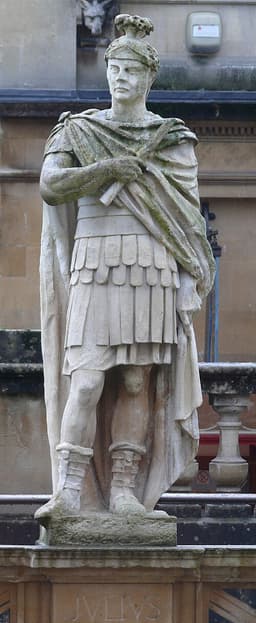
Gnaeus Julius Agricola
General · Ancient
52.5Total
Basic Information
Born
-63
40
Died
-12
93
Era
Ancient
Ancient
Nationality
Roman Empire
Roman Empire
Occupation
General
General
Civilization
Western
Western
Score Comparison
Military (10%)
88.0
72.0
Political (20%)
68.0
35.1
Influence (20%)
56.7
54.1
Legacy (20%)
55.0
47.5
Leadership (15%)
70.0
61.1
Strategy (15%)
80.8
55.0
TOTAL
65.5
52.5
Agrippa — Complete Timeline
31 BC
Battle of ActiumWar
Agrippa commanded the fleet of Octavian against the combined forces of Mark Antony and Cleopatra. His tactical victory at Actium ended the Roman civil wars and secured Octavian's sole rule, leading to the establishment of the Roman Empire.
Civil WarOctavianMark AntonyCleopatra
Impact: global
27 BC
Construction of the PantheonCultural◆ Major
Agrippa commissioned the original Pantheon in Rome, a temple dedicated to all gods. The building was later rebuilt by Hadrian but retained Agrippa's inscription, becoming a landmark of Roman architecture.
ArchitectureTempleRome
Impact: globalconstructive
23 BC
Governorship of the Eastern ProvincesPolitical Action◆ Major
Augustus granted Agrippa proconsular imperium over the eastern provinces, effectively making him co-ruler. Agrippa administered the region, settled disputes, and strengthened Roman control, demonstrating his role as Augustus's heir apparent.
AdministrationEastern ProvincesAugustus
Impact: regionalconstructive
Gnaeus Julius Agricola — Complete Timeline
74 AD
Governorship of AquitaniaPolitical Action
Agricola was appointed governor of Aquitania, a Roman province in Gaul. He administered the province for three years, focusing on legal and financial reforms. This post prepared him for higher command and demonstrated his administrative skills.
Provincial AdministrationGaulCareer
Impact: regionalconstructive
78 AD
Conquest of the OrdovicesWar◆ Major
As governor of Britain, Agricola launched a campaign against the Ordovices tribe in northern Wales. He defeated them and then conquered the island of Anglesey, a stronghold of Druids and resistance, completing the Roman subjugation of Wales.
Roman BritainWalesMilitary Campaign
Impact: regional
83 AD
Battle of Mons GraupiusWar◆ Major
Agricola's army defeated a large Caledonian force led by Calgacus at Mons Graupius in northern Scotland. The Roman victory was decisive, but Agricola did not pursue the defeated tribes into the Highlands, leaving the conquest of Scotland incomplete.
BattleScotlandCaledonia
Impact: regional
Circumnavigation of BritainOther
Agricola ordered a Roman fleet to circumnavigate Britain, proving it was an island. The fleet sailed around the northern coast, encountering the Orkney Islands. This exploration provided valuable geographical knowledge and demonstrated Roman naval power.
ExplorationNavyGeography
Impact: regionalconstructive
Expert Analysis
Origins
Marcus Vipsanius Agrippa (63–12 BCE) was born into a plebeian family in the Italian countryside, possibly near Arpinum. His father died early, but Agrippa's intelligence and ambition earned him a place among the elite youth trained alongside Octavian (later Augustus) in Apollonia. Their bond, forged during military exercises and philosophical studies, became the foundation of his career. In contrast, Gnaeus Julius Agricola (40–93 CE) hailed from a senatorial family in Forum Julii (modern Fréjus, France). His father, a senator, was executed under Caligula, leaving Agricola to be raised by his mother. He studied philosophy in Massilia (Marseille) but turned to military service, joining the Roman legions in Britain under Suetonius Paulinus.
Rise to Power
Agrippa's rise began during the civil wars following Julius Caesar's assassination. He commanded Octavian's fleet at the Battle of Actium in 31 BCE, where his tactical brilliance defeated Mark Antony and Cleopatra, ending the Roman Republic's final war. This victory made Agrippa indispensable. He later held consulships and was granted tribunician power, effectively making him co-ruler with Augustus. Agricola's ascent was slower. After serving as military tribune in Britain (60–61 CE), he returned to Rome, married Domitia Decidiana, and held the quaestorship in Asia. His governorship of Aquitania (73–76 CE) showcased administrative skill, leading to his appointment as consul in 77 CE and then governor of Britain (77–84 CE).
Leadership & Governance
Agrippa's leadership was defined by loyalty and innovation. He reorganized the Roman army, improved infrastructure (building roads and aqueducts), and administered the eastern provinces with a firm hand. His governance score of 68.0 reflects his effectiveness as Augustus's deputy. Agricola, with a political score of 35.1, was less influential in Rome but excelled as a provincial governor. In Britain, he combined military conquest with Romanization, founding towns, promoting education, and integrating British elites into Roman culture. His leadership style was paternalistic, earning loyalty from his troops and subjects.
Triumph & Tragedy
Agrippa's greatest triumph was the Battle of Actium, scoring 88.0 in military. He also commissioned the original Pantheon (later rebuilt by Hadrian) and expanded Rome's water supply via the Aqua Virgo. His tragedy was his premature death in 12 BCE, possibly from illness, which left Augustus without his trusted partner. Agricola's triumph was the Battle of Mons Graupius in 83 CE, where he defeated the Caledonian confederation. He also circumnavigated Britain, proving it an island. His tragedy was being recalled by Emperor Domitian, who feared his popularity, leaving Scotland unconquered. Agricola died in 93 CE, possibly poisoned on Domitian's orders.
Character & Destiny
Agrippa was pragmatic, loyal, and modest, often refusing triumphs and honors. His character complemented Augustus's cautious nature, enabling their partnership. His fate was tied to Augustus's success, and his early death prevented him from becoming emperor. Agricola was disciplined, fair, and ambitious but not politically savvy. His success in Britain made him a threat to Domitian, leading to his recall and obscure end. Both men's characters shaped their fates: Agrippa's loyalty earned him power but limited his independence; Agricola's competence provoked imperial jealousy.
Legacy
Agrippa's legacy is monumental. His military reforms influenced Roman tactics for centuries. The Pantheon, though rebuilt, still bears his name, and his urban projects set standards for Roman engineering. His influence score of 56.7 reflects his role in stabilizing Augustus's regime. Agricola's legacy is more localized. His conquests in Britain established Roman rule for 300 years, and his son-in-law Tacitus's biography preserved his deeds. However, his failure to complete the conquest of Scotland left a frontier that later emperors struggled to hold. Agricola's legacy score of 47.5 acknowledges his regional impact.
Conclusion
Agrippa had greater impact on Roman history. His military score of 88.0 and political score of 68.0 far exceed Agricola's 72.0 and 35.1. Agrippa's actions at Actium and his administrative reforms were crucial to the Roman Empire's foundation, while Agricola's achievements were confined to a single province. Agrippa's total score of 65.5 against Agricola's 52.5 reflects his broader influence. Although both were capable generals, Agrippa's role as co-architect of the Augustan system makes him the more significant figure in world history.
Rankings
🥇
AgrippaLeader
Mil: 88.0Pol: 68.0Inf: 56.7
65.5
🥈
Gnaeus Julius Agricola
Mil: 72.0Pol: 35.1Inf: 54.1
52.5
+13.0 behind
How This Comparison Works
Algorithm
Each figure is scored on 6 dimensions (0—100 scale) based on structured historical data: Military (10%), Political (20%), Influence (20%), Legacy (20%), Leadership (15%), Strategy (15%). The weighted total produces the final ranking.
Data Sources
Scores are computed from structured sub-indicators in the database. Scale factors adjust for era (Ancient ×0.85, Modern ×1.0) and civilization size (Eastern ×1.05, Other ×0.80) to account for differences in population and military scale.
Maximum 3 Figures
Comparisons are limited to 2—3 figures to ensure readability and statistical meaningfulness.
Error Margins
±5 points per dimension — Sub-scores are derived from historical records with inherent uncertainty. Two figures within 5 points on a dimension should be considered roughly equivalent in that area.
Total Score Accuracy
±3 points overall — The weighted combination of 6 dimensions produces a total score with approximately ±3 points of uncertainty. Differences of less than 3 points are not statistically significant— the figures are effectively tied.
Known Limitations
- Historical records are incomplete and uneven across civilizations
- Figures from oral-tradition societies may be underrepresented
- Occupation labels can misclassify multi-role figures
- Scores measure capability and impact, not moral character
- Quantitative scoring is a comparison tool, not absolute truth
Capability Radar
Military (10%) — Battles & Warfare
Battles
85
65
Win Rate
90
70
Expansion
85
75
Political (20%) — Governance & Reform
Reform
75
45
Diplomacy
80
50
Economy
70
40
Influence (20%) — Cultural & Global Reach
Cultural
65
35
Global
70
30
Legacy (20%) — Historical Impact
Historical
80
55
Longevity
75
40
Leadership (15%) — Power & Stability
Tenure
70
55
Stability
85
50
Strategy (15%) — Tactics & Innovation
Strategy
85
72
Tactics
88
68
Reform
80
30
Similar Comparisons
Comments & Discussion
No comments yet. Be the first to share your thoughts!