Loading...
Agui vs Enomoto Takeaki
Agui leads by 4.3 pts · 2 figures compared
…

Agui
General · Modern
55.9Total
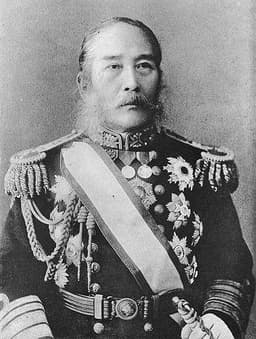
Enomoto Takeaki
General · Modern
51.6Total
Basic Information
Born
1717
1836
Died
1797
1908
Era
Modern
Modern
Nationality
China
Japan
Occupation
General
General
Civilization
Eastern
Eastern
Score Comparison
Military (10%)
61.7
25.0
Political (20%)
46.6
54.7
Influence (20%)
53.3
54.1
Legacy (20%)
46.7
46.7
Leadership (15%)
80.0
68.0
Strategy (15%)
57.5
55.0
TOTAL
55.9
51.6
Agui — Complete Timeline
1755 AD
Conquest of XinjiangWar◆ Major
Agui served as a key commander in the Qing campaign to conquer the Dzungar Khanate in Xinjiang. The campaign resulted in the destruction of the Dzungar state and the incorporation of Xinjiang into the Qing Empire.
Dzungar-Qing WarConquestXinjiang
Impact: regional
1766 AD
Burma CampaignWar
Agui participated in the Qing invasion of Burma. The campaign failed to achieve its objectives, and Agui advocated for withdrawal, which was eventually ordered, marking a rare Qing military setback.
Sino-Burmese WarCampaignWithdrawal
Impact: regionaltragic
1771 AD
Jinchuan CampaignWar◆ Major
Agui led Qing forces in the second Jinchuan campaign against the Gyalrong people in Sichuan. The campaign lasted five years and ended with Qing victory, but at great cost in lives and resources.
Jinchuan CampaignSichuanWar
Impact: regionaldestructive
Enomoto Takeaki — Complete Timeline
1868 AD
Led the Shogunate Fleet to HokkaidoWar
Enomoto commanded the shogunate's remaining naval forces, including eight warships, and sailed to Hokkaido. This fleet formed the core of the Republic of Ezo's military and allowed the loyalists to establish a base.
Naval CommandBoshin WarShogunate Loyalist
Impact: regional
Founded the Republic of EzoPolitical Action
After the shogunate's defeat, Enomoto led loyalist forces to Hokkaido and established the Republic of Ezo, an independent state with a Western-style government. He was elected president and organized a defense against imperial forces.
Boshin WarSeparatist StateShogunate Loyalist
Impact: national
1869 AD
Surrendered at the Battle of HakodateWar◆ Major
Enomoto's forces were defeated by the imperial army at the Battle of Hakodate. He surrendered the Republic of Ezo and was taken prisoner, ending the last organized resistance to the Meiji Restoration.
Boshin WarDefeatEnd of Resistance
Impact: nationaltragic
1885 AD
Served as Minister of Foreign Affairs in the Meiji GovernmentPolitical Action◆ Major
After being pardoned, Enomoto served as Japan's Minister of Foreign Affairs. He negotiated treaties with Western powers and worked to revise the unequal treaties imposed on Japan, contributing to Japan's diplomatic modernization.
DiplomacyTreaty RevisionMeiji Government
Impact: nationalconstructive
Expert Analysis
Origins
Agui (1717–1797) was born into the Manchu elite, part of the prominent Gūwalgiya clan. His father, Ašan, was a grand secretary, and Agui received a traditional Confucian education alongside military training. He passed the imperial examinations in 1737, earning a jinshi degree, and began his career as a civil official before shifting to military command.
Enomoto Takeaki (1836–1908) was born into a samurai family in Edo. His father was a minor shogunate retainer. Enomoto studied Dutch naval science at the Nagasaki Naval Training Center and later in the Netherlands from 1862 to 1867, where he gained expertise in Western naval warfare and international law.
Rise to Power
Agui rose through the Qing bureaucracy, serving in key posts such as governor of Guangdong and Guangxi. His military prominence came during the Qianlong Emperor's campaigns. In 1755, he was appointed as a commander in the campaign against the Dzungar Khanate. His decisive action at the Battle of Oroi-Jalatu in 1756 helped secure Qing control over Xinjiang. By 1768, he was leading the second Jinchuan campaign, which lasted from 1771 to 1776, ultimately crushing the Gyalrong resistance.
Enomoto Takeaki's rise was tied to the Tokugawa shogunate's modernization efforts. He commanded the shogunate's fleet and was sent to the Netherlands to study naval technology. During the Boshin War (1868–1869), after the shogunate's collapse, he refused to surrender and fled to Hokkaido with eight warships and 2,500 soldiers. There, he established the Republic of Ezo in 1869, a short-lived state with a Western-style government, and was elected its president.
Leadership & Governance
Agui's leadership was characterized by strict discipline and logistical efficiency. In the Jinchuan campaign, he built a network of supply depots and roads, ensuring his army of 100,000 was well-provisioned. He also employed psychological warfare, such as offering amnesty to defectors. His governance in Xinjiang focused on military consolidation, establishing garrisons and promoting agriculture to stabilize the region.
Enomoto's leadership blended samurai tradition with modern Western governance. The Republic of Ezo had a cabinet, a parliament, and a constitution based on the American model. He attempted to negotiate with the imperial court for recognition, appealing to international law, but was rebuffed. His military strategy was defensive, relying on the fortress of Goryokaku in Hakodate. However, his forces were outnumbered 7,000 to 20,000 by the imperial army, and after a six-month siege, he surrendered in June 1869.
Triumph & Tragedy
Agui's greatest triumph was the conquest of Xinjiang, which eliminated the Dzungar threat and expanded Qing territory by 1.5 million square kilometers. He also successfully suppressed the Jinchuan rebellion, though at a high cost: the campaign lasted five years and cost over 30 million silver taels. His failure came in the Burma campaign (1766–1769), where he advocated for withdrawal after disease and supply issues decimated the Qing army, admitting the invasion was a mistake.
Enomoto's triumph was founding the Republic of Ezo, which demonstrated his organizational and diplomatic skills. He also achieved rehabilitation: after surrendering, he was imprisoned briefly and then pardoned, later serving as Japan's Minister of Foreign Affairs (1885–1888) and Minister of Education. His tragedy was the failure of the Ezo Republic; he was forced to surrender and the republic was dissolved. Additionally, his early loyalty to the shogunate delayed Japan's unification under the Meiji government.
Character & Destiny
Agui was pragmatic and ruthless, prioritizing results over ideology. He was known for his frugality and integrity, often clashing with corrupt officials. His destiny was tied to the Qianlong Emperor's ambitions; he was a loyal executor of imperial policy, but his successes were overshadowed by the emperor's own glory. Agui scored 80.0 in leadership, reflecting his ability to command large armies and manage complex campaigns, but his political score of 46.6 indicates limited independent influence.
Enomoto was idealistic and tenacious, clinging to the shogunate cause despite overwhelming odds. His training in the West gave him a global perspective, but his loyalty to a dying regime clouded his judgment. He scored 68.0 in leadership and 54.7 in political, showing adaptability after his defeat. His destiny was to transition from rebel to statesman, a rare feat in Japanese history.
Legacy
Agui's legacy is tied to the Qing expansion. He is remembered as a capable general who secured the empire's frontiers, but his campaigns also caused immense suffering among the Dzungars and Gyalrong. The Jinchuan campaign led to the sinicization of the region, while Xinjiang remained under Qing control. His military scores of 61.7 and strategy of 57.5 reflect competent but not exceptional performance.
Enomoto's legacy is more complex. The Republic of Ezo is seen as a precursor to modern democracy in Japan, and his later service as foreign minister helped Japan negotiate equal treaties with Western powers. He is celebrated as a symbol of loyalty and modernization. His influence score of 54.1 and legacy score of 46.7 are comparable to Agui's, but his political impact was greater in the long term.
Conclusion
Agui had a higher total score (55.9 vs 51.6), driven by superior military and leadership scores. However, Enomoto's impact was more transformative. Agui's conquests were part of a larger Qing expansion that ultimately collapsed, while Enomoto's actions contributed to Japan's modernization and international standing. Enomoto's role in founding the Ezo Republic and his later diplomatic work had lasting influence on Japan's political development. Therefore, Enomoto Takeaki had greater overall impact, despite lower scores in military and strategy. His ability to adapt and serve a new regime after defeat demonstrates a flexibility that Agui lacked. Agui was a competent executor of imperial policy, but Enomoto was a pioneer of modern statecraft in Japan.
Rankings
🥇
AguiLeader
Mil: 61.7Pol: 46.6Inf: 53.3
55.9
🥈
Enomoto Takeaki
Mil: 25.0Pol: 54.7Inf: 54.1
51.6
+4.3 behind
How This Comparison Works
Algorithm
Each figure is scored on 6 dimensions (0—100 scale) based on structured historical data: Military (10%), Political (20%), Influence (20%), Legacy (20%), Leadership (15%), Strategy (15%). The weighted total produces the final ranking.
Data Sources
Scores are computed from structured sub-indicators in the database. Scale factors adjust for era (Ancient ×0.85, Modern ×1.0) and civilization size (Eastern ×1.05, Other ×0.80) to account for differences in population and military scale.
Maximum 3 Figures
Comparisons are limited to 2—3 figures to ensure readability and statistical meaningfulness.
Error Margins
±5 points per dimension — Sub-scores are derived from historical records with inherent uncertainty. Two figures within 5 points on a dimension should be considered roughly equivalent in that area.
Total Score Accuracy
±3 points overall — The weighted combination of 6 dimensions produces a total score with approximately ±3 points of uncertainty. Differences of less than 3 points are not statistically significant— the figures are effectively tied.
Known Limitations
- Historical records are incomplete and uneven across civilizations
- Figures from oral-tradition societies may be underrepresented
- Occupation labels can misclassify multi-role figures
- Scores measure capability and impact, not moral character
- Quantitative scoring is a comparison tool, not absolute truth
Capability Radar
Military (10%) — Battles & Warfare
Battles
65
40
Win Rate
60
35
Expansion
70
30
Political (20%) — Governance & Reform
Reform
30
30
Diplomacy
40
40
Economy
30
25
Influence (20%) — Cultural & Global Reach
Cultural
30
25
Global
20
20
Legacy (20%) — Historical Impact
Historical
40
40
Longevity
30
30
Leadership (15%) — Power & Stability
Tenure
50
35
Stability
45
20
Strategy (15%) — Tactics & Innovation
Strategy
60
50
Tactics
55
55
Reform
30
45
Similar Comparisons
Comments & Discussion
No comments yet. Be the first to share your thoughts!