Loading...
Ahmad Tejan Kabbah vs Cardinal Richelieu
Cardinal Richelieu leads by 10.0 pts · 2 figures compared
…

Ahmad Tejan Kabbah
Politician · Modern
56.6Total
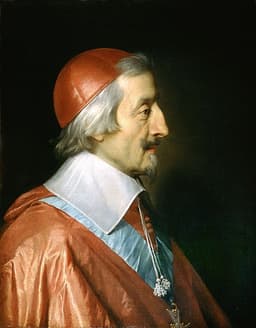
Cardinal Richelieu
Politician · Modern
66.6Total
Basic Information
Born
1932
1585
Died
—
1642
Era
Modern
Modern
Nationality
Sierra Leone
France
Occupation
Politician
Politician
Civilization
Other
Western
Score Comparison
Military (10%)
50.0
50.0
Political (20%)
72.0
75.0
Influence (20%)
54.1
65.0
Legacy (20%)
48.3
65.0
Leadership (15%)
72.0
75.0
Strategy (15%)
43.9
66.3
TOTAL
56.6
66.6
Ahmad Tejan Kabbah — Complete Timeline
1996 AD
Elected President of Sierra LeonePolitical Action
Kabbah was elected President of Sierra Leone in the country's first democratic election after years of military rule. His victory was seen as a restoration of civilian governance amid the ongoing civil war.
ElectionSierra LeoneDemocracy
Impact: nationalconstructive
1997 AD
Overthrown by CoupPolitical Action◆ Major
Kabbah was overthrown in a military coup led by the Armed Forces Revolutionary Council. He fled to Guinea, and the coup plunged Sierra Leone into further chaos and violence.
CoupSierra LeoneExile
Impact: nationaldestructive
1998 AD
Restored to PowerPolitical Action
Kabbah was restored to the presidency after a Nigerian-led ECOMOG intervention ousted the junta. His return marked a key step in ending the civil war and rebuilding state institutions.
RestorationSierra LeoneCivil War
Impact: nationalconstructive
1999 AD
Signed Lomé Peace AgreementPolitical Action◆ Major
Kabbah signed the Lom
Peace AgreementSierra LeoneCivil War
Impact: national
Cardinal Richelieu — Complete Timeline
1627 AD
Siege of La RochelleWar◆ Major
Richelieu personally commanded the siege of La Rochelle, a Huguenot stronghold, which lasted 14 months. The city's surrender ended Huguenot political and military power in France, centralizing royal authority and enforcing Catholic uniformity.
SiegeHuguenotsCentralization
Impact: nationaldestructive
1635 AD
Entry of France into the Thirty Years' WarWar
Richelieu declared war on Spain, bringing France directly into the Thirty Years' War on the side of the Protestant powers. This decision prioritized French state interests over Catholic solidarity, aiming to weaken Habsburg dominance in Europe.
War DeclarationThirty Years' WarHabsburg
Impact: global
Establishment of the Académie FrançaiseCultural◆ Major
Richelieu founded the Acad
Cultural InstitutionLanguageRoyal Patronage
Impact: nationalconstructive
Expert Analysis
Origins
Ahmad Tejan Kabbah was born on February 16, 1932, in Pendembu, Sierra Leone, into a prominent Muslim family. His father was a businessman and chief, and his mother a homemaker. Kabbah attended secondary school in Freetown and later studied law in the United Kingdom, qualifying as a barrister in 1959. He worked in the Sierra Leone civil service and later for the United Nations Development Programme (UNDP), gaining experience in diplomacy and development.
Cardinal Richelieu, born Armand Jean du Plessis on September 9, 1585, in Paris, France, came from a minor noble family. His father was a courtier and soldier. Richelieu initially trained for a military career but switched to theology after his family's bishopric became available. He was ordained a bishop in 1607 and later became a cardinal in 1622. His education at the Collège de Navarre and later the Sorbonne gave him a strong intellectual foundation.
Rise to Power
Kabbah rose to prominence through civil service and international diplomacy. He served as a Labor Commissioner, then as Permanent Secretary in various ministries. In 1971, he joined the UNDP, eventually becoming Deputy Director for East Africa. He returned to Sierra Leone in 1992 and was appointed by the military government as a consultant. In 1996, after a transition to civilian rule, he won the presidential election as the candidate of the Sierra Leone People's Party (SLPP), defeating John Karefa-Smart. His victory was seen as a restoration of democracy after years of military rule.
Richelieu rose to power through the church and state. He became a bishop at 22 and was appointed as a secretary of state by Marie de' Medici in 1616. After a brief exile, he reemerged as a cardinal and chief minister to King Louis XIII in 1624. His political acumen and ability to navigate court intrigues allowed him to consolidate power, outmaneuvering rivals like the Queen Mother and the nobility.
Leadership & Governance
Kabbah's leadership style was conciliatory and diplomatic. He prioritized ending the civil war and restoring peace. His governance focused on reconciliation, as seen in the 1999 Lomé Peace Agreement, which granted amnesty to rebels. However, this approach was criticized for being too lenient. Kabbah also worked with international partners like ECOMOG and the UN to stabilize the country. He scored 72.0 in political leadership and 72.0 in leadership overall.
Richelieu's leadership was authoritarian and centralizing. He systematically dismantled the power of the Huguenots (e.g., Siege of La Rochelle, 1627-1628) and the nobility, executing or exiling opponents. He strengthened the monarchy's control over France and expanded its influence abroad. His governance included founding the Académie Française in 1635 to standardize the French language. He scored 75.0 in political leadership and 75.0 in leadership overall.
Triumph & Tragedy
Kabbah's greatest triumph was restoring civilian rule and ending the civil war. His return to power in 1998 after the ECOMOG intervention was a turning point. However, his greatest failure was the Lomé Peace Agreement, which failed to hold and led to further violence. The agreement's amnesty provision was widely condemned. Kabbah's legacy is mixed: he is credited with peace but criticized for not achieving lasting stability.
Richelieu's triumphs include centralizing French power and laying the foundations for French absolutism. His military strategies in the Thirty Years' War (entry in 1635) strengthened France. His greatest failure was perhaps the harsh suppression of the Huguenots, which created long-term religious tensions. He also faced several noble revolts, such as the Day of the Dupes (1630), which he survived but which highlighted ongoing instability.
Character & Destiny
Kabbah was known for his calm, patient, and diplomatic character. He believed in negotiation and reconciliation, which helped end the war but also led to compromises that backfired. His background in the UN shaped his multilateral approach. His destiny was to be a peacemaker in a fractured country, but his tenure was marred by the limitations of power.
Richelieu was pragmatic, ruthless, and strategic. He prioritized the state's interests above all, famously stating, "The ends justify the means." His character drove him to consolidate power at any cost, leading to his reputation as a master statesman. His destiny was to transform France into a dominant European power, but his methods left a legacy of absolutism.
Legacy
Kabbah's legacy is tied to the restoration of democracy in Sierra Leone. He is remembered as the "father of democracy" but his peace deals are seen as flawed. His influence scored 54.1 and legacy 48.3. The Truth and Reconciliation Commission established after the war bears his imprint. However, Sierra Leone's subsequent stability under later governments has overshadowed his tenure.
Richelieu's legacy is immense. He centralized the French state, curbed the nobility, and established the framework for absolute monarchy. The Académie Française continues to regulate French language. His foreign policy set France on a path to European hegemony. He scored 65.0 in influence and 65.0 in legacy. Historians consider him one of the founders of modern statecraft.
Conclusion
While Kabbah made significant contributions to peace in Sierra Leone, his impact was limited to a small nation and his achievements were fragile. Richelieu, in contrast, reshaped France and influenced European politics for centuries. Richelieu's total score of 66.6 versus Kabbah's 56.6 reflects his greater strategic and political impact. Richelieu's centralization of power and founding of the Académie Française have enduring legacies, whereas Kabbah's peace efforts, while commendable, did not create lasting institutional change. Therefore, Cardinal Richelieu had a greater and more lasting impact on history.
Rankings
🥇
Cardinal RichelieuLeader
Mil: 50.0Pol: 75.0Inf: 65.0
66.6
🥈
Ahmad Tejan Kabbah
Mil: 50.0Pol: 72.0Inf: 54.1
56.6
+10.0 behind
How This Comparison Works
Algorithm
Each figure is scored on 6 dimensions (0—100 scale) based on structured historical data: Military (10%), Political (20%), Influence (20%), Legacy (20%), Leadership (15%), Strategy (15%). The weighted total produces the final ranking.
Data Sources
Scores are computed from structured sub-indicators in the database. Scale factors adjust for era (Ancient ×0.85, Modern ×1.0) and civilization size (Eastern ×1.05, Other ×0.80) to account for differences in population and military scale.
Maximum 3 Figures
Comparisons are limited to 2—3 figures to ensure readability and statistical meaningfulness.
Error Margins
±5 points per dimension — Sub-scores are derived from historical records with inherent uncertainty. Two figures within 5 points on a dimension should be considered roughly equivalent in that area.
Total Score Accuracy
±3 points overall — The weighted combination of 6 dimensions produces a total score with approximately ±3 points of uncertainty. Differences of less than 3 points are not statistically significant— the figures are effectively tied.
Known Limitations
- Historical records are incomplete and uneven across civilizations
- Figures from oral-tradition societies may be underrepresented
- Occupation labels can misclassify multi-role figures
- Scores measure capability and impact, not moral character
- Quantitative scoring is a comparison tool, not absolute truth
Capability Radar
Military (10%) — Battles & Warfare
Battles
25
55
Win Rate
23
60
Expansion
29
75
Political (20%) — Governance & Reform
Reform
70
95
Diplomacy
75
90
Economy
40
70
Influence (20%) — Cultural & Global Reach
Cultural
30
75
Global
35
75
Legacy (20%) — Historical Impact
Historical
50
85
Longevity
40
80
Leadership (15%) — Power & Stability
Tenure
65
85
Stability
55
80
Strategy (15%) — Tactics & Innovation
Strategy
30
85
Tactics
33
65
Reform
34
70
Similar Comparisons
Comments & Discussion
No comments yet. Be the first to share your thoughts!