Loading...
Akhenaten vs Shishunaga
Akhenaten leads by 2.5 pts · 2 figures compared
…

Akhenaten
Emperor · Ancient
45.9Total
Shishunaga
Emperor · Ancient
43.4Total
Basic Information
Born
-1353
-430
Died
-1336
-395
Era
Ancient
Ancient
Nationality
Egypt
India
Occupation
Emperor
Emperor
Civilization
Middle Eastern
Indian
Score Comparison
Military (10%)
10.2
25.0
Political (20%)
40.8
36.5
Influence (20%)
61.0
48.6
Legacy (20%)
50.0
40.0
Leadership (15%)
45.0
58.8
Strategy (15%)
42.3
45.0
TOTAL
45.9
43.4
Akhenaten — Complete Timeline
1353 BC
Introduction of Aten MonotheismReform
Akhenaten elevated the sun disk Aten to the status of the sole god, suppressing the traditional Egyptian pantheon. He closed temples of Amun and other gods, redirecting resources to the worship of Aten, a radical religious reform that disrupted centuries of tradition.
ReligionMonotheismAten
Impact: globaldestructive
1351 BC
Foundation of Akhetaten (Amarna)Cultural◆ Major
Akhenaten founded a new capital city, Akhetaten (modern Amarna), dedicated to the Aten. He moved the royal court and administration from Thebes to this new city, which was built with open-air temples and palaces designed for Aten worship.
ArchitectureCapitalAmarna
Impact: nationalconstructive
1350 BC
Artistic Revolution in Amarna StyleCultural◆ Major
Akhenaten introduced a new artistic style characterized by naturalistic and exaggerated depictions of the royal family, including elongated heads and bodies. This break from traditional Egyptian art emphasized the divine nature of the pharaoh and the Aten.
ArtAmarna StyleInnovation
Impact: globalconstructive
1345 BC
Neglect of Foreign PolicyPolitical Action◆ Major
Akhenaten's focus on religious reform led to neglect of Egypt's foreign policy. The Amarna letters reveal that vassal states in Canaan were under threat from the Hittites and local rebels, but Akhenaten failed to respond effectively, leading to loss of Egyptian influence.
Foreign PolicyAmarna LettersDecline
Impact: regionaldestructive
Shishunaga — Complete Timeline
430 BC
Founded the Shishunaga DynastyPolitical Action
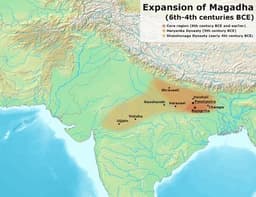
Shishunaga established the Shishunaga dynasty after overthrowing the Haryanka dynasty's king Nagadasaka. He made Girivraja (Rajgir) his capital and began consolidating power in Magadha.
Dynasty FoundingMagadhaPolitical Change
Impact: regionalconstructive
420 BC
Conquered the Kingdom of AvantiWar◆ Major
Shishunaga led a military campaign against the powerful kingdom of Avanti, defeating its king and annexing its territory. This conquest significantly expanded Magadha's influence in central India.
ConquestExpansionAvanti
Impact: regional
415 BC
Moved Capital to PataliputraPolitical Action◆ Major
Shishunaga relocated the Magadha capital from Girivraja to Pataliputra, a strategically located city on the Ganges. This move enhanced trade and administrative control, laying the foundation for future Mauryan expansion.
Capital MoveAdministrationUrban Development
Impact: regionalconstructive
Expert Analysis
Origins
Akhenaten, born around 1380 BCE as Amenhotep IV, was the son of Pharaoh Amenhotep III and Queen Tiye. He grew up in the opulent court of Thebes, immersed in traditional Egyptian religion and politics. His education included military training, administration, and religious rituals, but he showed early fascination with the sun god Ra-Horakhty. His mother Tiye, of Nubian descent, may have influenced his independent thinking.
Shishunaga, whose birth date is uncertain (likely 5th century BCE), was a minister or official in the Haryanka dynasty of Magadha. He came from a humble background, possibly a tribal chief or a former bandit, according to some Buddhist texts. His early life is obscure, but he demonstrated political acumen by serving under the last Haryanka king, Nagadasaka, before orchestrating a coup.
Rise to Power
Akhenaten ascended the throne around 1353 BCE upon his father's death. He immediately initiated religious reforms, elevating the Aten, the sun disk, from a minor deity to the supreme god. In Year 5 of his reign, he changed his name to Akhenaten ('Effective for the Aten') and founded a new capital, Akhetaten (modern Amarna), 300 km north of Thebes. He suppressed the cult of Amun, closed temples, and redirected resources to Aten worship.
Shishunaga rose to power by overthrowing Nagadasaka, the last Haryanka king, around 413 BCE (dates vary). According to the Puranas, Nagadasaka was unpopular due to his misrule, and Shishunaga, possibly a viceroy or minister, seized power. He established the Shishunaga dynasty and initially ruled from Girivraja (Rajgir). He then conquered the powerful kingdom of Avanti, defeating its king Nandivardhana, and later moved the capital to Pataliputra, a strategic location on the Ganges.
Leadership & Governance
Akhenaten's leadership was revolutionary but autocratic. He imposed Atenism as a state religion, erasing names of other gods from monuments. He centralized power in Amarna, relying on a small circle of officials like the vizier Ay and the general Horemheb (who later became pharaoh). His governance neglected traditional administrative structures, leading to inefficiency. The Amarna letters reveal that vassal states in Canaan faced attacks without Egyptian support.
Shishunaga's leadership was pragmatic and expansionist. He consolidated Magadha's power by annexing Avanti, a rival kingdom, and strengthening the army. He moved the capital to Pataliputra, which became a major trade hub. Shishunaga also patronized Buddhism and Jainism, and according to Buddhist texts, he was a just ruler who maintained law and order. His governance focused on territorial expansion and administrative centralization.
Triumph & Tragedy
Akhenaten's triumph was the establishment of the first recorded monotheistic religion, influencing later traditions. His artistic revolution produced the naturalistic Amarna style, distinct from rigid Egyptian conventions. However, his tragedy was the failure of his religious reforms. After his death, the Aten cult was dismantled, temples to Amun were reopened, and his name was struck from records by successors like Horemheb. His capital Amarna was abandoned. His neglect of foreign policy led to loss of Egyptian influence in the Levant.
Shishunaga's triumph was founding a dynasty that lasted for about 150 years and expanding Magadha's territory. His conquest of Avanti doubled Magadha's size. Moving the capital to Pataliputra set the stage for future empires like the Mauryas. His tragedy is the lack of detailed historical records; his personal life and exact reign length are uncertain. The Shishunaga dynasty was overthrown by the Nandas, and his successors like Kalashoka faced internal strife.
Character & Destiny
Akhenaten was a zealot and visionary, willing to upend centuries of tradition for his religious ideals. He was depicted as a monotheist but also as a ruler who neglected practical administration. Historians like Donald Redford describe him as a fanatic whose inflexibility led to his legacy's erasure. His character—idealistic, stubborn, and detached—shaped his fate: a revolutionary whose reforms did not outlive him.
Shishunaga was a pragmatic and ambitious statesman. He likely possessed political cunning to overthrow a dynasty and military skill to conquer Avanti. His character—realistic, adaptive, and expansionist—allowed him to build a stable foundation for Magadha. However, his obscurity in history suggests he may have been overshadowed by later rulers like the Mauryas. His destiny was to be a transitional figure, crucial but not immortal.
Legacy
Akhenaten's legacy is profound in religious history: he is considered a precursor to monotheism, influencing Judaism, Christianity, and Islam through the Aten hymn's parallels to Psalm 104. His artistic style influenced later Egyptian art and was rediscovered in the 19th century. Politically, his reign weakened Egypt but also demonstrated the power of royal ideology. He scores 61.0 in influence and 50.0 in legacy, reflecting his long-term impact on religion and art.
Shishunaga's legacy is more local but foundational. He established a dynasty that ruled Magadha for generations, expanded its territory, and moved the capital to Pataliputra, which became the center of Indian empires for centuries. He is remembered in Buddhist texts as a righteous king. His influence (48.6) and legacy (40.0) are lower than Akhenaten's, but his political and military achievements (25.0 military, 36.5 political) were more effective in state-building.
Conclusion
Akhenaten had greater impact on world history through his religious innovation, scoring 45.9 overall compared to Shishunaga's 43.4. While Shishunaga's military and political scores (25.0 and 36.5) are higher than Akhenaten's (10.2 and 40.8), Akhenaten's influence (61.0) and legacy (50.0) far surpass Shishunaga's (48.6 and 40.0). The score gap of 2.5 points reflects Akhenaten's enduring cultural significance versus Shishunaga's regional political achievements. Akhenaten's monotheism changed the course of religious thought, while Shishunaga's dynasty was a stepping stone to greater empires. Therefore, Akhenaten is the more impactful figure.
Rankings
🥇
AkhenatenLeader
Mil: 10.2Pol: 40.8Inf: 61.0
45.9
🥈
Shishunaga
Mil: 25.0Pol: 36.5Inf: 48.6
43.4
+2.5 behind
How This Comparison Works
Algorithm
Each figure is scored on 6 dimensions (0—100 scale) based on structured historical data: Military (10%), Political (20%), Influence (20%), Legacy (20%), Leadership (15%), Strategy (15%). The weighted total produces the final ranking.
Data Sources
Scores are computed from structured sub-indicators in the database. Scale factors adjust for era (Ancient ×0.85, Modern ×1.0) and civilization size (Eastern ×1.05, Other ×0.80) to account for differences in population and military scale.
Maximum 3 Figures
Comparisons are limited to 2—3 figures to ensure readability and statistical meaningfulness.
Error Margins
±5 points per dimension — Sub-scores are derived from historical records with inherent uncertainty. Two figures within 5 points on a dimension should be considered roughly equivalent in that area.
Total Score Accuracy
±3 points overall — The weighted combination of 6 dimensions produces a total score with approximately ±3 points of uncertainty. Differences of less than 3 points are not statistically significant— the figures are effectively tied.
Known Limitations
- Historical records are incomplete and uneven across civilizations
- Figures from oral-tradition societies may be underrepresented
- Occupation labels can misclassify multi-role figures
- Scores measure capability and impact, not moral character
- Quantitative scoring is a comparison tool, not absolute truth
Capability Radar
Military (10%) — Battles & Warfare
Battles
5
30
Win Rate
5
35
Expansion
5
40
Political (20%) — Governance & Reform
Reform
60
35
Diplomacy
30
30
Economy
20
30
Influence (20%) — Cultural & Global Reach
Cultural
70
20
Global
55
10
Legacy (20%) — Historical Impact
Historical
65
30
Longevity
60
20
Leadership (15%) — Power & Stability
Tenure
40
40
Stability
15
35
Strategy (15%) — Tactics & Innovation
Strategy
5
35
Tactics
5
30
Reform
10
25
Similar Comparisons
Comments & Discussion
No comments yet. Be the first to share your thoughts!