Loading...
This comparison has not been analyzed yet.
One-time AI generation (~1 minute). Scores and timeline are already available below.
Al-Ashath ibn Qays vs Dou Gu
Dou Gu leads by 4.1 pts · 2 figures compared
…

Al-Ashath ibn Qays
General · Ancient
43.2Total
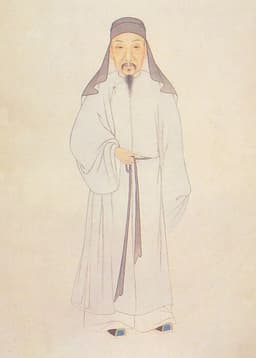
Dou Gu
General · Ancient
47.3Total
Basic Information
Born
-599
19
Died
—
89
Era
Ancient
Ancient
Nationality
Kinda
China
Occupation
General
General
Civilization
Middle Eastern
Eastern
Score Comparison
Military (10%)
55.0
61.7
Political (20%)
35.0
35.0
Influence (20%)
47.1
46.3
Legacy (20%)
38.3
40.0
Leadership (15%)
40.9
57.1
Strategy (15%)
50.0
57.5
TOTAL
43.2
47.3
Al-Ashath ibn Qays — Complete Timeline
636 BC
Participated in the Muslim conquest of PersiaWar◆ Major
Al-Ashath served as a commander in the Muslim conquest of Persia, notably at the Battle of al-Qadisiyyah. He later governed parts of the conquered territories, demonstrating his loyalty to the caliphate.
Muslim ConquestsPersiaGeneral
Impact: globalconstructive
632 BC
Led the Kinda rebellion against Abu BakrWar◆ Major
Al-Ashath ibn Qays led the Kinda tribe in rebellion against the caliphate during the Ridda Wars. He was captured by Muslim forces and brought before Caliph Abu Bakr.
Ridda WarsRebellionKinda
Impact: regionaldestructive
Pardoned by Abu Bakr and converted to IslamPolitical Action◆ Major
After his capture, Al-Ashath was pardoned by Caliph Abu Bakr and converted to Islam. He was given a prominent position, including marriage to Abu Bakr's sister, integrating him into the Muslim elite.
Ridda WarsPardonConversion
Impact: regionalconstructive
Dou Gu — Complete Timeline
73 AD
Battle of YiwuluWar◆ Major
Dou Gu led a Han expeditionary force against the Xiongnu at Yiwulu (modern Hami). He defeated the Xiongnu and established a military garrison, securing the strategic gateway to the Western Regions and reopening the Silk Road.
Han DynastyXiongnuSilk Road
Impact: regional
74 AD
Appointed as Protector General of the Western RegionsPolitical Action◆ Major
Dou Gu was appointed Protector General (Duhu) of the Western Regions, overseeing Han interests in Central Asia. He established diplomatic relations with local kingdoms and maintained Han military presence in the region.
Han DynastyWestern RegionsDiplomacy
Impact: regionalconstructive
89 AD
Campaign Against the Northern XiongnuWar
Dou Gu, as a general under Emperor He, launched a major campaign against the Northern Xiongnu. His forces advanced deep into the steppe, defeating the Xiongnu and forcing their remnants to flee westward, ending the Xiongnu threat to Han China.
Han DynastyXiongnuMilitary Campaign
Impact: regional
Death in BattleWar
Dou Gu died in battle during the campaign against the Northern Xiongnu. His death marked the end of a distinguished military career that had secured Han dominance over the northern frontier.
Han DynastyDeathMilitary
Impact: regionaltragic
This comparison has not been analyzed yet.
One-time AI generation (~1 minute). Scores and timeline are already available below.
Rankings
🥇
Dou GuLeader
Mil: 61.7Pol: 35.0Inf: 46.3
47.3
🥈
Al-Ashath ibn Qays
Mil: 55.0Pol: 35.0Inf: 47.1
43.2
+4.1 behind
How This Comparison Works
Algorithm
Each figure is scored on 6 dimensions (0—100 scale) based on structured historical data: Military (10%), Political (20%), Influence (20%), Legacy (20%), Leadership (15%), Strategy (15%). The weighted total produces the final ranking.
Data Sources
Scores are computed from structured sub-indicators in the database. Scale factors adjust for era (Ancient ×0.85, Modern ×1.0) and civilization size (Eastern ×1.05, Other ×0.80) to account for differences in population and military scale.
Maximum 3 Figures
Comparisons are limited to 2—3 figures to ensure readability and statistical meaningfulness.
Error Margins
±5 points per dimension — Sub-scores are derived from historical records with inherent uncertainty. Two figures within 5 points on a dimension should be considered roughly equivalent in that area.
Total Score Accuracy
±3 points overall — The weighted combination of 6 dimensions produces a total score with approximately ±3 points of uncertainty. Differences of less than 3 points are not statistically significant— the figures are effectively tied.
Known Limitations
- Historical records are incomplete and uneven across civilizations
- Figures from oral-tradition societies may be underrepresented
- Occupation labels can misclassify multi-role figures
- Scores measure capability and impact, not moral character
- Quantitative scoring is a comparison tool, not absolute truth
Capability Radar
Military (10%) — Battles & Warfare
Battles
25
55
Win Rate
20
60
Expansion
10
50
Political (20%) — Governance & Reform
Reform
10
10
Diplomacy
35
40
Economy
15
10
Influence (20%) — Cultural & Global Reach
Cultural
20
20
Global
10
15
Legacy (20%) — Historical Impact
Historical
25
30
Longevity
15
20
Leadership (15%) — Power & Stability
Tenure
30
20
Stability
20
15
Strategy (15%) — Tactics & Innovation
Strategy
15
55
Tactics
20
50
Reform
5
10
Similar Comparisons
Comments & Discussion
No comments yet. Be the first to share your thoughts!