Loading...
This comparison has not been analyzed yet.
One-time AI generation (~1 minute). Scores and timeline are already available below.
Al-Bara ibn Malik vs Vercingetorix
Vercingetorix leads by 0.1 pts · 2 figures compared
…

Al-Bara ibn Malik
General · Ancient
50.0Total
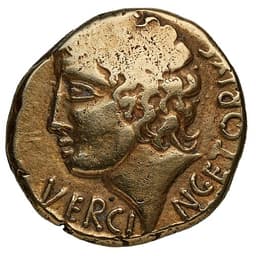
Vercingetorix
General · Ancient
50.1Total
Basic Information
Born
-600
-82
Died
—
-46
Era
Ancient
Ancient
Nationality
Rashidun Caliphate
Gaul
Occupation
General
General
Civilization
Middle Eastern
Western
Score Comparison
Military (10%)
61.7
60.0
Political (20%)
35.0
29.3
Influence (20%)
49.4
59.0
Legacy (20%)
40.8
54.0
Leadership (15%)
62.6
35.4
Strategy (15%)
66.3
61.3
TOTAL
50.0
50.1
Al-Bara ibn Malik — Complete Timeline
632 AD
Hero of the Battle of YamamaWar◆ Major
Al-Bara ibn Malik played a crucial role in the Battle of Yamama against the false prophet Musaylimah. He reportedly led a charge that broke through enemy lines, and his actions were instrumental in the Muslim victory, though he was severely wounded.
Battle of YamamaHeroismRidda Wars
Impact: regional
641 AD
Participated in the conquest of TustarWar
Al-Bara ibn Malik fought in the Muslim conquest of Tustar (Shushtar) in Persia. He was known for his bravery in battle, and his efforts contributed to the Muslim victory over the Sassanid Empire.
Conquest of TustarPersiaMilitary
Impact: regional
Death from wounds at TustarWar
Al-Bara ibn Malik died from wounds sustained during the conquest of Tustar. He was buried near the city, and his death was mourned by the Muslim community, including his brother Anas ibn Malik.
DeathTustarMartyrdom
tragic
Vercingetorix — Complete Timeline
52 BC
Gallic revolt against CaesarWar◆ Major
Vercingetorix united the Gallic tribes in a major revolt against Julius Caesar's Roman occupation. He was elected commander-in-chief of the Gallic forces and implemented a scorched-earth strategy to deny supplies to the Roman army, marking the climax of the Gallic Wars.
Gallic WarsRevoltJulius Caesar
Impact: regional
Battle of GergoviaWar◆ Major
Vercingetorix successfully defended the fortified hilltop town of Gergovia against Julius Caesar's Roman legions. Caesar was forced to withdraw after suffering significant losses, marking one of his few tactical defeats in the Gallic Wars and boosting Gallic morale.
Gallic WarsBattleVictory
Impact: regional
Battle of AlesiaWar
Vercingetorix was besieged by Julius Caesar at the oppidum of Alesia. Caesar built extensive fortifications to trap the Gallic army inside and repel a relief force. After a prolonged siege, Vercingetorix surrendered, ending the major Gallic resistance to Roman rule.
Gallic WarsSiegeSurrender
Impact: regionaltragic
Surrender and imprisonmentPolitical Action◆ Major
Vercingetorix surrendered to Julius Caesar at Alesia, reportedly laying down his arms at Caesar's feet. He was taken to Rome as a prisoner and held for six years, awaiting Caesar's triumph. His surrender marked the end of organized Gallic resistance.
Gallic WarsSurrenderImprisonment
Impact: regionaltragic
46 BC
Execution in RomePolitical Action◆ Major
Vercingetorix was executed by strangulation in the Tullianum prison in Rome as part of Julius Caesar's triumph. His death symbolized the final subjugation of Gaul and the consolidation of Roman control over the region.
ExecutionGallic WarsRoman Republic
Impact: regionaltragic
This comparison has not been analyzed yet.
One-time AI generation (~1 minute). Scores and timeline are already available below.
Rankings
🥇
VercingetorixLeader
Mil: 60.0Pol: 29.3Inf: 59.0
50.1
🥈
Al-Bara ibn Malik
Mil: 61.7Pol: 35.0Inf: 49.4
50.0
+0.1 behind
How This Comparison Works
Algorithm
Each figure is scored on 6 dimensions (0—100 scale) based on structured historical data: Military (10%), Political (20%), Influence (20%), Legacy (20%), Leadership (15%), Strategy (15%). The weighted total produces the final ranking.
Data Sources
Scores are computed from structured sub-indicators in the database. Scale factors adjust for era (Ancient ×0.85, Modern ×1.0) and civilization size (Eastern ×1.05, Other ×0.80) to account for differences in population and military scale.
Maximum 3 Figures
Comparisons are limited to 2—3 figures to ensure readability and statistical meaningfulness.
Error Margins
±5 points per dimension — Sub-scores are derived from historical records with inherent uncertainty. Two figures within 5 points on a dimension should be considered roughly equivalent in that area.
Total Score Accuracy
±3 points overall — The weighted combination of 6 dimensions produces a total score with approximately ±3 points of uncertainty. Differences of less than 3 points are not statistically significant— the figures are effectively tied.
Known Limitations
- Historical records are incomplete and uneven across civilizations
- Figures from oral-tradition societies may be underrepresented
- Occupation labels can misclassify multi-role figures
- Scores measure capability and impact, not moral character
- Quantitative scoring is a comparison tool, not absolute truth
Capability Radar
Military (10%) — Battles & Warfare
Battles
65
65
Win Rate
70
55
Expansion
30
40
Political (20%) — Governance & Reform
Reform
5
35
Diplomacy
10
60
Economy
5
20
Influence (20%) — Cultural & Global Reach
Cultural
20
55
Global
15
50
Legacy (20%) — Historical Impact
Historical
35
65
Longevity
20
60
Leadership (15%) — Power & Stability
Tenure
10
30
Stability
10
25
Strategy (15%) — Tactics & Innovation
Strategy
60
60
Tactics
75
70
Reform
10
45
Similar Comparisons
Comments & Discussion
No comments yet. Be the first to share your thoughts!