Loading...
This comparison has not been analyzed yet.
One-time AI generation (~1 minute). Scores and timeline are already available below.
Al-Hakim bi-Amr Allah vs Carloman I
Al-Hakim bi-Amr Allah leads by 16.0 pts · 2 figures compared
…

Al-Hakim bi-Amr Allah
Emperor · Medieval
55.6Total
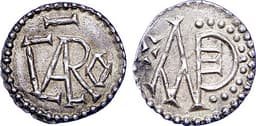
Carloman I
Emperor · Medieval
39.6Total
Basic Information
Born
985
751
Died
1021
771
Era
Medieval
Medieval
Nationality
Fatimid Caliphate
Frankish Empire
Occupation
Emperor
Emperor
Civilization
Middle Eastern
Western
Score Comparison
Military (10%)
50.0
50.0
Political (20%)
61.3
27.9
Influence (20%)
55.0
47.1
Legacy (20%)
55.0
37.5
Leadership (15%)
67.0
45.0
Strategy (15%)
38.3
25.0
TOTAL
55.6
39.6
Al-Hakim bi-Amr Allah — Complete Timeline
996 AD
Accession as Fatimid CaliphPolitical Action◆ Major
Al-Hakim bi-Amr Allah became the sixth Fatimid caliph at age 11, succeeding his father al-Aziz. His early reign was dominated by regents, but he soon asserted personal control, initiating a period of controversial and often erratic rule.
Fatimid CaliphateAccessionRule
Impact: regional
1004 AD
Persecution of Christians and JewsPolitical Action◆ Major
Al-Hakim initiated a series of persecutions against Christians and Jews in the Fatimid Caliphate, including the destruction of churches and synagogues, forced conversions, and discriminatory laws. These actions disrupted religious communities and damaged the caliphate's reputation.
Religious PersecutionFatimid CaliphateChristiansJews
Impact: regionaldestructive
1009 AD
Destruction of the Church of the Holy SepulchreCultural◆ Major
Al-Hakim ordered the destruction of the Church of the Holy Sepulchre in Jerusalem, a major Christian pilgrimage site. This act intensified tensions between the Fatimid Caliphate and Christian Europe, contributing to the later Crusades.
Religious ConflictJerusalemCrusades
Impact: globaldestructive
1017 AD
Proclamation of DivinityCultural
Al-Hakim began to claim divine status, with supporters like al-Darazi proclaiming him as the incarnation of God. This led to the formation of the Druze faith, which views al-Hakim as a divine figure, though he himself did not formally establish the religion.
DruzeDivine ClaimReligious Movement
Impact: regional
1021 AD
Disappearance of Al-HakimOther◆ Major
Al-Hakim disappeared during a night walk near Cairo, likely assassinated by his sister Sitt al-Mulk. His body was never found, leading to Druze beliefs in his occultation. His death ended his erratic rule and led to a period of stability under his successor.
Fatimid CaliphateDeathDruze
Impact: regionaltragic
Carloman I — Complete Timeline
768 AD
Division of the Kingdom with CharlemagnePolitical Action◆ Major
Upon the death of their father Pepin the Short, Carloman I and his brother Charlemagne divided the Frankish kingdom. Carloman received the inner territories: Austrasia, Alemannia, Thuringia, and parts of Neustria and Aquitaine, while Charlemagne got the outer regions.
CarolingianDivisionSuccession
Impact: regional
769 AD
Conflict with Charlemagne over AquitaineWar
Carloman I refused to support Charlemagne's campaign to suppress a rebellion in Aquitaine led by Hunald II. This refusal strained relations between the brothers and highlighted their rivalry. Charlemagne eventually crushed the revolt alone, strengthening his position.
CarolingianAquitaineRivalry
Impact: regionaldestructive
771 AD
Death and Succession by CharlemagnePolitical Action◆ Major
Carloman I died suddenly at his villa in Samoussy, possibly from natural causes. His death allowed Charlemagne to seize his territories, uniting the entire Frankish kingdom under one ruler. Carloman's wife Gerberga fled to Italy with their sons, seeking refuge with the Lombards.
CarolingianDeathUnification
Impact: regional
This comparison has not been analyzed yet.
One-time AI generation (~1 minute). Scores and timeline are already available below.
Rankings
🥇
Al-Hakim bi-Amr AllahLeader
Mil: 50.0Pol: 61.3Inf: 55.0
55.6
🥈
Carloman I
Mil: 50.0Pol: 27.9Inf: 47.1
39.6
+16.0 behind
How This Comparison Works
Algorithm
Each figure is scored on 6 dimensions (0—100 scale) based on structured historical data: Military (10%), Political (20%), Influence (20%), Legacy (20%), Leadership (15%), Strategy (15%). The weighted total produces the final ranking.
Data Sources
Scores are computed from structured sub-indicators in the database. Scale factors adjust for era (Ancient ×0.85, Modern ×1.0) and civilization size (Eastern ×1.05, Other ×0.80) to account for differences in population and military scale.
Maximum 3 Figures
Comparisons are limited to 2—3 figures to ensure readability and statistical meaningfulness.
Error Margins
±5 points per dimension — Sub-scores are derived from historical records with inherent uncertainty. Two figures within 5 points on a dimension should be considered roughly equivalent in that area.
Total Score Accuracy
±3 points overall — The weighted combination of 6 dimensions produces a total score with approximately ±3 points of uncertainty. Differences of less than 3 points are not statistically significant— the figures are effectively tied.
Known Limitations
- Historical records are incomplete and uneven across civilizations
- Figures from oral-tradition societies may be underrepresented
- Occupation labels can misclassify multi-role figures
- Scores measure capability and impact, not moral character
- Quantitative scoring is a comparison tool, not absolute truth
Capability Radar
Military (10%) — Battles & Warfare
Battles
25
15
Win Rate
20
20
Expansion
20
10
Political (20%) — Governance & Reform
Reform
55
10
Diplomacy
40
20
Economy
50
15
Influence (20%) — Cultural & Global Reach
Cultural
70
10
Global
60
10
Legacy (20%) — Historical Impact
Historical
65
15
Longevity
75
10
Leadership (15%) — Power & Stability
Tenure
60
30
Stability
30
25
Strategy (15%) — Tactics & Innovation
Strategy
20
15
Tactics
15
15
Reform
30
5
Similar Comparisons
Comments & Discussion
No comments yet. Be the first to share your thoughts!