Loading...
This comparison has not been analyzed yet.
One-time AI generation (~1 minute). Scores and timeline are already available below.
Al-Muazzam Isa vs Zhu Zhanji
Zhu Zhanji leads by 18.7 pts · 2 figures compared
…

Al-Muazzam Isa
Emperor · Medieval
45.4Total
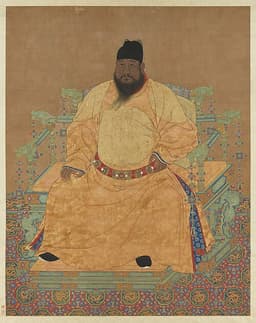
Zhu Zhanji
Emperor · Medieval
64.1Total
Basic Information
Born
1176
1399
Died
1227
1435
Era
Medieval
Medieval
Nationality
Ayyubid Dynasty
China
Occupation
Emperor
Emperor
Civilization
Middle Eastern
Eastern
Score Comparison
Military (10%)
10.0
50.0
Political (20%)
42.3
59.3
Influence (20%)
52.5
72.0
Legacy (20%)
42.5
58.0
Leadership (15%)
55.3
79.8
Strategy (15%)
60.0
57.5
TOTAL
45.4
64.1
Al-Muazzam Isa — Complete Timeline
1218 AD
Siege of Damietta (1218-1219)War◆ Major
Al-Muazzam Isa, as Ayyubid ruler of Damascus, participated in the defense against the Fifth Crusade. The Crusaders besieged Damietta in the Nile Delta. Al-Muazzam Isa's forces were unable to prevent the city's fall in 1219, leading to a temporary Crusader occupation.
Fifth CrusadeSiegeCrusader-Ayyubid Wars
Impact: regionaldestructive
1221 AD
Treaty of Al-Kamil (1221)Political Action◆ Major
Al-Muazzam Isa, alongside his brother Sultan Al-Kamil of Egypt, negotiated the end of the Fifth Crusade. The treaty restored Damietta to the Ayyubids in exchange for a truce and the Crusaders' withdrawal from Egypt. This secured Ayyubid control over the region.
Fifth CrusadeTreatyDiplomacy
Impact: regionalconstructive
1226 AD
Conflict with Al-Kamil (1226-1227)War
Al-Muazzam Isa engaged in a power struggle with his brother Sultan Al-Kamil of Egypt. He allied with the Khwarezmian prince Jalal al-Din against Al-Kamil. This internal Ayyubid conflict weakened the dynasty and allowed Crusader states to regain territory.
Ayyubid Civil WarPower StruggleAlliance
Impact: regionaldestructive
1227 AD
Death of Al-Muazzam Isa (1227)Other◆ Major
Al-Muazzam Isa died in Damascus, likely from natural causes. His death ended his rivalry with Al-Kamil and allowed the Egyptian sultan to consolidate Ayyubid power. His son An-Nasir Dawud succeeded him but was later deposed by Al-Kamil.
DeathSuccessionAyyubid Dynasty
Impact: regional
Zhu Zhanji — Complete Timeline
1425 AD
Accession as Xuande EmperorPolitical Action◆ Major
Zhu Zhanji ascended the Ming throne as the Xuande Emperor after the sudden death of his father, the Hongxi Emperor. His reign continued the shift toward civilian governance and cultural patronage, marking a period of stability.
Ming DynastySuccessionStability
Impact: nationalconstructive
1426 AD
Suppression of the Rebellion of Zhu GaoxuWar◆ Major
The Xuande Emperor personally led a campaign against his uncle, Zhu Gaoxu, who rebelled in Shandong. The rebellion was quickly crushed, and Zhu Gaoxu was executed, consolidating the emperor's authority and deterring future princely revolts.
RebellionMing DynastyCivil War
Impact: national
Reform of the Grand SecretariatReform◆ Major
The Xuande Emperor formalized the role of the Grand Secretariat, appointing scholar-officials like Yang Shiqi and Yang Rong as senior advisors. This institutionalized a cabinet system that improved administrative efficiency and reduced eunuch influence.
Government ReformGrand SecretariatBureaucracy
Impact: nationalconstructive
Patronage of the Arts and PorcelainCultural◆ Major
The Xuande Emperor became a renowned patron of painting, calligraphy, and ceramics. He personally oversaw the production of Xuande porcelain at Jingdezhen, which became highly prized for its quality and design, influencing Chinese art for centuries.
ArtPorcelainCultural Patronage
Impact: globalconstructive
1430 AD
Continued Suspension of Maritime ExpeditionsPolitical Action◆ Major
The Xuande Emperor maintained his father's policy of suspending Zheng He's treasure fleet voyages, though he authorized a final expedition in 1430-1433. This decision cemented the end of China's era of naval exploration and shifted focus to land borders.
Maritime PolicyZheng HeIsolation
Impact: global
1435 AD
Death and Succession of Zhu QizhenOther◆ Major
The Xuande Emperor died at age 36, likely from illness, after a reign of ten years. He was succeeded by his young son Zhu Qizhen, whose minority led to a regency and later the Tumu Crisis, undoing much of Xuande's stability.
DeathSuccessionMing Dynasty
Impact: nationaltragic
This comparison has not been analyzed yet.
One-time AI generation (~1 minute). Scores and timeline are already available below.
Rankings
🥇
Zhu ZhanjiLeader
Mil: 50.0Pol: 59.3Inf: 72.0
64.1
🥈
Al-Muazzam Isa
Mil: 10.0Pol: 42.3Inf: 52.5
45.4
+18.7 behind
How This Comparison Works
Algorithm
Each figure is scored on 6 dimensions (0—100 scale) based on structured historical data: Military (10%), Political (20%), Influence (20%), Legacy (20%), Leadership (15%), Strategy (15%). The weighted total produces the final ranking.
Data Sources
Scores are computed from structured sub-indicators in the database. Scale factors adjust for era (Ancient ×0.85, Modern ×1.0) and civilization size (Eastern ×1.05, Other ×0.80) to account for differences in population and military scale.
Maximum 3 Figures
Comparisons are limited to 2—3 figures to ensure readability and statistical meaningfulness.
Error Margins
±5 points per dimension — Sub-scores are derived from historical records with inherent uncertainty. Two figures within 5 points on a dimension should be considered roughly equivalent in that area.
Total Score Accuracy
±3 points overall — The weighted combination of 6 dimensions produces a total score with approximately ±3 points of uncertainty. Differences of less than 3 points are not statistically significant— the figures are effectively tied.
Known Limitations
- Historical records are incomplete and uneven across civilizations
- Figures from oral-tradition societies may be underrepresented
- Occupation labels can misclassify multi-role figures
- Scores measure capability and impact, not moral character
- Quantitative scoring is a comparison tool, not absolute truth
Capability Radar
Military (10%) — Battles & Warfare
Battles
45
55
Win Rate
40
60
Expansion
35
45
Political (20%) — Governance & Reform
Reform
30
70
Diplomacy
50
75
Economy
35
80
Influence (20%) — Cultural & Global Reach
Cultural
30
80
Global
25
55
Legacy (20%) — Historical Impact
Historical
35
65
Longevity
20
60
Leadership (15%) — Power & Stability
Tenure
40
65
Stability
30
85
Strategy (15%) — Tactics & Innovation
Strategy
45
55
Tactics
50
50
Reform
30
40
Similar Comparisons
Comments & Discussion
No comments yet. Be the first to share your thoughts!