Loading...
Al-Mustanjid vs Wenceslaus IV of Bohemia
Wenceslaus IV of Bohemia leads by 8.7 pts · 2 figures compared
…
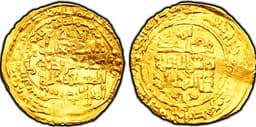
Al-Mustanjid
Emperor · Medieval
37.0Total

Wenceslaus IV of Bohemia
Emperor · Medieval
45.7Total
Basic Information
Born
1124
1361
Died
1170
1419
Era
Medieval
Medieval
Nationality
Abbasid Caliphate
Bohemia
Occupation
Emperor
Emperor
Civilization
Middle Eastern
Western
Score Comparison
Military (10%)
20.0
21.2
Political (20%)
30.7
33.6
Influence (20%)
46.3
54.9
Legacy (20%)
35.0
48.3
Leadership (15%)
31.2
58.8
Strategy (15%)
54.3
39.6
TOTAL
37.0
45.7
Al-Mustanjid — Complete Timeline
1164 AD
Conflict with the FatimidsWar◆ Major
Al-Mustanjid sent military aid to the Zengid ruler Nur al-Din against the Fatimid caliphate in Egypt. This intervention contributed to the weakening of Fatimid power and the eventual rise of Saladin.
Fatimid DeclineZengid AllianceEgypt
Impact: regional
1168 AD
Assassination of VizierPolitical Action
Al-Mustanjid ordered the assassination of his powerful vizier, Ibn Hubayra, who had become too influential. This act demonstrated the caliph's desire to control his administration but also created instability.
AssassinationVizierPower Struggle
destructive
1170 AD
Death During CampaignOther
Al-Mustanjid died while on a military campaign against the Seljuks. His death was sudden and possibly due to illness or poisoning, ending his brief reign without major achievements.
DeathCampaignSeljuk War
tragic
Wenceslaus IV of Bohemia — Complete Timeline
1402 AD
Conflict with the HussitesPolitical Action
Wenceslaus IV initially supported Jan Hus and the reform movement, but later opposed them under pressure from the Catholic Church. His inconsistent policies alienated both Hussites and Catholics, weakening his authority.
Religious ConflictJan HusPolitical Instability
Impact: national
1419 AD
Defenestration of PraguePolitical Action
Wenceslaus IV's refusal to release Hussite prisoners led to a mob storming the New Town Hall in Prague. The crowd threw the city councillors out of a window, triggering the Hussite Wars that would devastate Bohemia for decades.
Hussite WarsRebellionReligious Conflict
Impact: regionaldestructive
Death of Wenceslaus IVOther◆ Major
Wenceslaus IV died of a heart attack shortly after the Defenestration of Prague. His death left Bohemia without a strong ruler, allowing the Hussite movement to gain momentum and plunging the kingdom into civil war.
DeathSuccession CrisisHussite Wars
Impact: regionaltragic
Expert Analysis
Origins
Al-Mustanjid (born 1124) was the son of Caliph al-Muqtafi, raised in the Abbasid court in Baghdad. His education focused on Islamic jurisprudence and governance, but he lacked military training. Wenceslaus IV (born 1361) was the son of Emperor Charles IV, raised in the Holy Roman Empire's court. He was educated in Latin, German, and Czech, and inherited the Bohemian crown at age 17. Both were heirs to powerful dynasties, but their early lives diverged: Al-Mustanjid was groomed for religious leadership, while Wenceslaus was prepared for secular rule.
Rise to Power
Al-Mustanjid became caliph in 1160 after his father's death, assuming power in a period of Abbasid decline. His key turning point was his conflict with the Fatimids: in 1164, he sent military aid to Nur al-Din against Egypt, which weakened the Fatimid caliphate and increased Abbasid influence. However, his authority was challenged by his vizier, Ibn Hubayra, whom he had assassinated in 1160 to consolidate power. Wenceslaus IV became King of Bohemia in 1378 and Holy Roman Emperor in 1378 as well, but his reign was marked by conflict with the nobility and church. The Defenestration of Prague in 1419 was a turning point: after Wenceslaus refused to release Hussite prisoners, a mob threw councillors out of a window, sparking the Hussite Wars. This event escalated his struggle with the reform movement.
Leadership & Governance
Al-Mustanjid's governance was reactive: he focused on maintaining Abbasid authority through strategic alliances and eliminating rivals. His assassination of Ibn Hubayra scored 30.7 in political acumen, but his military score of 20.0 reflects limited direct command. He relied on proxies like Nur al-Din to project power. Wenceslaus IV, scoring 58.8 in leadership, attempted to balance between Catholic orthodoxy and Hussite reforms. He initially supported Jan Hus, but later opposed him under papal pressure, leading to inconsistent policies. His governance was undermined by his alcoholism and inability to control the nobility, causing his political score of 33.6 to reflect instability.
Triumph & Tragedy
Al-Mustanjid's greatest success was his intervention against the Fatimids, which contributed to their decline and bolstered Sunni authority. His tragedy was his sudden death during a campaign against the Seljuks in 1170, possibly poisoned, ending his brief reign of only 10 years. Wenceslaus IV's triumph was fostering early Hussite reforms, which influenced later Protestant movements. His tragedy was the Defenestration of Prague, which triggered the Hussite Wars and left Bohemia in chaos. His death of a heart attack shortly after in 1419 prevented any resolution, scoring his legacy at 48.3.
Character & Destiny
Al-Mustanjid was cautious and strategic, but his reliance on assassination showed a ruthless streak. His character shaped a short reign focused on survival. Wenceslaus IV was indecisive and prone to drink, with a weak will that led to inconsistent policies. Historians assess him as a failed king who could not manage the forces of reform. Al-Mustanjid's strategy score of 54.3 reflects better planning, while Wenceslaus's 39.6 shows poor execution.
Legacy
Al-Mustanjid's legacy is minor: his intervention against the Fatimids sped their end, but his reign is overshadowed by later Abbasid caliphs. His influence score of 46.3 is moderate. Wenceslaus IV's legacy is tied to the Hussite movement, which prefigured the Reformation. His influence score of 54.9 and legacy of 48.3 indicate a lasting impact on Bohemian history. The Defenestration of Prague became a symbol of resistance.
Conclusion
Wenceslaus IV had greater impact than Al-Mustanjid, with a total score of 45.7 versus 37.0. While Al-Mustanjid's actions weakened the Fatimids, Wenceslaus's reign directly triggered the Hussite Wars, a major European conflict that shaped religious history. His leadership in a time of upheaval, despite failures, left a more enduring legacy. Al-Mustanjid, though competent, was a minor figure in a declining caliphate.
Rankings
🥇
Wenceslaus IV of BohemiaLeader
Mil: 21.2Pol: 33.6Inf: 54.9
45.7
🥈
Al-Mustanjid
Mil: 20.0Pol: 30.7Inf: 46.3
37.0
+8.7 behind
How This Comparison Works
Algorithm
Each figure is scored on 6 dimensions (0—100 scale) based on structured historical data: Military (10%), Political (20%), Influence (20%), Legacy (20%), Leadership (15%), Strategy (15%). The weighted total produces the final ranking.
Data Sources
Scores are computed from structured sub-indicators in the database. Scale factors adjust for era (Ancient ×0.85, Modern ×1.0) and civilization size (Eastern ×1.05, Other ×0.80) to account for differences in population and military scale.
Maximum 3 Figures
Comparisons are limited to 2—3 figures to ensure readability and statistical meaningfulness.
Error Margins
±5 points per dimension — Sub-scores are derived from historical records with inherent uncertainty. Two figures within 5 points on a dimension should be considered roughly equivalent in that area.
Total Score Accuracy
±3 points overall — The weighted combination of 6 dimensions produces a total score with approximately ±3 points of uncertainty. Differences of less than 3 points are not statistically significant— the figures are effectively tied.
Known Limitations
- Historical records are incomplete and uneven across civilizations
- Figures from oral-tradition societies may be underrepresented
- Occupation labels can misclassify multi-role figures
- Scores measure capability and impact, not moral character
- Quantitative scoring is a comparison tool, not absolute truth
Capability Radar
Military (10%) — Battles & Warfare
Battles
5
15
Win Rate
5
10
Expansion
5
5
Political (20%) — Governance & Reform
Reform
10
30
Diplomacy
15
25
Economy
10
30
Influence (20%) — Cultural & Global Reach
Cultural
10
40
Global
5
30
Legacy (20%) — Historical Impact
Historical
10
50
Longevity
10
40
Leadership (15%) — Power & Stability
Tenure
20
60
Stability
15
15
Strategy (15%) — Tactics & Innovation
Strategy
5
10
Tactics
5
10
Reform
5
5
Similar Comparisons
Comments & Discussion
No comments yet. Be the first to share your thoughts!