Loading...
Al-Mustarshid vs Vlad II Dracul
Vlad II Dracul leads by 3.1 pts · 2 figures compared
…
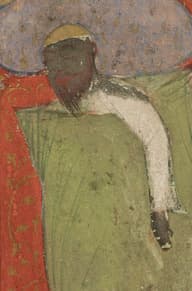
Al-Mustarshid
Emperor · Medieval
39.6Total
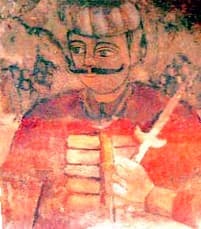
Vlad II Dracul
Emperor · Medieval
42.7Total
Basic Information
Born
1092
1395
Died
1135
1447
Era
Medieval
Medieval
Nationality
Abbasid Caliphate
Wallachia
Occupation
Emperor
Emperor
Civilization
Middle Eastern
Western
Score Comparison
Military (10%)
50.0
50.0
Political (20%)
26.4
29.3
Influence (20%)
47.9
51.0
Legacy (20%)
38.3
44.2
Leadership (15%)
34.6
38.1
Strategy (15%)
38.6
38.3
TOTAL
39.6
42.7
Al-Mustarshid — Complete Timeline
1125 AD
Rebellion Against Seljuk SultanWar
Caliph Al-Mustarshid rebelled against Seljuk Sultan Mahmud II, raising an army and fighting the Seljuks near Baghdad. The caliph was defeated and captured, then forced to pay a large ransom and recognize Seljuk authority.
RebellionSeljuk-Abbasid WarDefeat
Impact: regionaldestructive
1132 AD
Military Campaign Against SeljuksWar
Al-Mustarshid launched a military campaign against the Seljuk sultan, capturing several fortresses. This campaign temporarily expanded caliphal territory but ultimately failed to secure lasting independence.
Military CampaignTerritorial Expansion
Impact: regional
1135 AD
Assassination of Al-MustarshidPolitical Action◆ Major
Al-Mustarshid was assassinated in his tent by a group of Seljuk agents while on campaign. His death marked the first time an Abbasid caliph was killed by the Seljuks, demonstrating the fragility of caliphal power.
AssassinationSeljuk ViolenceCaliphal Death
Impact: regionaltragic
Vlad II Dracul — Complete Timeline
1436 AD
Accession as Voivode of WallachiaPolitical Action◆ Major
Vlad II Dracul became Voivode of Wallachia after the death of his half-brother Alexander I Aldea. His reign was marked by a precarious balance between the Ottoman Empire and the Kingdom of Hungary.
SuccessionRule
Impact: regional
Alliance with the Ottoman EmpirePolitical Action◆ Major
Vlad II Dracul allied with the Ottoman Sultan Murad II, agreeing to pay tribute and provide military support. This alliance secured his position but made Wallachia a vassal state.
Ottoman AllianceVassalage
Impact: regional
1444 AD
Participation in the Crusade of VarnaWar◆ Major
Vlad II Dracul joined the Christian coalition led by John Hunyadi and King W
CrusadeDefeatVarna
Impact: regionaltragic
1447 AD
AssassinationPolitical Action◆ Major
Vlad II Dracul was assassinated on the orders of John Hunyadi, who suspected him of treachery. His death led to a power struggle in Wallachia and the eventual rise of his son Vlad the Impaler.
AssassinationPower Struggle
Impact: regionaltragic
Expert Analysis
Origins
Al-Mustarshid was born in 1092 in Baghdad, the capital of the Abbasid Caliphate. He was the son of Caliph Al-Mustazhir and was raised in the caliphal court, receiving a traditional Islamic education. His early life was shaped by the declining authority of the Abbasid caliphs, who had become figureheads under Seljuk domination. Al-Mustarshid ascended to the caliphate in 1118, inheriting a position that was largely ceremonial but still carried religious prestige.
Vlad II Dracul was born around 1390 in Wallachia, a principality in modern-day Romania. He was the son of Mircea the Elder, a respected voivode, and belonged to the House of Drăculești. His early life was marked by the Ottoman threat and internal power struggles. He spent time as a hostage at the Ottoman court, where he gained firsthand knowledge of Ottoman politics and military tactics. This experience shaped his later decisions as a ruler.
Rise to Power
Al-Mustarshid became caliph after his father's death in 1118. His reign began with an attempt to restore caliphal authority, which had been eroded by the Seljuk sultans. In 1122, he rebelled against Seljuk Sultan Mahmud II, raising an army from Baghdad and the surrounding regions. He managed to capture several fortresses, but was ultimately defeated near Baghdad in 1123. Despite his defeat, he continued to assert his independence, leading to further conflicts.
Vlad II Dracul became Voivode of Wallachia in 1436 after the death of his half-brother Alexander I Aldea. His rise was facilitated by his alliance with the Ottoman Sultan Murad II, who recognized him as a vassal. In exchange, Vlad agreed to pay tribute and provide military support. This alliance secured his position but made him dependent on the Ottomans. He also sought to balance this with ties to the Kingdom of Hungary, leading to a precarious diplomatic stance.
Leadership & Governance
Al-Mustarshid's leadership was defined by his rebellion against Seljuk control. He attempted to govern Baghdad and its environs independently, but his military resources were limited. He focused on consolidating caliphal authority, but his governance was hampered by internal dissent and the superior power of the Seljuks. His political score of 26.4 reflects his inability to establish lasting control.
Vlad II Dracul's governance was characterized by his efforts to maintain Wallachia's autonomy between the Ottoman Empire and Hungary. He paid tribute to the Ottomans while also participating in Christian coalitions, such as the Crusade of Varna in 1444. His political maneuvering earned him a political score of 29.3, slightly higher than Al-Mustarshid. However, his duplicity led to distrust from both sides.
Triumph & Tragedy
Al-Mustarshid's greatest triumph was his temporary expansion of caliphal territory by capturing several Seljuk fortresses in 1122-1123. This demonstrated that the caliphate could still project military power. However, his defeat and subsequent capture by the Seljuks was a major failure. His assassination in 1135 by Seljuk agents, while on campaign, marked the first time an Abbasid caliph was killed in such a manner, symbolizing the complete subjugation of the caliphate.
Vlad II Dracul's greatest success was his participation in the Crusade of Varna, where he contributed Wallachian troops to the Christian coalition. However, the crusade ended in disaster at the Battle of Varna in 1444, with King Władysław III killed. His alliance with the Ottomans, while securing his throne, led to his assassination in 1447 on the orders of John Hunyadi, who suspected him of treachery. His death plunged Wallachia into a power struggle.
Character & Destiny
Al-Mustarshid was determined to restore caliphal power, but his ambition outstripped his resources. His decision to rebel against the Seljuks, despite their overwhelming strength, shows a willingness to take risks. His assassination demonstrated the ruthlessness of the Seljuk sultans and the vulnerability of the caliph.
Vlad II Dracul was pragmatic and duplicitous, constantly shifting alliances to survive. His experience as a hostage made him cautious, but his double-dealing ultimately cost him the trust of both the Ottomans and the Hungarians. His character reflects the harsh realities of 15th-century Balkan politics.
Legacy
Al-Mustarshid's legacy is that of a caliph who tried to resist Seljuk dominance but failed. His death marked a low point for the Abbasid Caliphate, which never regained temporal power. He scored 38.3 in legacy, reflecting his role as a symbol of resistance.
Vlad II Dracul's legacy is overshadowed by that of his son, Vlad the Impaler, but he established the Drăculești dynasty's claim to Wallachia. His political maneuvering set precedents for later rulers. He scored 44.2 in legacy, higher than Al-Mustarshid.
Conclusion
Vlad II Dracul had a greater impact than Al-Mustarshid, as evidenced by his higher total score of 42.7 versus 39.6. Vlad's actions shaped the political landscape of Wallachia and influenced his son's infamous reign. Al-Mustarshid's rebellion, while notable, was a temporary challenge to Seljuk power that ended in failure and death. Vlad's legacy, though mixed, had more lasting consequences.
Rankings
🥇
Vlad II DraculLeader
Mil: 50.0Pol: 29.3Inf: 51.0
42.7
🥈
Al-Mustarshid
Mil: 50.0Pol: 26.4Inf: 47.9
39.6
+3.1 behind
How This Comparison Works
Algorithm
Each figure is scored on 6 dimensions (0—100 scale) based on structured historical data: Military (10%), Political (20%), Influence (20%), Legacy (20%), Leadership (15%), Strategy (15%). The weighted total produces the final ranking.
Data Sources
Scores are computed from structured sub-indicators in the database. Scale factors adjust for era (Ancient ×0.85, Modern ×1.0) and civilization size (Eastern ×1.05, Other ×0.80) to account for differences in population and military scale.
Maximum 3 Figures
Comparisons are limited to 2—3 figures to ensure readability and statistical meaningfulness.
Error Margins
±5 points per dimension — Sub-scores are derived from historical records with inherent uncertainty. Two figures within 5 points on a dimension should be considered roughly equivalent in that area.
Total Score Accuracy
±3 points overall — The weighted combination of 6 dimensions produces a total score with approximately ±3 points of uncertainty. Differences of less than 3 points are not statistically significant— the figures are effectively tied.
Known Limitations
- Historical records are incomplete and uneven across civilizations
- Figures from oral-tradition societies may be underrepresented
- Occupation labels can misclassify multi-role figures
- Scores measure capability and impact, not moral character
- Quantitative scoring is a comparison tool, not absolute truth
Capability Radar
Military (10%) — Battles & Warfare
Battles
25
20
Win Rate
20
25
Expansion
10
15
Political (20%) — Governance & Reform
Reform
20
15
Diplomacy
25
35
Economy
15
20
Influence (20%) — Cultural & Global Reach
Cultural
15
20
Global
10
15
Legacy (20%) — Historical Impact
Historical
20
35
Longevity
10
30
Leadership (15%) — Power & Stability
Tenure
30
30
Stability
10
15
Strategy (15%) — Tactics & Innovation
Strategy
25
25
Tactics
20
30
Reform
15
10
Similar Comparisons
Comments & Discussion
No comments yet. Be the first to share your thoughts!