Loading...
This comparison has not been analyzed yet.
One-time AI generation (~1 minute). Scores and timeline are already available below.
Al-Muttaqi vs Ruganzu I Bwimba
Ruganzu I Bwimba leads by 3.1 pts · 2 figures compared
…
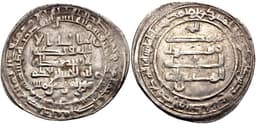
Al-Muttaqi
Emperor · Medieval
37.5Total

Ruganzu I Bwimba
Emperor · Medieval
40.6Total
Basic Information
Born
908
1500
Died
968
1543
Era
Medieval
Medieval
Nationality
Abbasid Caliphate
Rwanda
Occupation
Emperor
Emperor
Civilization
Middle Eastern
Other
Score Comparison
Military (10%)
20.0
14.9
Political (20%)
32.1
30.8
Influence (20%)
45.5
48.6
Legacy (20%)
35.8
38.3
Leadership (15%)
39.0
55.3
Strategy (15%)
45.0
45.0
TOTAL
37.5
40.6
Al-Muttaqi — Complete Timeline
940 AD
Accession of Al-MuttaqiPolitical Action◆ Major
Al-Muttaqi became caliph after the death of Al-Radi. His reign was dominated by the struggle between the Hamdanids and the Buyids for control of Baghdad and the caliphate.
AccessionPower StruggleHamdanids
Impact: national
944 AD
Deposition and Blinding by the BuyidsPolitical Action◆ Major
Al-Muttaqi was deposed by the Buyid emir Mu'izz al-Dawla, who had taken control of Baghdad. He was blinded and imprisoned, becoming a puppet of the Buyids. This event solidified Buyid dominance over the caliphate.
DepositionBlindingBuyid Control
Impact: nationaltragic
968 AD
Death of Al-MuttaqiPolitical Action
Al-Muttaqi died in captivity, having been blinded and imprisoned for over two decades. His long imprisonment symbolized the complete subjugation of the Abbasid caliphs to the Buyid dynasty.
DeathImprisonmentBuyid
Impact: nationaltragic
Ruganzu I Bwimba — Complete Timeline
1520 AD
Founded the Nyiginya clan dynastyPolitical Action◆ Major
Ruganzu I Bwimba is credited with establishing the Nyiginya clan as the ruling dynasty of Rwanda, according to oral tradition. He unified several Hutu and Tutsi clans under his leadership, creating the foundation for the Rwandan kingdom that would later expand under his successors.
FoundingDynastyOral Tradition
Impact: regionalconstructive
1530 AD
Expanded territory through military campaignsWar◆ Major
Ruganzu I Bwimba led military expeditions to expand the territory under Nyiginya control, conquering neighboring regions in central Rwanda. These campaigns established the core of the Rwandan kingdom, incorporating areas that would later become the heartland of the state.
ExpansionConquestState Formation
Impact: regional
1540 AD
Established the ubuhake clientage systemReform◆ Major
Ruganzu I Bwimba is traditionally credited with formalizing the ubuhake system, a patron-client relationship between Tutsi cattle owners and Hutu farmers. This system structured social and economic relations in the kingdom, reinforcing Tutsi dominance over the Hutu majority for centuries.
Social StructureClientageInequality
Impact: regionaldestructive
This comparison has not been analyzed yet.
One-time AI generation (~1 minute). Scores and timeline are already available below.
Rankings
🥇
Ruganzu I BwimbaLeader
Mil: 14.9Pol: 30.8Inf: 48.6
40.6
🥈
Al-Muttaqi
Mil: 20.0Pol: 32.1Inf: 45.5
37.5
+3.1 behind
How This Comparison Works
Algorithm
Each figure is scored on 6 dimensions (0—100 scale) based on structured historical data: Military (10%), Political (20%), Influence (20%), Legacy (20%), Leadership (15%), Strategy (15%). The weighted total produces the final ranking.
Data Sources
Scores are computed from structured sub-indicators in the database. Scale factors adjust for era (Ancient ×0.85, Modern ×1.0) and civilization size (Eastern ×1.05, Other ×0.80) to account for differences in population and military scale.
Maximum 3 Figures
Comparisons are limited to 2—3 figures to ensure readability and statistical meaningfulness.
Error Margins
±5 points per dimension — Sub-scores are derived from historical records with inherent uncertainty. Two figures within 5 points on a dimension should be considered roughly equivalent in that area.
Total Score Accuracy
±3 points overall — The weighted combination of 6 dimensions produces a total score with approximately ±3 points of uncertainty. Differences of less than 3 points are not statistically significant— the figures are effectively tied.
Known Limitations
- Historical records are incomplete and uneven across civilizations
- Figures from oral-tradition societies may be underrepresented
- Occupation labels can misclassify multi-role figures
- Scores measure capability and impact, not moral character
- Quantitative scoring is a comparison tool, not absolute truth
Capability Radar
Military (10%) — Battles & Warfare
Battles
5
10
Win Rate
5
10
Expansion
5
10
Political (20%) — Governance & Reform
Reform
10
20
Diplomacy
10
20
Economy
10
20
Influence (20%) — Cultural & Global Reach
Cultural
5
20
Global
5
10
Legacy (20%) — Historical Impact
Historical
10
20
Longevity
5
20
Leadership (15%) — Power & Stability
Tenure
20
30
Stability
5
20
Strategy (15%) — Tactics & Innovation
Strategy
5
10
Tactics
5
10
Reform
5
10
Similar Comparisons
Comments & Discussion
No comments yet. Be the first to share your thoughts!