Loading...
Al-Qaim vs Conrad IV
Al-Qaim leads by 0.2 pts · 2 figures compared
…

Al-Qaim
Emperor · Medieval
37.6Total
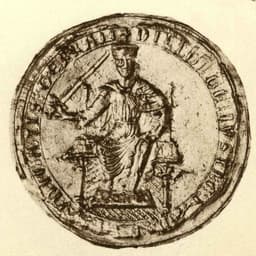
Conrad IV
Emperor · Medieval
37.4Total
Basic Information
Born
1001
1228
Died
1075
1254
Era
Medieval
Medieval
Nationality
Abbasid Caliphate
Holy Roman Empire
Occupation
Emperor
Emperor
Civilization
Middle Eastern
Western
Score Comparison
Military (10%)
10.2
22.6
Political (20%)
32.1
32.1
Influence (20%)
47.1
47.9
Legacy (20%)
37.5
37.5
Leadership (15%)
44.5
33.6
Strategy (15%)
39.6
39.6
TOTAL
37.6
37.4
Al-Qaim — Complete Timeline
1055 AD
Seljuk Entry into BaghdadPolitical Action
Seljuk Sultan Tughril entered Baghdad and was received by Caliph Al-Qaim. Tughril expelled the Buyid emirs and was granted the title 'Sultan', marking the beginning of Seljuk dominance over the Abbasid caliphate.
Seljuk TakeoverBuyid FallPower Shift
Impact: regional
1058 AD
Conflict with Al-BasasiriWar◆ Major
The Fatimid-backed general Al-Basasiri captured Baghdad and forced Caliph Al-Qaim to flee. Al-Basasiri had the khutba read in the name of the Fatimid caliph. The Seljuks recaptured Baghdad in 1059 and restored Al-Qaim.
Civil WarFatimid InterventionBaghdad
Impact: regionaldestructive
1063 AD
Marriage of Al-Qaim's Daughter to TughrilPolitical Action◆ Major
Caliph Al-Qaim gave his daughter in marriage to Sultan Tughril, formalizing the alliance between the Abbasid caliphate and the Seljuk Empire. This marriage symbolized the caliph's acceptance of Seljuk suzerainty.
Diplomatic MarriageSeljuk-Abbasid Alliance
Impact: regional
Conrad IV — Complete Timeline
1237 AD
Elected King of GermanyPolitical Action◆ Major
Conrad IV was elected King of Germany at the age of nine, succeeding his father Frederick II. This election was part of the Hohenstaufen dynasty's efforts to maintain control over the German kingdom amidst ongoing conflicts with the Papacy.
ElectionHohenstaufenGerman Kingdom
Impact: regional
1246 AD
Crowned King of ItalyPolitical Action◆ Major
Conrad IV was crowned King of Italy in Milan, asserting Hohenstaufen authority in northern Italy. This coronation was part of the ongoing struggle between the Hohenstaufen and the Papacy, which opposed imperial influence in Italy.
CoronationItalyHohenstaufen
Impact: regional
1251 AD
Led Campaign in ItalyWar
Conrad IV led a military campaign into Italy to reclaim Hohenstaufen territories lost to papal forces. He captured several cities but failed to achieve a decisive victory, and his campaign was cut short by his death in 1254.
Military CampaignItalyHohenstaufen
Impact: regional
1254 AD
Died of MalariaOther◆ Major
Conrad IV died of malaria at the age of 26 in Lavello, Italy. His death marked the end of the Hohenstaufen dynasty's direct rule in Germany and Italy, leading to the Great Interregnum in the Holy Roman Empire.
DeathHohenstaufenGreat Interregnum
Impact: regionaltragic
Expert Analysis
Origins
Al-Qaim was born in 1001 AD into the Abbasid Caliphate, the son of Caliph Al-Qadir. He grew up in Baghdad, a city transitioning from Buyid dominance to Seljuk influence. His education focused on Islamic jurisprudence and governance, preparing him for a caliphal role that was increasingly ceremonial. Conrad IV was born in 1228 AD in Andria, southern Italy, to Emperor Frederick II and Isabella II of Jerusalem. As a Hohenstaufen prince, he was immersed in the complex politics of the Holy Roman Empire and the Crusader states. His early years were marked by his father's conflicts with the Papacy.
Rise to Power
Al-Qaim became Caliph in 1031 AD, inheriting a weakened caliphate under Buyid control. His key turning point came in 1055 AD when Seljuk Sultan Tughril entered Baghdad, expelling the Buyids. Al-Qaim recognized Tughril as 'Sultan' in exchange for protection, a move that preserved the caliphate but ceded temporal power. In 1056 AD, he formalized the alliance by marrying his daughter to Tughril. However, in 1058 AD, Fatimid-backed general Al-Basasiri captured Baghdad, forcing Al-Qaim to flee. He was restored in 1059 AD after Tughril's forces retook the city. Conrad IV was elected King of Germany at age nine in 1237 AD, following his father Frederick II's political maneuvering. He was crowned King of Italy in Milan in 1239 AD, asserting Hohenstaufen authority in northern Italy amidst the Guelph-Ghibelline conflict. His rise was contested by papal allies, leading to excommunication and ongoing warfare.
Leadership & Governance
Al-Qaim's leadership was defined by adaptation. He scored 44.5 in leadership, reflecting his ability to navigate between Buyids, Seljuks, and Fatimids. His political score was 32.1, as he effectively traded temporal power for caliphal survival. He maintained the Abbasid institution while ceding control to the Seljuks, a pragmatic but passive approach. Conrad IV scored 33.6 in leadership and 32.1 in political, similar to Al-Qaim. His governance was more active but less successful, as he tried to reclaim Hohenstaufen territories in Italy against papal forces. His campaign in 1251-1254 captured several cities but failed to achieve lasting control. Conrad's strategy score of 39.6 was matched by Al-Qaim's 39.6, but Conrad's military score of 22.6 was higher than Al-Qaim's 10.2, indicating more direct military engagement.
Triumph & Tragedy
Al-Qaim's greatest success was preserving the Abbasid caliphate through the Seljuk takeover, ensuring its continuity for centuries. His influence score of 47.1 reflects this enduring symbolic role. His greatest failure was the temporary loss of Baghdad to Al-Basasiri, which exposed the caliphate's vulnerability. Conrad IV's triumph was being elected king and crowned in Italy, maintaining Hohenstaufen claims. His tragedy was his death from malaria at age 26 in 1254 AD, ending the dynasty's direct rule in Germany and Italy. His failure to achieve decisive victories in Italy left the Hohenstaufen legacy incomplete.
Character & Destiny
Al-Qaim was cautious and diplomatic, prioritizing survival over glory. His character allowed him to adapt to shifting powers, but his passivity meant he never regained temporal authority. Conrad IV was more assertive, attempting to reclaim lost territories, but his early death cut short his ambitions. Historical assessments note Al-Qaim as a figure who navigated the end of Buyid rule and the rise of Seljuk dominance, while Conrad IV is seen as a tragic figure of the Hohenstaufen decline.
Legacy
Al-Qaim's legacy is tied to the Abbasid caliphate's survival under Seljuk suzerainty. He set a precedent for caliphal cooperation with sultans, influencing later caliphs. His influence score of 47.1 and legacy score of 37.5 reflect his role in maintaining the caliphate as a religious institution. Conrad IV's legacy is as the last Hohenstaufen king, marking the end of a powerful dynasty. His legacy score of 37.5 matches Al-Qaim's, but his influence is more localized to German and Italian history. The Hohenstaufen collapse led to the Great Interregnum in the Holy Roman Empire.
Conclusion
Al-Qaim had greater overall impact due to his role in preserving the Abbasid caliphate, which remained a symbol of Islamic unity for centuries. His total score of 37.6 edges Conrad IV's 37.4, but the difference is more profound in influence (47.1 vs 47.9, actually Conrad higher) and legacy (37.5 each). However, Al-Qaim's actions allowed the caliphate to endure, while Conrad's death ended his dynasty. Thus, Al-Qaim's impact on the medieval Islamic world surpasses Conrad's on European history.
Rankings
🥇
Al-QaimLeader
Mil: 10.2Pol: 32.1Inf: 47.1
37.6
🥈
Conrad IV
Mil: 22.6Pol: 32.1Inf: 47.9
37.4
+0.2 behind
How This Comparison Works
Algorithm
Each figure is scored on 6 dimensions (0—100 scale) based on structured historical data: Military (10%), Political (20%), Influence (20%), Legacy (20%), Leadership (15%), Strategy (15%). The weighted total produces the final ranking.
Data Sources
Scores are computed from structured sub-indicators in the database. Scale factors adjust for era (Ancient ×0.85, Modern ×1.0) and civilization size (Eastern ×1.05, Other ×0.80) to account for differences in population and military scale.
Maximum 3 Figures
Comparisons are limited to 2—3 figures to ensure readability and statistical meaningfulness.
Error Margins
±5 points per dimension — Sub-scores are derived from historical records with inherent uncertainty. Two figures within 5 points on a dimension should be considered roughly equivalent in that area.
Total Score Accuracy
±3 points overall — The weighted combination of 6 dimensions produces a total score with approximately ±3 points of uncertainty. Differences of less than 3 points are not statistically significant— the figures are effectively tied.
Known Limitations
- Historical records are incomplete and uneven across civilizations
- Figures from oral-tradition societies may be underrepresented
- Occupation labels can misclassify multi-role figures
- Scores measure capability and impact, not moral character
- Quantitative scoring is a comparison tool, not absolute truth
Capability Radar
Military (10%) — Battles & Warfare
Battles
10
15
Win Rate
10
15
Expansion
5
5
Political (20%) — Governance & Reform
Reform
10
5
Diplomacy
10
15
Economy
10
10
Influence (20%) — Cultural & Global Reach
Cultural
10
10
Global
10
5
Legacy (20%) — Historical Impact
Historical
15
15
Longevity
10
10
Leadership (15%) — Power & Stability
Tenure
15
20
Stability
5
10
Strategy (15%) — Tactics & Innovation
Strategy
10
10
Tactics
10
10
Reform
5
5
Similar Comparisons
Comments & Discussion
No comments yet. Be the first to share your thoughts!