Loading...
Analysis will be generated on first visit.
Scores and timeline are available below. The page will refresh automatically when ready.
Ala-ud-din Khalji vs Julius Caesar
Julius Caesar leads by 9.8 pts · 2 figures compared
…
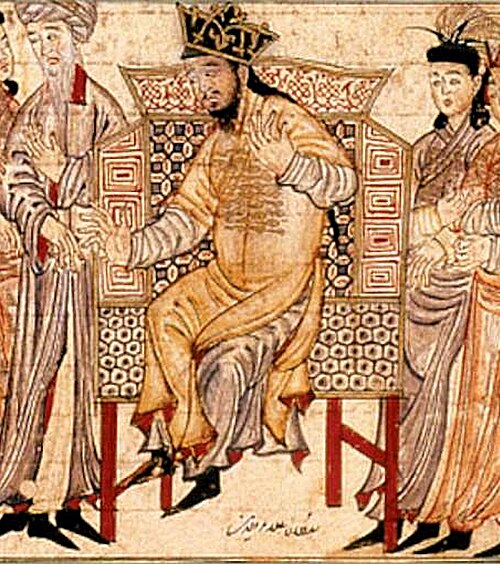
Ala-ud-din Khalji
Emperor · Medieval
73.5Total
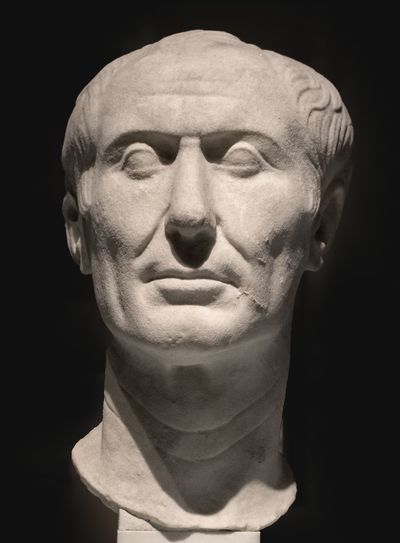
Julius Caesar
General · Ancient
83.3Total
Basic Information
Born
1266
-100
Died
1316
-44
Era
Medieval
Ancient
Nationality
India
Roman Republic
Occupation
Emperor
General
Civilization
Indian
Western
Score Comparison
Military (10%)
78.3
88.0
Political (20%)
72.0
78.0
Influence (20%)
72.2
85.0
Legacy (20%)
69.8
82.0
Leadership (15%)
73.3
82.0
Strategy (15%)
79.4
88.0
TOTAL
73.5
83.3
Rankings
🥇
Julius CaesarLeader
Mil: 88.0Pol: 78.0Inf: 85.0
83.3
🥈
Ala-ud-din Khalji
Mil: 78.3Pol: 72.0Inf: 72.2
73.5
+9.8 behind
How This Comparison Works
Algorithm
Each figure is scored on 6 dimensions (0—100 scale) based on structured historical data: Military (10%), Political (20%), Influence (20%), Legacy (20%), Leadership (15%), Strategy (15%). The weighted total produces the final ranking.
Data Sources
Scores are computed from structured sub-indicators in the database. Scale factors adjust for era (Ancient ×0.85, Modern ×1.0) and civilization size (Eastern ×1.05, Other ×0.80) to account for differences in population and military scale.
Maximum 3 Figures
Comparisons are limited to 2—3 figures to ensure readability and statistical meaningfulness.
Error Margins
±5 points per dimension — Sub-scores are derived from historical records with inherent uncertainty. Two figures within 5 points on a dimension should be considered roughly equivalent in that area.
Total Score Accuracy
±3 points overall — The weighted combination of 6 dimensions produces a total score with approximately ±3 points of uncertainty. Differences of less than 3 points are not statistically significant— the figures are effectively tied.
Known Limitations
- Historical records are incomplete and uneven across civilizations
- Figures from oral-tradition societies may be underrepresented
- Occupation labels can misclassify multi-role figures
- Scores measure capability and impact, not moral character
- Quantitative scoring is a comparison tool, not absolute truth
Capability Radar
Military (10%) — Battles & Warfare
Battles
85
95
Win Rate
90
92
Expansion
82
97
Political (20%) — Governance & Reform
Reform
78
90
Diplomacy
70
85
Economy
80
82
Influence (20%) — Cultural & Global Reach
Cultural
60
88
Global
50
94
Legacy (20%) — Historical Impact
Historical
70
95
Longevity
55
96
Leadership (15%) — Power & Stability
Tenure
75
75
Stability
65
60
Strategy (15%) — Tactics & Innovation
Strategy
85
94
Tactics
88
96
Reform
80
88
Analysis will be generated on first visit.
Scores and timeline are available below. The page will refresh automatically when ready.
Ala-ud-din Khalji — Complete Timeline
1296 AD
Accession to the Delhi SultanatePolitical Action
Ala-ud-din Khalji ascended the throne of the Delhi Sultanate after assassinating his uncle Jalal-ud-din Khalji. He consolidated power by eliminating rivals and implementing a centralized administration.
Delhi SultanateKhaljiAssassination
Impact: regional
1299 AD
Repulsion of the Mongol InvasionsWar◆ Major
Ala-ud-din Khalji defeated a Mongol invasion led by Qutlugh Khwaja near Delhi. He subsequently repelled several Mongol incursions between 1299 and 1306, using a combination of fortifications and military tactics, securing the Delhi Sultanate's northern frontier.
Mongol InvasionsDelhiDefense
Impact: regional
Conquest of GujaratWar◆ Major
Ala-ud-din Khalji led a campaign against the Vaghela kingdom of Gujarat, defeating King Karna II. He annexed Gujarat and plundered the Somnath temple, bringing immense wealth to the Delhi Sultanate.
GujaratSomnathAnnexation
Impact: regional
1300 AD
Economic Reforms and Price ControlReform◆ Major
Ala-ud-din Khalji implemented a system of price controls for essential goods, including grain, cloth, and horses. He established state granaries and fixed wages, aiming to maintain a stable economy and support his large army.
Price ControlEconomic ReformAdministration
Impact: regionalconstructive
1303 AD
Conquest of the DeccanWar◆ Major
Ala-ud-din Khalji's general Malik Kafur led campaigns into the Deccan, defeating the Yadava, Kakatiya, and Hoysala kingdoms. These conquests extended Delhi's rule to the southern tip of India and brought tribute from the Deccan states.
DeccanMalik KafurSouthern India
Impact: regional
Similar Comparisons
Comments & Discussion
No comments yet. Be the first to share your thoughts!