Loading...
Alcide De Gasperi vs Franjo Tuđman
Franjo Tuđman leads by 1.7 pts · 2 figures compared
…
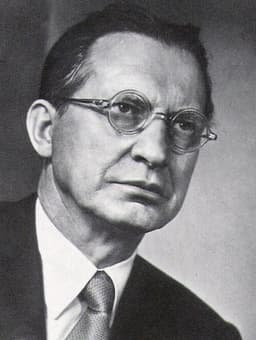
Alcide De Gasperi
Politician · Modern
55.5Total
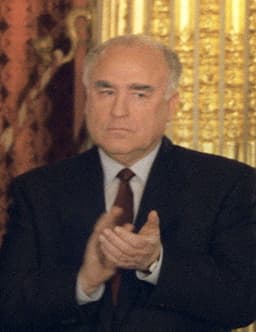
Franjo Tuđman
Politician · Modern
57.2Total
Basic Information
Born
1881
1922
Died
1954
—
Era
Modern
Modern
Nationality
Italy
Croatia
Occupation
Politician
Politician
Civilization
Western
Western
Score Comparison
Military (10%)
12.4
41.6
Political (20%)
85.0
68.0
Influence (20%)
65.0
60.0
Legacy (20%)
40.0
49.2
Leadership (15%)
80.7
68.0
Strategy (15%)
31.5
53.8
TOTAL
55.5
57.2
Alcide De Gasperi — Complete Timeline
1946 AD
First Prime Minister of the Italian RepublicPolitical Action
De Gasperi became the first prime minister of the newly proclaimed Italian Republic in December 1945. He led a coalition government that included Christian Democrats, Socialists, and Communists. His government oversaw the transition from monarchy to republic.
RepublicGovernmentTransition
Impact: nationalconstructive
1947 AD
Peace Treaty of ParisPolitical Action◆ Major
De Gasperi signed the Treaty of Paris, which formally ended World War II for Italy. Italy lost its colonies, ceded territory to Yugoslavia and France, and paid reparations. The treaty was unpopular but allowed Italy to regain sovereignty and join the Western alliance.
TreatyWorld War IIDiplomacy
Impact: global
Expulsion of Communists from GovernmentPolitical Action
De Gasperi expelled the Italian Communist Party and Socialist Party from his coalition government in May 1947. This move aligned Italy with the United States and the Marshall Plan, deepening the Cold War divide. It solidified Christian Democratic dominance for decades.
Cold WarMarshall PlanCoalition
Impact: global
1949 AD
Italian Membership in NATOPolitical Action◆ Major
De Gasperi led Italy into the North Atlantic Treaty Organization (NATO) as a founding member. This decision anchored Italy in the Western bloc during the Cold War and secured U.S. military and economic support. It was opposed by the Communist Party.
NATOCold WarAlliance
Impact: globalconstructive
Franjo Tuđman — Complete Timeline
1990 AD
Election as First President of Independent CroatiaPolitical Action◆ Major
Franjo Tuđman was elected president of the Socialist Republic of Croatia in the first multi-party elections on May 30, 1990. His Croatian Democratic Union (HDZ) won a majority, and he led Croatia toward independence from Yugoslavia, declaring sovereignty later that year.
IndependenceElectionCroatia
Impact: nationalconstructive
1991 AD
Declaration of Croatian IndependencePolitical Action◆ Major
Tuđman led Croatia in declaring independence from Yugoslavia on June 25, 1991, following a referendum. This triggered the Croatian War of Independence against the Yugoslav People's Army and Serb rebels, resulting in a four-year conflict that ended with Croatian victory.
IndependenceWarYugoslav Breakup
Impact: regionalconstructive
1995 AD
Operation StormWar◆ Major
Tuđman ordered the Croatian Army to launch Operation Storm in August 1995, a military offensive that recaptured the Serb-held Krajina region. The operation ended the Croatian War of Independence but resulted in the exodus of approximately 200,000 Serb civilians and accusations of war crimes.
Military OffensiveWar CrimesCroatian War
Impact: regionaldestructive
Signing of the Dayton AgreementPolitical Action◆ Major
Tuđman signed the Dayton Peace Agreement on December 14, 1995, ending the Bosnian War. The agreement established Bosnia and Herzegovina as a decentralized state with two entities, and Tuđman's role was criticized for supporting Croat separatism in Bosnia.
Peace TreatyBosnian WarDiplomacy
Impact: regional
1999 AD
Death and Legacy ControversyOther◆ Major
Tuđman died on December 10, 1999, after a long battle with cancer. His death marked the end of an era, and his legacy remains divisive: praised for achieving Croatian independence but criticized for authoritarian tendencies and nationalist policies that contributed to ethnic conflict.
DeathLegacyCroatia
Impact: national
Expert Analysis
Origins
Alcide De Gasperi was born on April 3, 1881, in Pieve Tesino, then part of the Austro-Hungarian Empire. His father was a local policeman, and his family had a strong Catholic background. De Gasperi studied at the University of Vienna, where he became involved in Christian social movements. He was influenced by Catholic social teaching and the Italian unification movement, which shaped his political philosophy.
Franjo Tuđman was born on May 14, 1922, in Veliko Trgovišće, Croatia, then part of the Kingdom of Serbs, Croats, and Slovenes. His father was a prominent Croatian nationalist and a member of the Croatian Peasant Party. Tuđman studied at the University of Zagreb, where he earned a degree in history. He later joined the Partisans during World War II, fighting against the Axis powers, which shaped his nationalist and anti-communist views.
Rise to Power
De Gasperi rose to prominence in the early 20th century as a leader of the Italian People's Party. He was imprisoned by Mussolini's fascist regime in 1927 for his political activities. After World War II, he became the first Prime Minister of the Italian Republic in December 1945, leading a coalition government. His key turning point was the expulsion of the Italian Communist and Socialist parties from his government in May 1947, which aligned Italy with the Western bloc.
Tuđman rose to power in the late 1980s as a Croatian nationalist leader. He founded the Croatian Democratic Union (HDZ) in 1989, which won the first multi-party elections in Croatia in 1990. He was elected President of Croatia on May 30, 1990. His key turning point was the declaration of Croatian independence on June 25, 1991, which triggered the Croatian War of Independence. Tuđman's political skills (score: 68.0) were crucial in navigating Croatia's emergence from Yugoslavia.
Leadership & Governance
De Gasperi's leadership style was consensus-building and coalition-oriented. He governed through a series of centrist coalitions, prioritizing economic reconstruction and European integration. He signed the Treaty of Paris in 1947, which ended Italy's war status but imposed territorial losses and reparations. De Gasperi also led Italy into NATO in 1949, anchoring the country in the Western alliance. His political score of 85.0 reflects his ability to stabilize post-war Italy.
Tuđman's leadership style was more authoritarian and nationalist. He centralized power in the presidency and suppressed opposition media. He oversaw Croatia's transition to independence and the war effort, including Operation Storm in August 1995, which recaptured Serb-held territory but led to ethnic cleansing of Serbs. Tuđman's military score of 41.6 reflects his role in the war, while his political score of 68.0 indicates his control over the state.
Triumph & Tragedy
De Gasperi's greatest triumph was rebuilding Italy's economy and democracy after WWII. He implemented the Marshall Plan, which helped Italy achieve rapid economic growth. His greatest failure was the Treaty of Paris, which resulted in territorial losses and a weak international position. He scored 65.0 in influence for his role in European integration.
Tuđman's greatest triumph was achieving Croatian independence and defending it through the war. Operation Storm in 1995 was a military success that ended the Krajina crisis. His greatest failure was the authoritarian turn and ethnic cleansing during the war, which damaged Croatia's international reputation. His legacy score of 49.2 reflects the controversy.
Character & Destiny
De Gasperi was a pragmatic, patient, and devout Catholic. He believed in gradual reform and coalition politics. His character led him to prioritize stability over radical change, which helped Italy avoid civil war. His destiny was to be a founding father of the Italian Republic, but his legacy was overshadowed by later leaders.
Tuđman was a stubborn, nationalist historian who believed in Croatian statehood. His character led him to take risks, such as declaring independence, which succeeded but at a high cost. His destiny was to be the first president of independent Croatia, but his legacy is marred by authoritarianism and war crimes allegations.
Legacy
De Gasperi's legacy is as a founding father of the Italian Republic and a key architect of European integration. His policies laid the groundwork for Italy's economic miracle. He is remembered positively in Italy, but his influence is less internationally known. His political score of 85.0 is among the highest for Italian leaders.
Tuđman's legacy is deeply divisive. He is celebrated as the father of Croatian independence but criticized for authoritarianism and war crimes. He established the framework for Croatia's democracy, but his nationalist policies left a mixed legacy. His total score of 57.2 is slightly higher than De Gasperi's 55.5.
Conclusion
While Tuđman has a slightly higher total score (57.2 vs 55.5), De Gasperi had a more profound and positive impact on Italy and Europe. De Gasperi's political score of 85.0 far exceeds Tuđman's 68.0, and his influence score of 65.0 is higher than Tuđman's 60.0. De Gasperi's role in rebuilding a democratic Italy and integrating into Western institutions had lasting stability, whereas Tuđman's legacy is more ambiguous. Therefore, De Gasperi had greater overall impact.
Rankings
🥇
Franjo TuđmanLeader
Mil: 41.6Pol: 68.0Inf: 60.0
57.2
🥈
Alcide De Gasperi
Mil: 12.4Pol: 85.0Inf: 65.0
55.5
+1.7 behind
How This Comparison Works
Algorithm
Each figure is scored on 6 dimensions (0—100 scale) based on structured historical data: Military (10%), Political (20%), Influence (20%), Legacy (20%), Leadership (15%), Strategy (15%). The weighted total produces the final ranking.
Data Sources
Scores are computed from structured sub-indicators in the database. Scale factors adjust for era (Ancient ×0.85, Modern ×1.0) and civilization size (Eastern ×1.05, Other ×0.80) to account for differences in population and military scale.
Maximum 3 Figures
Comparisons are limited to 2—3 figures to ensure readability and statistical meaningfulness.
Error Margins
±5 points per dimension — Sub-scores are derived from historical records with inherent uncertainty. Two figures within 5 points on a dimension should be considered roughly equivalent in that area.
Total Score Accuracy
±3 points overall — The weighted combination of 6 dimensions produces a total score with approximately ±3 points of uncertainty. Differences of less than 3 points are not statistically significant— the figures are effectively tied.
Known Limitations
- Historical records are incomplete and uneven across civilizations
- Figures from oral-tradition societies may be underrepresented
- Occupation labels can misclassify multi-role figures
- Scores measure capability and impact, not moral character
- Quantitative scoring is a comparison tool, not absolute truth
Capability Radar
Military (10%) — Battles & Warfare
Battles
11
10
Win Rate
15
10
Expansion
17
10
Political (20%) — Governance & Reform
Reform
85
60
Diplomacy
80
55
Economy
70
50
Influence (20%) — Cultural & Global Reach
Cultural
60
55
Global
65
45
Legacy (20%) — Historical Impact
Historical
70
55
Longevity
65
40
Leadership (15%) — Power & Stability
Tenure
75
65
Stability
75
40
Strategy (15%) — Tactics & Innovation
Strategy
21
10
Tactics
23
10
Reform
27
15
Similar Comparisons
Comments & Discussion
No comments yet. Be the first to share your thoughts!