Loading...
Alcide De Gasperi vs Kim Il-sung
Kim Il-sung leads by 8.5 pts · 2 figures compared
…
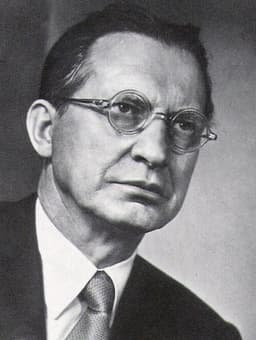
Alcide De Gasperi
Politician · Modern
55.5Total
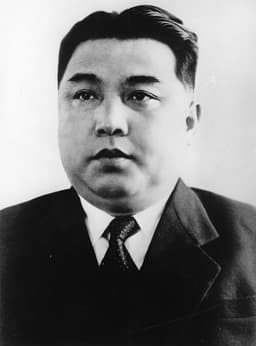
Kim Il-sung
Politician · Modern
64.0Total
Basic Information
Born
1881
1912
Died
1954
1994
Era
Modern
Modern
Nationality
Italy
North Korea
Occupation
Politician
Politician
Civilization
Western
Eastern
Score Comparison
Military (10%)
12.4
43.3
Political (20%)
85.0
68.0
Influence (20%)
65.0
65.0
Legacy (20%)
40.0
70.0
Leadership (15%)
80.7
80.0
Strategy (15%)
31.5
36.8
TOTAL
55.5
64.0
Alcide De Gasperi — Complete Timeline
1946 AD
First Prime Minister of the Italian RepublicPolitical Action
De Gasperi became the first prime minister of the newly proclaimed Italian Republic in December 1945. He led a coalition government that included Christian Democrats, Socialists, and Communists. His government oversaw the transition from monarchy to republic.
RepublicGovernmentTransition
Impact: nationalconstructive
1947 AD
Peace Treaty of ParisPolitical Action◆ Major
De Gasperi signed the Treaty of Paris, which formally ended World War II for Italy. Italy lost its colonies, ceded territory to Yugoslavia and France, and paid reparations. The treaty was unpopular but allowed Italy to regain sovereignty and join the Western alliance.
TreatyWorld War IIDiplomacy
Impact: global
Expulsion of Communists from GovernmentPolitical Action
De Gasperi expelled the Italian Communist Party and Socialist Party from his coalition government in May 1947. This move aligned Italy with the United States and the Marshall Plan, deepening the Cold War divide. It solidified Christian Democratic dominance for decades.
Cold WarMarshall PlanCoalition
Impact: global
1949 AD
Italian Membership in NATOPolitical Action◆ Major
De Gasperi led Italy into the North Atlantic Treaty Organization (NATO) as a founding member. This decision anchored Italy in the Western bloc during the Cold War and secured U.S. military and economic support. It was opposed by the Communist Party.
NATOCold WarAlliance
Impact: globalconstructive
Kim Il-sung — Complete Timeline
1948 AD
Establishment of the Democratic People's Republic of KoreaPolitical Action
Kim Il-sung proclaimed the Democratic People's Republic of Korea (North Korea) with Soviet backing, becoming its first Premier. This established a communist state in the northern half of the Korean Peninsula, separate from the US-backed South.
FoundingNorth KoreaCold War
Impact: regional
1950 AD
Start of the Korean WarWar
Kim Il-sung ordered the North Korean invasion of South Korea, initiating the Korean War. The war resulted in millions of casualties and ended in a stalemate with the 1953 armistice, leaving Korea divided.
WarInvasionKorean War
Impact: globaldestructive
1955 AD
Adoption of the Juche IdeologyCultural◆ Major
Kim Il-sung formally introduced Juche, a self-reliance ideology, as the guiding principle of North Korea. Juche emphasized political independence, economic self-sufficiency, and military autonomy, shaping the country's isolationist policies.
IdeologyJucheSelf-Reliance
Impact: national
1960 AD
Consolidation of the Kim Il-sung Cult of PersonalityPolitical Action◆ Major
Kim Il-sung established an extensive cult of personality, portraying himself as the 'Great Leader' and founder of the Juche ideology. This included rewriting history, erecting statues, and mandating loyalty oaths, creating a totalitarian state.
Cult of PersonalityJucheTotalitarianism
Impact: nationaldestructive
1994 AD
Death and Designation as Eternal PresidentPolitical Action◆ Major
Kim Il-sung died of a heart attack, and the North Korean constitution was amended to designate him 'Eternal President'. His son Kim Jong-il succeeded him, continuing the dynastic rule of the Kim family.
DeathSuccessionEternal President
Impact: national
Expert Analysis
Origins
Alcide De Gasperi was born on April 3, 1881, in Pieve Tesino, then part of the Austro-Hungarian Empire. His father was a local tax official. He studied literature and philosophy at the University of Vienna, where he became involved in the Italian Catholic movement. Kim Il-sung was born on April 15, 1912, in Mangyongdae, near Pyongyang, then under Japanese colonial rule. His family was Christian and his father was a teacher. Kim moved to Manchuria as a child and became involved in communist guerrilla activities against Japan.
Rise to Power
De Gasperi's rise began in the Italian People's Party (PPI) founded by Don Luigi Sturzo. He served as a deputy in the Italian parliament from 1921. Opposing Mussolini, he was arrested in 1927 and sentenced to 4 years in prison. After release, he worked in the Vatican library. In 1943, he founded the Christian Democracy party. After WWII, he became Prime Minister in December 1945, leading a coalition. Kim Il-sung's rise was through the communist guerrilla movement in Manchuria. He joined the Communist Party of Korea in 1925. In 1941, he fled to the Soviet Union, where he received military training. With Soviet backing, he returned to Korea in 1945 and was installed as leader of the Provisional People's Committee. He proclaimed the DPRK on September 9, 1948.
Leadership & Governance
De Gasperi governed through coalition politics, focusing on economic reconstruction and anchoring Italy in the Western alliance. He expelled communists from government in May 1947, aligning Italy with the US. He pursued land reform and supported the Marshall Plan, which brought $1.5 billion in aid. Italy's GDP grew at an average of 6% annually during his tenure. Kim Il-sung established a totalitarian state based on the Juche ideology of self-reliance. He nationalized industry and collectivized agriculture. The economy initially grew due to Soviet aid, but by the 1970s, stagnation set in. He created a cult of personality, with his image ubiquitous and his writings mandatory study. His leadership score is 80.0 versus De Gasperi's 80.7, but Kim's political score is 68.0 versus De Gasperi's 85.0.
Triumph & Tragedy
De Gasperi's greatest success was the reconstruction of Italy as a democratic republic and its integration into NATO and the European Coal and Steel Community (precursor to the EU). He signed the Treaty of Paris in 1947, ending war with the Allies, albeit with territorial losses. His tragedy was the failure to fully reconcile with the left; the Cold War division persisted. Kim Il-sung's triumph was the establishment of an independent North Korean state and the survival of his regime after the Korean War. The war itself was a tragedy: it caused 3 million deaths and devastated the peninsula. His pursuit of Juche led to economic isolation and famines.
Character & Destiny
De Gasperi was pragmatic, patient, and a skilled coalition-builder. He was deeply Catholic and anti-communist. His character shaped Italy's alignment with the West and its democratic stability. Kim Il-sung was ruthless, charismatic, and ideologically rigid. He eliminated rivals, including the 'August Faction' and 'Kapsan Faction'. His personality drove the cult of personality and the militarization of North Korea. Historians assess De Gasperi as a founding father of Italian democracy; Kim as a brutal dictator who created a dynastic dictatorship.
Legacy
De Gasperi's legacy is Italy's post-war democratic order and its role in European integration. He is remembered as one of the 'founding fathers of the European Union'. His political score of 85.0 reflects his effective governance. Kim Il-sung's legacy is the Kim dynasty, which continues to rule North Korea. He is officially the 'Eternal President'. His legacy score is 70.0, higher than De Gasperi's 40.0, due to the enduring regime. However, his influence score is tied at 65.0. The total scores: Kim 64.0, De Gasperi 55.5.
Conclusion
While Kim Il-sung's total score is higher, De Gasperi's impact on democratic governance and European unity is more positive and enduring. Kim's legacy is one of tyranny and suffering. De Gasperi's political skill (85.0) and leadership (80.7) built a free Italy; Kim's leadership (80.0) built a prison state. Therefore, De Gasperi had greater impact in terms of advancing human freedom and prosperity.
Rankings
🥇
Kim Il-sungLeader
Mil: 43.3Pol: 68.0Inf: 65.0
64.0
🥈
Alcide De Gasperi
Mil: 12.4Pol: 85.0Inf: 65.0
55.5
+8.5 behind
How This Comparison Works
Algorithm
Each figure is scored on 6 dimensions (0—100 scale) based on structured historical data: Military (10%), Political (20%), Influence (20%), Legacy (20%), Leadership (15%), Strategy (15%). The weighted total produces the final ranking.
Data Sources
Scores are computed from structured sub-indicators in the database. Scale factors adjust for era (Ancient ×0.85, Modern ×1.0) and civilization size (Eastern ×1.05, Other ×0.80) to account for differences in population and military scale.
Maximum 3 Figures
Comparisons are limited to 2—3 figures to ensure readability and statistical meaningfulness.
Error Margins
±5 points per dimension — Sub-scores are derived from historical records with inherent uncertainty. Two figures within 5 points on a dimension should be considered roughly equivalent in that area.
Total Score Accuracy
±3 points overall — The weighted combination of 6 dimensions produces a total score with approximately ±3 points of uncertainty. Differences of less than 3 points are not statistically significant— the figures are effectively tied.
Known Limitations
- Historical records are incomplete and uneven across civilizations
- Figures from oral-tradition societies may be underrepresented
- Occupation labels can misclassify multi-role figures
- Scores measure capability and impact, not moral character
- Quantitative scoring is a comparison tool, not absolute truth
Capability Radar
Military (10%) — Battles & Warfare
Battles
11
15
Win Rate
15
10
Expansion
17
10
Political (20%) — Governance & Reform
Reform
85
70
Diplomacy
80
30
Economy
70
20
Influence (20%) — Cultural & Global Reach
Cultural
60
60
Global
65
60
Legacy (20%) — Historical Impact
Historical
70
70
Longevity
65
80
Leadership (15%) — Power & Stability
Tenure
75
95
Stability
75
40
Strategy (15%) — Tactics & Innovation
Strategy
21
25
Tactics
23
20
Reform
27
30
Similar Comparisons
Comments & Discussion
No comments yet. Be the first to share your thoughts!