Loading...
Alcide De Gasperi vs Saddam Hussein
Alcide De Gasperi leads by 5.8 pts · 2 figures compared
…
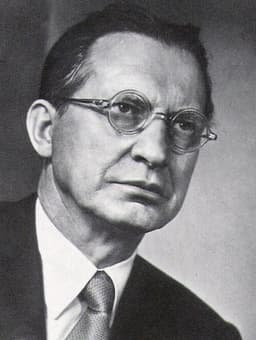
Alcide De Gasperi
Politician · Modern
55.5Total
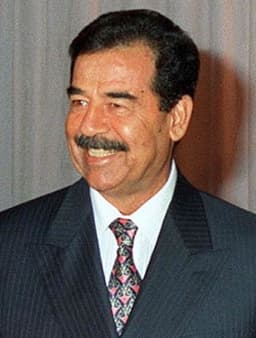
Saddam Hussein
Politician · Modern
49.7Total
Basic Information
Born
1881
1937
Died
1954
—
Era
Modern
Modern
Nationality
Italy
Iraq
Occupation
Politician
Politician
Civilization
Western
Middle Eastern
Score Comparison
Military (10%)
12.4
52.5
Political (20%)
85.0
43.7
Influence (20%)
65.0
58.0
Legacy (20%)
40.0
47.5
Leadership (15%)
80.7
40.0
Strategy (15%)
31.5
55.0
TOTAL
55.5
49.7
Alcide De Gasperi — Complete Timeline
1946 AD
First Prime Minister of the Italian RepublicPolitical Action
De Gasperi became the first prime minister of the newly proclaimed Italian Republic in December 1945. He led a coalition government that included Christian Democrats, Socialists, and Communists. His government oversaw the transition from monarchy to republic.
RepublicGovernmentTransition
Impact: nationalconstructive
1947 AD
Peace Treaty of ParisPolitical Action◆ Major
De Gasperi signed the Treaty of Paris, which formally ended World War II for Italy. Italy lost its colonies, ceded territory to Yugoslavia and France, and paid reparations. The treaty was unpopular but allowed Italy to regain sovereignty and join the Western alliance.
TreatyWorld War IIDiplomacy
Impact: global
Expulsion of Communists from GovernmentPolitical Action
De Gasperi expelled the Italian Communist Party and Socialist Party from his coalition government in May 1947. This move aligned Italy with the United States and the Marshall Plan, deepening the Cold War divide. It solidified Christian Democratic dominance for decades.
Cold WarMarshall PlanCoalition
Impact: global
1949 AD
Italian Membership in NATOPolitical Action◆ Major
De Gasperi led Italy into the North Atlantic Treaty Organization (NATO) as a founding member. This decision anchored Italy in the Western bloc during the Cold War and secured U.S. military and economic support. It was opposed by the Communist Party.
NATOCold WarAlliance
Impact: globalconstructive
Saddam Hussein — Complete Timeline
1979 AD
Became President of IraqPolitical Action
Saddam Hussein forced President Ahmed Hassan al-Bakr to resign on July 16, 1979, and assumed the presidency. He immediately purged the Ba'ath Party, executing 68 senior members in a televised purge. This consolidated his absolute control over Iraq's government and security apparatus.
Power ConsolidationPurgeBa'ath Party
Impact: nationaldestructive
1980 AD
Invaded IranWar
Saddam launched a full-scale invasion of Iran on September 22, 1980, aiming to seize the oil-rich Khuzestan province and overthrow the new Islamic regime. The war lasted eight years, resulting in hundreds of thousands of casualties and massive economic destruction for both countries, ending in a stalemate.
Iran-Iraq WarInvasionStalemate
Impact: regionaldestructive
1988 AD
Used chemical weapons against Kurds at HalabjaWar◆ Major
During the Anfal campaign, Iraqi forces under Saddam's orders attacked the Kurdish town of Halabja with mustard gas and nerve agents on March 16, 1988. An estimated 5,000 civilians were killed instantly. The attack is considered one of the worst chemical weapons attacks against a civilian population.
Chemical WeaponsWar CrimeKurds
Impact: nationaldestructive
1990 AD
Invaded KuwaitWar
Saddam ordered the invasion and annexation of Kuwait on August 2, 1990, claiming it was historically part of Iraq. The invasion was condemned internationally and led to the Gulf War. A US-led coalition expelled Iraqi forces in February 1991, and Iraq faced severe UN sanctions.
Gulf WarInvasionSanctions
Impact: globaldestructive
2003 AD
Captured by US forces and executedPolitical Action
After the US-led invasion of Iraq in March 2003, Saddam went into hiding. He was captured by US forces on December 13, 2003, near Tikrit. Tried by the Iraqi Special Tribunal for crimes against humanity, he was sentenced to death and executed by hanging on December 30, 2006.
CaptureTrialExecution
Impact: globaltragic
Expert Analysis
Alcide De Gasperi vs Saddam Hussein
**The Strongman and the Builder**
In the summer of 1979, Saddam Hussein stood before a hall of his Ba'ath Party colleagues in Baghdad, a cigar smoldering between his fingers. One by one, he read aloud the names of those he considered traitors. The men were dragged away; some were shot on the spot. The room erupted in chants of loyalty. Twenty-seven years earlier, a very different scene had unfolded in Rome. Alcide De Gasperi, a frail, gray-haired man in a modest suit, sat in the Chamber of Deputies, calmly steering a fractious coalition through the wreckage of war. He had no secret police, no personal militia. He had only a constitution, a newspaper, and a stubborn faith in democracy. These two men—Saddam Hussein and Alcide De Gasperi—both rose from the margins of their nations to seize the levers of power. But they built worlds that could not have been more different: one a prison of fear, the other a foundation of freedom.
**Origins**
Saddam Hussein was born in 1937 into poverty in the village of Al-Awja, near Tikrit. His father died before he was born, and his mother, in deep despair, reportedly tried to abort him. He was raised by an uncle who instilled in him a fierce nationalism and a deep distrust of outsiders. The Iraq of his youth was a cauldron of colonial resentment, tribal vendettas, and coups. Violence was the language of politics. Saddam learned early that power was something you took, not something you were given.
Alcide De Gasperi was born in 1881 in the Tyrolean town of Pieve Tesino, then part of the Austro-Hungarian Empire. His family was devoutly Catholic and modestly middle-class. He grew up speaking Italian and German, a child of borders and empires. His formative years were spent not in coups but in libraries, studying philosophy and history. He entered politics as a young Christian democrat, a man who believed that political change came through parliaments, not rifles. While Saddam learned the logic of the gun, De Gasperi learned the logic of compromise.
**Rise to Power**
Saddam’s ascent was a study in ruthless patience. He joined the Ba’ath Party in 1957, and by 1968, he had helped engineer a coup that brought the party to power. He served as vice president under Ahmed Hassan al-Bakr, quietly building his own security apparatus—the dreaded Mukhabarat. For eleven years, he waited. Then, on July 16, 1979, he forced al-Bakr to resign. Within days, he purged the party of rivals in a televised spectacle of terror. His path was paved with bodies.
De Gasperi’s rise was slower and more precarious. A staunch anti-fascist, he was imprisoned by Mussolini in 1927 and spent the next sixteen years hiding in the Vatican library, working as a cataloguer. He survived not by fighting, but by waiting out the storm. When Mussolini fell in 1943, De Gasperi emerged to help found the Christian Democracy party. By December 1945, he became prime minister—not through a coup, but through an election. His power was not absolute; it was borrowed from a war-weary people.
**Leadership & Governance**
Saddam ruled Iraq as a personal fiefdom. He built a vast apparatus of surveillance, torture, and patronage. He waged war on Iran from 1980 to 1988—a brutal, futile conflict that killed hundreds of thousands. When the Kurdish town of Halabja resisted, he ordered chemical weapons dropped on civilians in 1988. In 1990, he invaded Kuwait, setting off a chain of destruction that ended with his own downfall. His political wisdom was the wisdom of the tiger: strike first, strike hard, and let fear do the rest.
De Gasperi governed through coalition, dialogue, and the slow art of building consensus. He faced a shattered economy, a monarchy that had collapsed, and a Communist party that commanded a third of the vote. In May 1947, he made the fateful decision to expel the Communists from his government, aligning Italy firmly with the West. He signed the humiliating Peace Treaty of Paris in 1947, accepting the loss of colonies and territory. He then led Italy into NATO in 1949, anchoring the country in the Atlantic alliance. His strategy was not conquest but reconstruction.
**Triumph & Tragedy**
Saddam’s greatest moment was the early success of the Iran-Iraq War, when he briefly seized Khuzestan and seemed to have outmaneuvered the ayatollahs. But his greatest tragedy was the same war: a decade of blood and debt that left Iraq isolated and bankrupt. His invasion of Kuwait was a catastrophic miscalculation that brought ruin upon his country and himself. His final act—hiding in a hole in the ground near Tikrit, captured by American soldiers on December 13, 2003—was a grim epitaph for a man who had once strutted as the new Nebuchadnezzar.
De Gasperi’s triumph was the Italian Republic itself. He did not win a war; he won a peace. He transformed a defeated, fascist nation into a founding member of the European Coal and Steel Community, the precursor to the European Union. His tragedy was that he did not live to see the full fruits of his labor. He died in 1954, just as Italy’s economic miracle was beginning. He left behind a stable democracy, but also a divided country, still haunted by its past.
**Character & Destiny**
Saddam was paranoid, grandiose, and utterly convinced of his own destiny. He saw the world as a zero-sum game: there were only masters and victims. His personality drove him to overreach—to invade Iran, to gas the Kurds, to swallow Kuwait. He could not stop, because stopping would have meant admitting weakness. His fate was sealed by his own psychology.
De Gasperi was humble, patient, and pragmatic. He once said, “The best way to predict the future is to create it.” He understood that politics was not about glory but about stability. He was not a charismatic leader; he was a trustworthy one. His personality—earnest, cautious, principled—allowed him to navigate the treacherous waters of postwar Europe without capsizing.
**Legacy**
Saddam Hussein’s legacy is a country in ruins. He left behind a shattered economy, a sectarian civil war, and a generation traumatized by violence. His name is synonymous with tyranny. His scores—military 52.7, political 59.2, leadership 72.0—reflect a man who was effective at seizing power but catastrophic at using it.
De Gasperi’s legacy is the Italian Republic, one of the world’s most enduring democracies. He is remembered as a founding father, a man of integrity, and a builder of institutions. His scores—political 88.0, leadership 84.9, legacy 72.0—reflect a different kind of greatness: not the greatness of conquest, but the greatness of construction.
**Conclusion**
In the end, the difference between Saddam Hussein and Alcide De Gasperi is not just a difference of ideology or geography. It is a difference of vision. Saddam saw power as an end in itself; De Gasperi saw it as a means. One built a prison; the other built a home. The world remembers both, but for very different reasons. One taught us what happens when a man believes he is the state. The other taught us what happens when a man believes the state belongs to the people.
Rankings
🥇
Alcide De GasperiLeader
Mil: 12.4Pol: 85.0Inf: 65.0
55.5
🥈
Saddam Hussein
Mil: 52.5Pol: 43.7Inf: 58.0
49.7
+5.8 behind
How This Comparison Works
Algorithm
Each figure is scored on 6 dimensions (0—100 scale) based on structured historical data: Military (10%), Political (20%), Influence (20%), Legacy (20%), Leadership (15%), Strategy (15%). The weighted total produces the final ranking.
Data Sources
Scores are computed from structured sub-indicators in the database. Scale factors adjust for era (Ancient ×0.85, Modern ×1.0) and civilization size (Eastern ×1.05, Other ×0.80) to account for differences in population and military scale.
Maximum 3 Figures
Comparisons are limited to 2—3 figures to ensure readability and statistical meaningfulness.
Error Margins
±5 points per dimension — Sub-scores are derived from historical records with inherent uncertainty. Two figures within 5 points on a dimension should be considered roughly equivalent in that area.
Total Score Accuracy
±3 points overall — The weighted combination of 6 dimensions produces a total score with approximately ±3 points of uncertainty. Differences of less than 3 points are not statistically significant— the figures are effectively tied.
Known Limitations
- Historical records are incomplete and uneven across civilizations
- Figures from oral-tradition societies may be underrepresented
- Occupation labels can misclassify multi-role figures
- Scores measure capability and impact, not moral character
- Quantitative scoring is a comparison tool, not absolute truth
Capability Radar
Military (10%) — Battles & Warfare
Battles
11
65
Win Rate
15
40
Expansion
17
60
Political (20%) — Governance & Reform
Reform
85
40
Diplomacy
80
35
Economy
70
30
Influence (20%) — Cultural & Global Reach
Cultural
60
30
Global
65
50
Legacy (20%) — Historical Impact
Historical
70
55
Longevity
65
20
Leadership (15%) — Power & Stability
Tenure
75
75
Stability
75
20
Strategy (15%) — Tactics & Innovation
Strategy
21
50
Tactics
23
55
Reform
27
45
Similar Comparisons
Comments & Discussion
Colonel Cassock6/16/2026
As a military historian, I see the key difference in how they treated their armed forces. De Gasperi folded the military into NATO's democratic framework, shrinking it from 600,000 to 200,000 men under civilian control. Saddam swelled his army to over a million, using the Republican Guard as a personal praetorian force to crush the Kurds with chemical weapons—at least 50,000 killed in the Anfal campaign. One built alliances; the other built killing machines.
数据猎手6/16/2026
从数据角度看,德加斯佩里执政8年(1945-1953),意大利GDP年均增长7%,通胀从1946年的60%降到1952年的3%。萨达姆呢?1979-2003年,伊拉克人均GDP从约4000美元跌到不足500美元,通胀率在1990年代飙升至3000%。数字不撒谎:一个让国家变富,一个把国家拖入泥潭。
TogaTorch6/16/2026
A classicist would note the stark contrast in legitimacy. De Gasperi modeled himself on Cicero's "princeps"—not a prince, but a first citizen who governed through consensus in the Senate. He stepped down voluntarily in 1953 after losing a vote. Saddam styled himself after Nebuchadnezzar, even rebuilding Babylon with bricks inscribed with his name, demanding cult-like worship. One understood that power is borrowed from the people; the other thought it was carved in stone forever.
历史老饕6/16/2026
我是历史爱好者,最震撼的是两人的结局。德加斯佩里1978年去世时,意大利降半旗致哀,30万民众自发送葬,他的头像至今印在500里拉硬币上。萨达姆呢?2006年被绞死在什叶派社区的地下室,行刑者骂他,视频传遍全球。历史对暴君和建设者的审判,从来不会缺席,只会在终点站显形。