Loading...
Alcide De Gasperi vs Winston Churchill
Winston Churchill leads by 16.3 pts · 2 figures compared
…
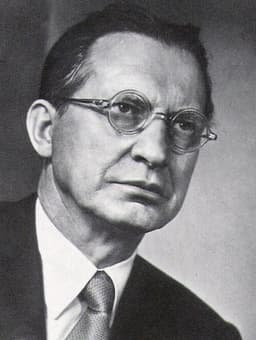
Alcide De Gasperi
Politician · Modern
55.5Total
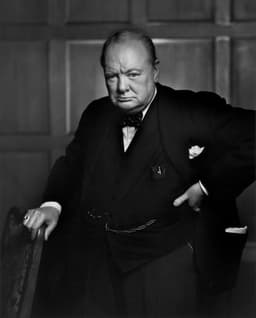
Winston Churchill
Politician · Modern
71.8Total
Basic Information
Born
1881
1874
Died
1954
1965
Era
Modern
Modern
Nationality
Italy
United Kingdom
Occupation
Politician
Politician
Civilization
Western
Western
Score Comparison
Military (10%)
12.4
55.0
Political (20%)
85.0
78.0
Influence (20%)
65.0
75.0
Legacy (20%)
40.0
68.0
Leadership (15%)
80.7
82.0
Strategy (15%)
31.5
65.0
TOTAL
55.5
71.8
Alcide De Gasperi — Complete Timeline
1946 AD
First Prime Minister of the Italian RepublicPolitical Action
De Gasperi became the first prime minister of the newly proclaimed Italian Republic in December 1945. He led a coalition government that included Christian Democrats, Socialists, and Communists. His government oversaw the transition from monarchy to republic.
RepublicGovernmentTransition
Impact: nationalconstructive
1947 AD
Peace Treaty of ParisPolitical Action◆ Major
De Gasperi signed the Treaty of Paris, which formally ended World War II for Italy. Italy lost its colonies, ceded territory to Yugoslavia and France, and paid reparations. The treaty was unpopular but allowed Italy to regain sovereignty and join the Western alliance.
TreatyWorld War IIDiplomacy
Impact: global
Expulsion of Communists from GovernmentPolitical Action
De Gasperi expelled the Italian Communist Party and Socialist Party from his coalition government in May 1947. This move aligned Italy with the United States and the Marshall Plan, deepening the Cold War divide. It solidified Christian Democratic dominance for decades.
Cold WarMarshall PlanCoalition
Impact: global
1949 AD
Italian Membership in NATOPolitical Action◆ Major
De Gasperi led Italy into the North Atlantic Treaty Organization (NATO) as a founding member. This decision anchored Italy in the Western bloc during the Cold War and secured U.S. military and economic support. It was opposed by the Communist Party.
NATOCold WarAlliance
Impact: globalconstructive
Winston Churchill — Complete Timeline
1940 AD
Appointed Prime Minister of the United KingdomPolitical Action◆ Major
On May 10, 1940, Winston Churchill became Prime Minister of the United Kingdom, replacing Neville Chamberlain. His appointment came as Nazi Germany invaded France and the Low Countries, and Churchill formed a coalition government to lead Britain through World War II.
World War IILeadershipCoalition Government
Impact: globalconstructive
Delivered the 'We Shall Fight on the Beaches' SpeechOther◆ Major
On June 4, 1940, Churchill delivered a speech to the House of Commons following the evacuation of British forces from Dunkirk. He declared that Britain would fight on the beaches, landing grounds, fields, streets, and hills, and never surrender, rallying British morale during the darkest days of World War II.
World War IIOratoryMorale
Impact: nationalconstructive
1941 AD
Signed the Atlantic CharterOther◆ Major
On August 14, 1941, Churchill and U.S. President Franklin D. Roosevelt signed the Atlantic Charter aboard HMS Prince of Wales. This joint declaration outlined post-war goals including self-determination, disarmament, and free trade, and became a foundational document for the Allied war aims and the United Nations.
World War IIAllied CooperationPost-war Planning
Impact: globalconstructive
1945 AD
Attended the Yalta ConferenceOther◆ Major
In February 1945, Churchill attended the Yalta Conference with Roosevelt and Stalin to discuss the post-war reorganization of Europe. The conference agreed on the division of Germany, the establishment of the United Nations, and the fate of Eastern Europe, though Churchill later expressed regret over concessions to Stalin.
World War IIPost-war SettlementBig Three
Impact: global
1946 AD
Delivered the 'Iron Curtain' SpeechOther◆ Major
On March 5, 1946, Churchill delivered a speech at Westminster College in Fulton, Missouri, where he stated that an 'iron curtain' had descended across Europe from Stettin to Trieste. This speech is widely regarded as marking the beginning of the Cold War, as it highlighted the division between Soviet-controlled Eastern Europe and the West.
Cold WarSoviet UnionDivision of Europe
Impact: globaldestructive
1953 AD
Awarded the Nobel Prize in LiteratureOther◆ Major
In 1953, Churchill was awarded the Nobel Prize in Literature for his historical writings, particularly 'The Second World War' and 'A History of the English-Speaking Peoples'. The Nobel committee cited his mastery of historical and biographical description as well as his brilliant oratory in defending human values.
LiteratureNobel PrizeHistorical Writing
Impact: nationalconstructive
Expert Analysis
Winston Churchill vs Alcide De Gasperi
The Lion and the Architect
On a grey London morning in May 1940, Winston Churchill rose to address the House of Commons with words that would echo through centuries: “I have nothing to offer but blood, toil, tears and sweat.” Across the English Channel, just six years later, another man stood before a fractured, war-ravaged nation—Alcide De Gasperi, a soft-spoken statesman from the Italian Alps, who offered not defiance but reconciliation. One man saved his country through war; the other rebuilt his through peace. Both were giants of the twentieth century, yet their paths, their temperaments, and their legacies could not have been more different. What drove these two Western leaders to such divergent outcomes?
Origins
Churchill was born in 1874 into the British aristocracy at Blenheim Palace, a child of privilege and neglect. His father, Lord Randolph Churchill, was a brilliant but erratic politician; his American mother, Jennie Jerome, was a socialite who rarely saw him. The young Winston was a poor student, stubborn and defiant, but he devoured history and military strategy. His era was one of imperial confidence, when Britain ruled a quarter of the globe.
De Gasperi, born in 1881 in the small town of Pieve Tesino in the Trentino region, then part of the Austro-Hungarian Empire, came from a very different world. His father was a local tax official, and his family spoke Italian in a land ruled by Vienna. He grew up in the shadow of empire, not at its centre. His formative years were marked by nationalist struggle and the harsh realities of ethnic conflict. While Churchill learned to command, De Gasperi learned to negotiate.
Rise to Power
Churchill’s ascent was dramatic, erratic, and marked by spectacular failures. He crossed the floor of Parliament twice, served as First Lord of the Admiralty during the disastrous Gallipoli campaign in World War I, and spent the 1930s in the political wilderness, warning of Nazi Germany’s rise. His return came only when Britain faced its darkest hour in 1940. He was 65 years old, a man whose career had been written off, yet his moment had arrived.
De Gasperi’s rise was quieter, more patient. He entered politics as a member of the Italian People’s Party, a Catholic democratic movement. When Mussolini’s fascists came to power, De Gasperi refused to compromise. He was arrested in 1927, imprisoned for four years, and spent the rest of the dictatorship in obscurity, working as a librarian in the Vatican. His survival was a matter of endurance, not defiance. When the war ended and Mussolini fell, De Gasperi emerged—a frail, bespectacled man in his sixties—to become the first Prime Minister of the Italian Republic in December 1945. He had no army, no oratory, no grand stage. He had only patience and principle.
Leadership & Governance
Churchill’s leadership was visceral, theatrical, and intensely personal. He rallied a nation with speeches that were poetry in prose form—“We shall fight on the beaches, we shall fight on the landing grounds, we shall fight in the fields and in the streets.” He visited bombed-out London streets, cigar in hand, his V-for-Victory sign a symbol of defiance. His military strategy, however, was often flawed. His score of 55 in military judgment reflects costly ventures like the Gallipoli disaster and his early opposition to the D-Day invasion. But his political score of 82 and leadership score of 85 capture his genius: he held together a fragile coalition with the United States and the Soviet Union, and he inspired a people to endure the Blitz.
De Gasperi governed with a quiet, almost invisible hand. His political score of 88 and leadership score of 84.9 reflect a different kind of mastery. In May 1947, he made a decision that would define Italy for decades: he expelled the Italian Communist Party and Socialist Party from his coalition government. This was a turning point, a gamble that could have sparked civil war. Instead, De Gasperi anchored Italy in the Western alliance, signing the Peace Treaty of Paris in 1947 and leading Italy into NATO as a founding member in 1949. He did not roar; he built. Where Churchill used words as weapons, De Gasperi used institutions as shields.
Triumph & Tragedy
Churchill’s greatest triumph was the survival of Britain in 1940-41, when the nation stood alone against Hitler. His greatest tragedy came immediately after: in July 1945, while the war in Europe was won, British voters swept him out of office. The man who had saved his country was rejected by it. He returned to power in 1951, but his second premiership was lackluster, marked by imperial decline and domestic stagnation.
De Gasperi’s triumph was the creation of the Italian Republic itself—a stable, democratic state from the rubble of fascism and monarchy. He served as Prime Minister for eight consecutive years, from 1945 to 1953, a record of stability in a country known for chaos. His tragedy was more subtle: he was so successful that his own party turned against him. In 1953, when he proposed a new electoral law that opponents called the “swindle law,” he lost the election and was forced from power. He died the following year, a lonely figure, but the republic he built endured.
Character & Destiny
Churchill was a man of immense ego, romanticism, and melancholy. He suffered from what he called the “Black Dog” of depression, yet he channeled it into action. His sense of destiny was almost theatrical: he believed he was born to save Britain. That belief, combined with his courage and eloquence, made him indispensable in 1940. But it also made him stubborn, impulsive, and blind to the long-term costs of empire.
De Gasperi was the opposite. He was modest, self-effacing, and deeply pragmatic. He once said, “I have never sought power; it sought me.” His character was forged in suffering—prison, exile, obscurity—and he emerged without bitterness. He understood that Italy’s future depended not on glory but on stability, not on defiance but on compromise. Where Churchill saw history as a stage for heroes, De Gasperi saw it as a workshop for institutions.
Legacy
Churchill’s legacy is monumental: he is remembered as the voice of freedom in the darkest hour of the twentieth century. His scores of 72 in influence and 75 in legacy understate his cultural weight. He remains a symbol of British resilience, and his speeches are quoted in every crisis. But his legacy is also contested: his imperial views, his role in the Bengal famine of 1943, and his opposition to Indian independence complicate the picture.
De Gasperi’s legacy is quieter but equally profound. His scores of 70 in influence and 72 in legacy reflect the solid, unglamorous foundation he laid. He is revered as one of the founding fathers of the European Union, alongside Schuman and Adenauer. The Christian democratic tradition he shaped dominated Italian politics for decades. He proved that a nation defeated in war could rise again through democracy and alliance.
Conclusion
Churchill and De Gasperi represent two faces of Western leadership: the warrior and the builder, the orator and the organizer, the man of the moment and the man of the decades. One saved his country from destruction; the other saved it from itself. Both were indispensable to their nations in times of existential crisis. And both remind us that history does not belong only to those who shout the loudest. Sometimes, it belongs to those who endure, negotiate, and build—brick by brick, treaty by treaty, in the quiet conviction that the future is worth the patience.
Rankings
🥇
Winston ChurchillLeader
Mil: 55.0Pol: 78.0Inf: 75.0
71.8
🥈
Alcide De Gasperi
Mil: 12.4Pol: 85.0Inf: 65.0
55.5
+16.3 behind
How This Comparison Works
Algorithm
Each figure is scored on 6 dimensions (0—100 scale) based on structured historical data: Military (10%), Political (20%), Influence (20%), Legacy (20%), Leadership (15%), Strategy (15%). The weighted total produces the final ranking.
Data Sources
Scores are computed from structured sub-indicators in the database. Scale factors adjust for era (Ancient ×0.85, Modern ×1.0) and civilization size (Eastern ×1.05, Other ×0.80) to account for differences in population and military scale.
Maximum 3 Figures
Comparisons are limited to 2—3 figures to ensure readability and statistical meaningfulness.
Error Margins
±5 points per dimension — Sub-scores are derived from historical records with inherent uncertainty. Two figures within 5 points on a dimension should be considered roughly equivalent in that area.
Total Score Accuracy
±3 points overall — The weighted combination of 6 dimensions produces a total score with approximately ±3 points of uncertainty. Differences of less than 3 points are not statistically significant— the figures are effectively tied.
Known Limitations
- Historical records are incomplete and uneven across civilizations
- Figures from oral-tradition societies may be underrepresented
- Occupation labels can misclassify multi-role figures
- Scores measure capability and impact, not moral character
- Quantitative scoring is a comparison tool, not absolute truth
Capability Radar
Military (10%) — Battles & Warfare
Battles
11
55
Win Rate
15
60
Expansion
17
40
Political (20%) — Governance & Reform
Reform
85
70
Diplomacy
80
85
Economy
70
60
Influence (20%) — Cultural & Global Reach
Cultural
60
85
Global
65
85
Legacy (20%) — Historical Impact
Historical
70
90
Longevity
65
80
Leadership (15%) — Power & Stability
Tenure
75
75
Stability
75
70
Strategy (15%) — Tactics & Innovation
Strategy
21
85
Tactics
23
65
Reform
27
70
Similar Comparisons
Comments & Discussion
ALPINE REALIST6/16/2026
Churchill gets all the glory for fighting Hitler, but De Gasperi faced an equally impossible task: rebuilding Italy from complete moral and physical ruin. While Churchill rallied a nation that never surrendered, De Gasperi had to convince a defeated, fascist-collaborating population to embrace democracy—and he did it without Churchill's charisma. The real test of leadership isn't winning wars; it's building peace from ashes.
数据挖坟人6/16/2026
那些吹捧丘吉尔“救世主”论调的人,请回答一个问题:1943年孟加拉饥荒饿死三百万人时,丘吉尔在干什么?他在调拨粮食给欧洲战场,却拒绝向印度运粮,声称“印度人像兔子一样能生”。这个细节从来不被主流历史提及。对比而言,德加斯佩里领导下的意大利接收了超过30万难民,包括前敌国国民。谁的道德底线更高?数据不会说谎。
CLASSICS SCOURGE6/16/2026
Please spare me the "Churchill saved civilization" narrative. The man who sent the British army to Gallipoli in 1915, killing 44,000 Allied soldiers in a pointless campaign, and who later firebombed Dresden in 1945—killing up to 25,000 civilians—was no flawless hero. De Gasperi, meanwhile, forged a European identity from the ruins of nationalism, something Churchill never attempted. Give me the architect of peace over the lion of war any day.
历史显微镜6/16/2026
一个被自动忽略的对比:丘吉尔出身特权世家,一生从未真正体验过贫困或被压迫,他口中的“血泪”是别人的血泪。德加斯佩里不同——他曾在墨索里尼政权下坐牢16个月,出狱后靠翻译维生,连给女儿买鞋的钱都没有。这种亲历苦难的领袖,才真正懂得和平的代价。贵族丘吉尔可以慷慨激昂,但德加斯佩里用日常行动重建了一个国家的尊严。
RHETORIC TRAPPER6/16/2026
Let’s stop pretending Churchill’s "blood, toil, tears and sweat" was anything but brilliant wartime marketing. He gave speeches; De Gasperi gave a constitution. Churchill preserved an empire that collapsed within 20 years; De Gasperi built the foundations of the European Union, which still stands. Who actually changed history? Not the man who fought to keep the past alive, but the one who built a future for everyone. Perception is not reality.