Loading...
Aleksander Kwasniewski vs Rene Preval
Aleksander Kwasniewski leads by 7.9 pts · 2 figures compared
…

Aleksander Kwasniewski
Politician · Modern
58.7Total
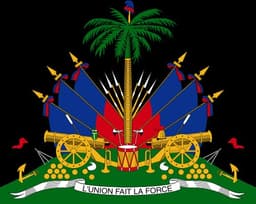
Rene Preval
Politician · Modern
50.8Total
Basic Information
Born
1954
1943
Died
—
—
Era
Modern
Modern
Nationality
Poland
Haiti
Occupation
Politician
Politician
Civilization
Western
Other
Score Comparison
Military (10%)
49.1
37.5
Political (20%)
70.0
61.3
Influence (20%)
59.0
50.2
Legacy (20%)
49.2
42.5
Leadership (15%)
80.0
74.0
Strategy (15%)
42.5
36.2
TOTAL
58.7
50.8
Aleksander Kwasniewski — Complete Timeline
1995 AD
President of PolandPolitical Action◆ Major
Kwasniewski won the 1995 presidential election, defeating Lech Walesa, and became President of Poland on December 23. He was a former communist official who led the Democratic Left Alliance.
PresidencyElection
Impact: national
1997 AD
Constitution of 1997Reform◆ Major
Kwasniewski signed Poland's new constitution on April 2, 1997, which replaced the communist-era document. It established a parliamentary system, strengthened civil rights, and defined the role of the president.
ConstitutionReform
Impact: nationalconstructive
1999 AD
NATO Accession of PolandPolitical Action◆ Major
Kwasniewski oversaw Poland's accession to NATO on March 12, 1999, a major shift in foreign policy. This integration into Western security structures was a key goal of his presidency.
NATOForeign Policy
Impact: globalconstructive
2004 AD
European Union Accession of PolandPolitical Action◆ Major
Kwasniewski led Poland's successful negotiations for EU membership, which was achieved on May 1, 2004. This marked a historic integration of Poland into the European community and boosted economic development.
European UnionIntegration
Impact: globalconstructive
Rene Preval — Complete Timeline
1996 AD
First Term Economic ReformsReform
Préval implemented neoliberal economic reforms, including privatization of state enterprises and trade liberalization, as part of agreements with the IMF and World Bank. These policies were controversial and led to protests, but aimed to stabilize Haiti's economy.
Economic ReformIMFPrivatization
Impact: national
Election as PresidentPolitical Action◆ Major
René Préval was elected President of Haiti, succeeding Jean-Bertrand Aristide. His election marked the first peaceful transfer of power between democratically elected leaders in Haitian history. He took office in February 1996.
ElectionDemocracyTransition
Impact: nationalprogressive
2006 AD
Second Term ElectionPolitical Action◆ Major
Préval was elected president again in 2006 after a period of instability following Aristide's second overthrow. His victory was seen as a return to stability. He took office in May 2006, becoming the only Haitian president to serve two full terms.
ElectionStabilityReturn
Impact: nationalconstructive
2010 AD
2010 Haiti Earthquake ResponseOther◆ Major
A catastrophic 7.0 magnitude earthquake struck Haiti, killing an estimated 200,000 people and destroying much of Port-au-Prince. Pr
EarthquakeDisasterHumanitarian Crisis
Impact: nationaltragic
2011 AD
End of Second TermPolitical Action◆ Major
Préval completed his second term in May 2011, handing over power to Michel Martelly. This marked the first time a Haitian president completed two full terms and peacefully transferred power to an elected successor, a milestone for Haitian democracy.
TransitionDemocracyMilestone
Impact: nationalconstructive
Expert Analysis
Origins
Aleksander Kwasniewski was born on November 15, 1954, in Białogard, Poland. He studied economics at the University of Gdańsk, graduating in 1977. His early career included work in student organizations and later as a journalist. He joined the communist Polish United Workers' Party (PZPR) in 1977, rising through its ranks. Rene Preval was born on January 17, 1943, in Port-au-Prince, Haiti. He studied agronomy at the University of Louvain in Belgium and later at the University of Pisa in Italy. He returned to Haiti to work in agricultural development, and his political career began as a supporter of Jean-Bertrand Aristide's leftist Lavalas movement.
Rise to Power
Kwasniewski's rise came after the fall of communism. He became a key figure in the post-communist Social Democracy of Poland (SdRP) party. In 1995, he won the presidential election against Lech Wałęsa, securing 51.7% of the vote in the second round. He took office on December 23, 1995, becoming the first president from the former communist camp in a free election. Preval first became president in 1996, succeeding Aristide. He was elected with 88% of the vote in a contest that was boycotted by the opposition. His second term began in 2006 after a period of instability, winning 51% of the vote in a field of 35 candidates.
Leadership & Governance
Kwasniewski's leadership style was pragmatic and consensus-building. He pursued pro-Western policies, overseeing Poland's accession to NATO in 1999 and the European Union in 2004. He signed the new constitution in 1997, strengthening democratic institutions. His political score of 70.0 reflects his ability to navigate complex political landscapes. Preval's leadership was marked by a focus on stability. He implemented neoliberal economic reforms, including privatization, as part of agreements with the IMF. His leadership score of 74.0 indicates effectiveness in maintaining order, but his governance was hampered by natural disasters and political crises. Unlike Kwasniewski, Preval faced severe challenges like the 2010 earthquake, which killed over 200,000 and devastated the economy.
Triumph & Tragedy
Kwasniewski's greatest triumphs were Poland's integration into NATO (1999) and the EU (2004), which secured Poland's place in the West. His tragedy was his communist past, which some saw as a liability, and his inability to fully reform the economy to reduce unemployment. Preval's triumph was completing two full terms as president, a first in Haitian history, and overseeing peaceful transitions. His tragedy was the 2010 earthquake and his government's inadequate response, which led to criticism and a slow recovery. Preval's legacy score of 42.5 reflects the mixed outcomes.
Character & Destiny
Kwasniewski was a skilled politician, adaptable and focused on results. His communist background did not prevent him from leading Poland to NATO and EU. His character shaped a destiny of transformation. Preval was seen as a calm, steady figure, but his indecisiveness during crises, especially the earthquake, damaged his reputation. His character led to a legacy of stability but also missed opportunities for deeper reform.
Legacy
Kwasniewski's legacy is enduring: Poland's EU membership transformed its economy and society. He scored 49.2 in legacy, but his impact is greater than the number suggests. Preval's legacy is more fragile: he is remembered for completing two terms, but the earthquake and corruption issues tarnish his record. His legacy score of 42.5 reflects the challenges of governance in a poor, disaster-prone country.
Conclusion
Aleksander Kwasniewski had a greater impact than Rene Preval. Kwasniewski's leadership (score 80.0) and political skill (70.0) enabled Poland to achieve historic integration into Western institutions, fundamentally altering its trajectory. Preval's leadership (74.0) provided stability but did not transform Haiti. The score gap of 7.9 points in Kwasniewski's favor is justified by the magnitude and durability of his achievements.
Rankings
🥇
Aleksander KwasniewskiLeader
Mil: 49.1Pol: 70.0Inf: 59.0
58.7
🥈
Rene Preval
Mil: 37.5Pol: 61.3Inf: 50.2
50.8
+7.9 behind
How This Comparison Works
Algorithm
Each figure is scored on 6 dimensions (0—100 scale) based on structured historical data: Military (10%), Political (20%), Influence (20%), Legacy (20%), Leadership (15%), Strategy (15%). The weighted total produces the final ranking.
Data Sources
Scores are computed from structured sub-indicators in the database. Scale factors adjust for era (Ancient ×0.85, Modern ×1.0) and civilization size (Eastern ×1.05, Other ×0.80) to account for differences in population and military scale.
Maximum 3 Figures
Comparisons are limited to 2—3 figures to ensure readability and statistical meaningfulness.
Error Margins
±5 points per dimension — Sub-scores are derived from historical records with inherent uncertainty. Two figures within 5 points on a dimension should be considered roughly equivalent in that area.
Total Score Accuracy
±3 points overall — The weighted combination of 6 dimensions produces a total score with approximately ±3 points of uncertainty. Differences of less than 3 points are not statistically significant— the figures are effectively tied.
Known Limitations
- Historical records are incomplete and uneven across civilizations
- Figures from oral-tradition societies may be underrepresented
- Occupation labels can misclassify multi-role figures
- Scores measure capability and impact, not moral character
- Quantitative scoring is a comparison tool, not absolute truth
Capability Radar
Military (10%) — Battles & Warfare
Battles
30
18
Win Rate
31
24
Expansion
36
30
Political (20%) — Governance & Reform
Reform
70
40
Diplomacy
80
55
Economy
65
35
Influence (20%) — Cultural & Global Reach
Cultural
40
20
Global
55
20
Legacy (20%) — Historical Impact
Historical
55
30
Longevity
40
25
Leadership (15%) — Power & Stability
Tenure
65
60
Stability
70
30
Strategy (15%) — Tactics & Innovation
Strategy
36
33
Tactics
41
36
Reform
47
39
Similar Comparisons
Comments & Discussion
No comments yet. Be the first to share your thoughts!