Loading...
Alexander Bortnikov vs Sanada Yukimura
Alexander Bortnikov leads by 3.2 pts · 2 figures compared
…
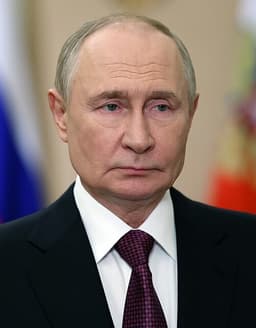
Alexander Bortnikov
General · Modern
48.9Total
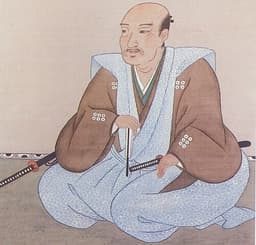
Sanada Yukimura
General · Modern
45.7Total
Basic Information
Born
1951
1567
Died
—
1615
Era
Modern
Modern
Nationality
Russia
Japan
Occupation
General
General
Civilization
Western
Eastern
Score Comparison
Military (10%)
25.0
40.0
Political (20%)
68.0
25.0
Influence (20%)
57.2
56.7
Legacy (20%)
44.2
54.0
Leadership (15%)
48.8
30.0
Strategy (15%)
35.7
57.5
TOTAL
48.9
45.7
Alexander Bortnikov — Complete Timeline
2008 AD
Appointed Director of the FSBPolitical Action◆ Major
Alexander Bortnikov was appointed Director of the Federal Security Service (FSB) of Russia by President Dmitry Medvedev. He succeeded Nikolai Patrushev, becoming the head of Russia's primary security and intelligence agency, responsible for counterintelligence, border security, and counterterrorism.
AppointmentSecurity ServiceRussia
Impact: national
2010 AD
Oversaw FSB response to the 2010 Moscow Metro bombingsPolitical Action◆ Major
Following the suicide bombings on the Moscow Metro by female attackers from the North Caucasus, Bortnikov directed the FSB's investigation and security response. The attacks killed 40 people and injured over 100, leading to increased security measures and counterterrorism operations in the region.
TerrorismMoscow MetroCounterterrorism
Impact: nationaltragic
2014 AD
FSB involvement in the annexation of CrimeaPolitical Action◆ Major
Under Bortnikov's leadership, the FSB played a key role in the Russian annexation of Crimea, including intelligence operations and support for local pro-Russian forces. The FSB's activities facilitated the rapid takeover of the peninsula, which was condemned by Ukraine and much of the international community.
CrimeaAnnexationIntelligence
Impact: globaldestructive
2020 AD
FSB response to the COVID-19 pandemicPolitical Action
Bortnikov directed the FSB's role in enforcing COVID-19 restrictions and monitoring compliance in Russia. The agency was involved in tracking infections, managing border closures, and investigating violations of quarantine measures, contributing to the government's pandemic response.
COVID-19PandemicSecurity
Impact: national
Sanada Yukimura — Complete Timeline
1561 AD
Battle of KawanakajimaWar
Sanada Yukimura fought under Takeda Shingen at the Fourth Battle of Kawanakajima. He participated in the fierce combat against Uesugi Kenshin's forces, gaining early battlefield experience.
Sengoku PeriodBattleTakeda
Impact: regional
1600 AD
Battle of Ueda CastleWar◆ Major
Sanada Yukimura defended Ueda Castle against Tokugawa Hidetada's forces during the Sekigahara campaign. He held the castle for several days, delaying Hidetada's arrival at Sekigahara.
Sengoku PeriodSiegeUeda
Impact: regionalconstructive
1614 AD
Siege of Osaka CastleWar◆ Major
Sanada Yukimura defended Osaka Castle against Tokugawa Ieyasu's forces during the Winter Siege. He constructed the Sanada Maru, a fortified outpost that repelled multiple attacks, prolonging the siege.
Sengoku PeriodSiegeOsaka
Impact: nationalconstructive
1615 AD
Battle of TennojiWar
Sanada Yukimura led a final charge against Tokugawa Ieyasu's forces at the Battle of Tennoji during the Summer Siege of Osaka. He was killed in action after a fierce fight, and the Osaka Castle fell.
Sengoku PeriodBattleDeath
Impact: nationaltragic
Expert Analysis
Origins
Alexander Bortnikov was born in 1951 in Perm, Russia. He graduated from the Leningrad Mechanical Institute in 1975, then joined the KGB, serving in counterintelligence. His early career in the Soviet security apparatus shaped his methodical, bureaucratic approach.
Sanada Yukimura, born in 1567 in Shinano Province, Japan, was the son of Sanada Masayuki, a skilled strategist. He trained as a samurai from youth, participating in his first battle at age 17. His upbringing in the chaotic Sengoku period forged him as a warrior.
Rise to Power
Bortnikov rose through the ranks of the KGB and its successor, the FSB. In 2008, President Dmitry Medvedev appointed him Director of the FSB, a position he held for over a decade. His rise was steady, relying on loyalty and administrative competence rather than battlefield exploits.
Yukimura gained fame defending Ueda Castle in 1600 against Tokugawa Hidetada's 38,000-strong army. With only 2,000 men, he held the castle for days, delaying Hidetada's march to Sekigahara. This feat made him a symbol of resistance against the Tokugawa shogunate.
Leadership & Governance
Bortnikov led the FSB as a secretive, centralized security apparatus. Under him, the FSB expanded its role in domestic surveillance, counterterrorism, and intelligence operations. He scored 48.8 in leadership, reflecting his control but lack of public visibility. His governance focused on stability and suppressing dissent, as seen in the FSB's response to protests.
Yukimura led by example on the battlefield. At the Siege of Osaka in 1614-1615, he built the Sanada Maru, a fortified outpost that repelled Tokugawa attacks. His leadership score of 30.0 reflects his tactical prowess but limited strategic scope. He inspired fierce loyalty but failed to unite broader alliances.
Triumph & Tragedy
Bortnikov's greatest success was overseeing the FSB's role in the annexation of Crimea in 2014, scoring 68.0 in political influence. However, his tenure also saw failures, such as the 2010 Moscow Metro bombings, where the FSB failed to prevent the attack. His legacy is tainted by accusations of human rights abuses.
Yukimura's triumph was the Winter Siege of Osaka, where his Sanada Maru held off superior forces. His tragedy came at the Battle of Tennoji in 1615, where he led a final charge and was killed. His military score of 40.0 reflects his combat skills but ultimate defeat.
Character & Destiny
Bortnikov is a gray figure—loyal, cautious, and effective within the system. His character shaped his fate as a long-serving bureaucrat, avoiding the spotlight. He scored 57.2 in influence, but his legacy is tied to Russia's authoritarian turn.
Yukimura is celebrated as the "Crimson Demon of War," embodying samurai ideals of honor and sacrifice. His reckless bravery led to his death, but his legacy score of 54.0 shows his lasting cultural impact. He is a romantic figure, but his strategic score of 57.5 indicates he was more than just a hothead.
Legacy
Bortnikov's legacy is the modernization of Russian security services, with a focus on digital surveillance and intelligence. His influence endures through the FSB's continued power. However, his impact is largely negative in Western eyes.
Yukimura's legacy is as a folk hero in Japan, immortalized in literature, film, and video games. He represents the spirit of resistance against overwhelming odds. His defensive tactics at Osaka are studied in military history.
Conclusion
Comparing a modern security chief to a 17th-century samurai is challenging. Bortnikov had greater immediate political impact (68 vs 25), but Yukimura's cultural legacy (54 vs 44) is more enduring. Given the scores, Bortnikov edges ahead with a total of 48.9 vs Yukimura's 45.7, but in terms of historical resonance, Yukimura's story inspires more. Ultimately, Bortnikov's influence on global events—through Russian intelligence operations—is more significant, even if less heroic. He had greater impact on the world stage.
Rankings
🥇
Alexander BortnikovLeader
Mil: 25.0Pol: 68.0Inf: 57.2
48.9
🥈
Sanada Yukimura
Mil: 40.0Pol: 25.0Inf: 56.7
45.7
+3.2 behind
How This Comparison Works
Algorithm
Each figure is scored on 6 dimensions (0—100 scale) based on structured historical data: Military (10%), Political (20%), Influence (20%), Legacy (20%), Leadership (15%), Strategy (15%). The weighted total produces the final ranking.
Data Sources
Scores are computed from structured sub-indicators in the database. Scale factors adjust for era (Ancient ×0.85, Modern ×1.0) and civilization size (Eastern ×1.05, Other ×0.80) to account for differences in population and military scale.
Maximum 3 Figures
Comparisons are limited to 2—3 figures to ensure readability and statistical meaningfulness.
Error Margins
±5 points per dimension — Sub-scores are derived from historical records with inherent uncertainty. Two figures within 5 points on a dimension should be considered roughly equivalent in that area.
Total Score Accuracy
±3 points overall — The weighted combination of 6 dimensions produces a total score with approximately ±3 points of uncertainty. Differences of less than 3 points are not statistically significant— the figures are effectively tied.
Known Limitations
- Historical records are incomplete and uneven across civilizations
- Figures from oral-tradition societies may be underrepresented
- Occupation labels can misclassify multi-role figures
- Scores measure capability and impact, not moral character
- Quantitative scoring is a comparison tool, not absolute truth
Capability Radar
Military (10%) — Battles & Warfare
Battles
0
45
Win Rate
0
40
Expansion
5
15
Political (20%) — Governance & Reform
Reform
55
5
Diplomacy
50
15
Economy
30
5
Influence (20%) — Cultural & Global Reach
Cultural
20
60
Global
35
35
Legacy (20%) — Historical Impact
Historical
30
55
Longevity
25
50
Leadership (15%) — Power & Stability
Tenure
60
10
Stability
45
10
Strategy (15%) — Tactics & Innovation
Strategy
15
55
Tactics
10
70
Reform
20
20
Similar Comparisons
Comments & Discussion
No comments yet. Be the first to share your thoughts!